


L-Carnosine
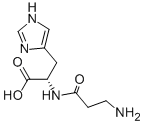
- CAS No.
- 305-84-0
- Chemical Name:
- L-Carnosine
- Synonyms
- CARNOSINE;Carnosin;N-BETA-ALANYL-L-HISTIDINE;Dragosine;β-Alanyl-L-histidine;N-B-ALANYL-L-HISTIDINE;β-Ala-His;BETA-ALA-HIS;β-Ala-His-OH;H-β-Ala-His-OH
- CBNumber:
- CB0433763
- Molecular Formula:
- C9H14N4O3
- Molecular Weight:
- 226.23
- MDL Number:
- MFCD00005207
- MOL File:
- 305-84-0.mol
- MSDS File:
- SDS
- TDS File:
- TDS
| Melting point | 253 °C (dec.) (lit.) |
|---|---|
| Boiling point | 367.84°C (rough estimate) |
| alpha | 20.9 º (c=1.5, H2O) |
| Density | 1.2673 (rough estimate) |
| vapor pressure | 0Pa at 25℃ |
| refractive index | 21 ° (C=2, H2O) |
| storage temp. | -20°C |
| solubility | DMSO (Very Slightly), Water (Slightly) |
| form | crystalline |
| pka | 2.62(at 25℃) |
| color | White |
| Odor | at 100.00%. odorless |
| optical activity | +24.120 |
| Water Solubility | almost transparency |
| Merck | 14,1850 |
| BRN | 87671 |
| Stability | Stable, but may be heat sensitive - store cold. Incompatible with strong oxidizing agents. |
| Major Application |
food and beverages personal care pharmaceutical |
| Cosmetics Ingredients Functions | SKIN CONDITIONING |
| InChI | 1S/C9H14N4O3/c10-2-1-8(14)13-7(9(15)16)3-6-4-11-5-12-6/h4-5,7H,1-3,10H2,(H,11,12)(H,13,14)(H,15,16)/t7-/m0/s1 |
| InChIKey | CQOVPNPJLQNMDC-ZETCQYMHSA-N |
| SMILES | NCCC(=O)N[C@@H](Cc1c[nH]cn1)C(O)=O |
| LogP | -3.8 at 22℃ |
| CAS DataBase Reference | 305-84-0(CAS DataBase Reference) |
| EWG's Food Scores | 1 |
| FDA UNII | 8HO6PVN24W |
| NCI Drug Dictionary | carnosine |
| EPA Substance Registry System | L-Histidine, .beta.-alanyl- (305-84-0) |
| UNSPSC Code | 12352209 |
| NACRES | NA.26 |
SAFETY
Risk and Safety Statements
| Symbol(GHS) |  GHS07 |
|---|---|
| Signal word | Warning |
| Hazard statements | H315-H319 |
| Precautionary statements | P264-P280-P302+P352-P321-P332+P313-P362-P264-P280-P305+P351+P338-P337+P313P |
| Hazard Codes | Xn |
| Risk Statements | 20/21/22-36/37/38 |
| Safety Statements | 24/25-36-26 |
| WGK Germany | 2 |
| RTECS | MS3080000 |
| F | 3-10 |
| TSCA | TSCA listed |
| HS Code | 29332900 |
| Storage Class | 11 - Combustible Solids |
| Toxicity | LD50 oral in mouse: > 14930mg/kg |
| REACH Registrations | Active |
L-Carnosine price More Price(78)
| Manufacturer | Product number | Product description | CAS number | Packaging | Price | Updated | Buy |
|---|---|---|---|---|---|---|---|
| Sigma-Aldrich | C9625 | L-Carnosine ~99%, crystalline | 305-84-0 | 10mg | $29.9 | 2026-04-30 | Buy |
| Sigma-Aldrich | C9625 | L-Carnosine ~99%, crystalline | 305-84-0 | 5g | $152 | 2026-04-30 | Buy |
| TCI Chemical | A0222 | beta-Alanyl-L-histidine >98.0%(HPLC)(T) | 305-84-0 | 1g | $19 | 2026-04-30 | Buy |
| TCI Chemical | A0222 | beta-Alanyl-L-histidine >98.0%(HPLC)(T) | 305-84-0 | 5g | $55 | 2026-04-30 | Buy |
| Cayman Chemical | 29825 | L-Carnosine ≥95% | 305-84-0 | 5g | $54 | 2026-04-30 | Buy |
L-Carnosine Chemical Properties, Uses, Production
Description
L-Carnosine is a dipeptide composed of β-alanine and L-histidine that has been found in rat olfactory bulb, skeletal muscle, brain, kidney, and spleen tissues, as well as human skeletal muscle, and has diverse biological activities. It is a metal chelator that forms complexes with copper, cobalt, nickel, cadmium, or zinc. Dietary administration of L-carnosine (60 mg/kg per day) reduces plasma levels of advanced glycation end products (AGEs) in diabetic rats. It reduces brain edema, blood-brain barrier disruption, microglial activation, and neuronal apoptosis in a rat model of intracerebral hemorrhage when administered at a dose of 1,000 mg/kg. L-Carnosine (250, 500, and 1,000 mg/kg, i.p.) reduces hepatic protein carbonylation and necrosis in a rat model of cirrhosis induced by bile duct ligation. It also reduces lung myeloperoxidase (MPO) activity, production of reactive oxygen species (ROS), and TNF-α and IL-6 levels, as well as alveolar hemorrhage, interstitial edema, and pulmonary leukocyte infiltration in a mouse model of LPS-induced lung injury.
Chemical Properties
white to off-white crystalline.
History
Carnosine, a dipeptide composed of beta-alanine and L-histidine, was first identified in beef extracts by Russian chemists Gulewitch and Amiradzibi in 1900.
Uses
L-Carnosine is a naturally-occurring histidine-containing compound and the biological role of this dipeptide is to act as cytosolic buffering agents. Other roles ascribed to L-Carnosine include action s as neurotransmitters, modulation of enzymic activities and chelation of heavy metals. Studies indicate an ability to boost the immunological functions. In cosmetics, it has anti-aging and skin-conditioning applications.
Definition
ChEBI: Carnosine is a dipeptide that is the N-(beta-alanyl) derivative of L-histidine. It has a role as an anticonvulsant, an antioxidant, an antineoplastic agent, a human metabolite, a Daphnia magna metabolite, a mouse metabolite, a neuroprotective agent and a geroprotector. It is a conjugate acid of a carnosinate. It is a tautomer of a carnosine zwitterion.
Application
L-Carnosine has been used to study its effects as an antioxidant on meat quality of pigs. It has also been used to study its effects on brain injury in a rat intracerebral hemorrhage model.
benefits
L-Carnosine is a strong anti-glycosylation, free radical scavenging,anti-oxidant,anti-aging, anti-pollution.Brightenand repairthe skin. white powder.Its recommended dosage is 0.05~2%.
Synthesis Reference(s)
The Journal of Organic Chemistry, 48, p. 392, 1983 DOI: 10.1021/jo00151a026
General Description
Carnosine is a dipeptide comprising beta-alanine and histidine. It is found in muscular and other tissues. It has strong oxidant property as it can scavenge both reactive oxygen species (ROS) and reactive nitrogen species (RNS). Carnosine acts as a cytosolic buffering agent and as a regulator of macrophage function.1 Attributing to its ability to form complexes with transition metals, it is used to regulate the content of transition metal ions in biological fluids and tissues.
Carnosine can prevent aging and can be used to prevent or treat complications of diabetes such as nerve damage, eye disorders (cataracts), and kidney problems.2 Potential therapeutic actions of carnosine include antihypertensive effects, immunomodulation, would healing, and antitumor/chemopreventive effects. The chelate compound of zinc ion and carnosine has been used in Japan for gastritis, gastric ulcers, and dyspepsia symptoms.3
Biochem/physiol Actions
L-Carosine is a dipeptide found at millimolar concentration in brain, muscle and the lens of the eye. In model systems it is a potent antioxidant that scavenges oxygen free radicals and transition metal ions. It blocks protein-protein and protein-DNA cross-links induced by hypochlorite anions and toxic aldehydes such as acetaldehyde, formaldehyde, and malondialdehyde, the primary product of lipid peroxidation. It also inhibits nonenzymatic protein glycation induced by aldose and ketose reducing sugars and inhibits the formation of toxic advanced glycation end products (AGE). These activities make it of interest in studies of aging, atherosclerosis, Alzheimer′s disease, and the secondary effects of diabetes.
Side effects
L-carnosine is generally considered safe when taken by mouth for short periods of time or when used by adults on the skin. However, there can be rare side effects, including rash, itchiness, dry mouth, changes in appetite, feelings of tiredness or vivid dreams. Rare but severe possible zinc carnosine side effects include decreased white blood cells, disorder of the digestive system and sideroblastic anemia. Less severe side effects may include stomach cramps, indigestion and nausea.
Safety Profile
Mildly toxic by intraperitoneal route. An experimental teratogen. Other experimental reproductive effects. When heated to decomposition it emits toxic fumes of NOx.
Synthesis
A) Preparation of hydrazinolysis reaction solution, in a 1000 ml four-necked reaction flask, put in as an intermediate phthaloyl-L-creatinine 50 g (0.14 mol), 200 ml of water, hydrazine hydrate (mass percent concentration of 80%) 10.8 g (0.17 mol), heating to reflux reaction 1.0h, add acetic acid to adjust the pH of the material to 5.5, filter to remove the by-products, to get the hydrazine solution;
B) preparation of L-myosin, to the hydrazinolysis reaction solution obtained from step A) add 100 ml of dichloromethane and benzaldehyde 9.6 g (0.09 mol), stirring at room temperature for 12h, the material was static layered, separated from the dichloromethane layer, the aqueous layer was washed twice with 50 ml of dichloromethane and then added 3 g of activated charcoal and 25 ml of ammonia (18%), and the material was decolorized at 60 for 0.5 seconds. After decolorization at 60 for 0.5h, filtration in addition to activated carbon, decolorized solution was concentrated in vacuum until solid precipitation, added methanol 300ml crystallization, stirred for 2.0h and filtered, filter cake was dried at 100 for 6h to obtain L-creatinine product 28.6g. Hydrazine residue was not detected in the product.
Purification Methods
Likely impurities are histidine and β-alanine. Crystallise L-carnosine from water by adding EtOH in excess. Recrystallise it from aqueous EtOH by slow addition of EtOH to a strong aqueous solution of the dipeptide. Its solubility in H2O is 33.3% at 25o. [Vinick & Jung J Org Chem 48 392 1983, Turner J Am Chem Soc 75 2388 1953, Sifford & du Vigneaud J Biol Chem 108 753 1935, Beilstein 25 H 516, 25 I 717, 25 II 408.]
References
1. P. J. Quinn, A. A. Boldyrev, V. E. Formazuyk, Carnosine: Its properties, functions and potential therapeutic applications, Molecular Aspects of Medicine, 1992, vol. 13, pp. 379-444 DOI:10.1016/0098-2997(92)90006-L
2. https://www.webmd.com/vitamins/ai/ingredientmono-1038/carnosine
3. G. M. Halpern, Zinc-Carnosine: Nature’s Safe and Effective Remedy for Ulcers, 2005, ISBN-10 0757002749
4. l-Carnosine, a Substrate of Carnosinase-1, Influences Glucose Metabolism DOI:10.2337/db07-0177
5. L-carnosine (beta-alanyl-L-histidine) and carcinine (beta-alanylhistamine) act as natural antioxidants with hydroxyl-radical-scavenging and lipid-peroxidase activities. DOI:10.1042/BJ3040509
6. Boldyrev, A.A., Aldini, G., and Derave, W. Physiology and pathophysiology of carnosine. Physiol. Rev. 93(4), 1803-1845 (2013). DOI:10.1152/physrev.00039.2012
7.
Ghodsi, R., and Kheirouri, S. Carnosine and advanced glycation end products: A systematic review. Amino Acids 50(9), 1177-1186 (2018). DOI:10.1007/s00726-018-2592-9
8. Tanaka, K.I., Sugizaki, T., Kanada, Y., et al. Preventive effects of carnosine on lipopolysaccharide-induced lung injury. Sci. Rep. 7:42813, (2017). DOI:10.1038/srep42813

L-Carnosine Preparation Products And Raw materials
| Supplier | Tel | Country | ProdList | Advantage | |
|---|---|---|---|---|---|
| Wuxi Jingyao Bio-Technology Co., Ltd. | 88770633 13961738808 | jingyaobiotech@126.com | China | 389 | 55 |
| Nantong puyue biomedical Co., Ltd | 0513-0513-0513-89158300 18014392889 | sales@puyerbiopharma.com | China | 4956 | 58 |
| WeiTai BioPharmaceutical Co.,Ltd(Hangzhou?) | 13282012786 13282132786 | sales@weitai-pharmaceutical.com | China | 69 | 58 |
| Suzhou Heshengyuan Biopharmaceutical Technology Co., Ltd | 13918488572 | he_wei_ryan@synorbio.com | China | 67 | 58 |
| Wuhan BJM Pharm Inc | 18607102166 18607102166 | sales04@benjaminpharmchem.com | China | 242 | 58 |
| MarsLab | 17549219037 17549219037 | 2572406736@qq.com | China | 146 | 58 |
| Anhui Chnbio Technology Co., Ltd. | 18969017660 | 2424422732@qq.com | China | 103 | 58 |
| Shenzhen Readline Biotech CO., LTD. | 0755-26659310 15915457431 | linkunsheng@szreadline.com | China | 120 | 58 |
| J & K SCIENTIFIC LTD. | 18210857532 18210857532 | jkinfo@jkchemical.com | China | 96815 | 76 |
| Jiangsu Huayu Chemical Co., Ltd. | 25-83241163 | sales@elegantnutri.com | China | 55 | 55 |
Related articles
- Medicinal Uses and Mechanism of Action of L-Carnosine
- L-Carnosine is a naturally occurring beta peptide compound with a wide range of important physiological functions including an....
- Dec 16,2024
- L-Carnosine: Food sources, Onset of action and Benefits
- L-Carnosine (β-alanyl-l-histidine) was a dipeptide isolated from natural material in 1900.
- Jun 4,2024
- L‐carnosine eye drops and L-carnosine syrup
- L-Carnosine is a dipeptide composed of two amino acids, alanine, and histidine, naturally occurring in vital organs like the h....
- Apr 16,2024
Related Questions
Ask a questionView Latest Price from L-Carnosine manufacturers
| Image | Update time | Product | Price | Min. Order | Purity | Supply Ability | Manufacturer | |
|---|---|---|---|---|---|---|---|---|
 |
2026-10-12 | L-Carnosine
305-84-0
|
1kg/bag | ≥98% | 50 T/Month | Hebei Qujie Technology Co., Ltd. | ||
 |
2026-10-12 | L-Carnosine
305-84-0
|
$500.00-1000.00 | 1g | 99.99% | 500 | HEBEI SHENGSUAN CHEMICAL INDUSTRY CO.,LTD | |
 |
2026-10-12 | L-Carnosine
305-84-0
|
1Kg | 99% | 20Ton | Xinxiang Aurora Biotechnology Co.,Ltd. |
-
- L-Carnosine
305-84-0
- $0.00
- ≥98%
- Hebei Qujie Technology Co., Ltd.
-
- L-Carnosine
305-84-0
- $500.00-1000.00
- 99.99%
- HEBEI SHENGSUAN CHEMICAL INDUSTRY CO.,LTD
-
- L-Carnosine
305-84-0
- 99%
- Xinxiang Aurora Biotechnology Co.,Ltd.
