


Propylamine
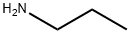
- CAS No.
- 107-10-8
- Chemical Name:
- Propylamine
- Synonyms
- PA;N-PROPYLAMINE;Propanamine;1-Propylamine;MONO-N-PROPYLAMINE;MNPA;Propylamin;1-PROPANAMINE;n-Propylaminwe;1-AMINOPROPANE
- CBNumber:
- CB8401908
- Molecular Formula:
- C3H9N
Lewis structure

- Molecular Weight:
- 59.11
- MDL Number:
- MFCD00008205
- MOL File:
- 107-10-8.mol
- MSDS File:
- SDS
- TDS File:
- TDS
| Melting point | −83.00 °C; −117.40 °F; 190.15 K |
|---|---|
| Boiling point | 47 to 51 °C; 116 to 124 °F; 320 to 324 K |
| Density | 0.719 g mL−1 |
| vapor density | 2 (vs air) |
| vapor pressure | 4.79 psi ( 20 °C) |
| FEMA | 4237 | PROPYLAMINE |
| refractive index | 1.388 |
| FLAVIS Number | 11.004 | Propylamine |
| Flash point | −30 °C (−22 °F; 243 K) |
| storage temp. | Store below +30°C. |
| solubility | water: soluble0.4 part(lit.) |
| pka | 10.6(at 20℃) |
| form | liquid |
| color | Colorless |
| Specific Gravity | 0.7173 |
| PH | 12.6 (100g/l, H2O, 20℃) |
| Odor | ammoniacal |
| Odor Type | ammoniacal |
| biological source | human blood |
| explosive limit | 2.1-13.6%(V) |
| Odor Threshold | 0.061ppm |
| Water Solubility | soluble |
| Specific Heat Capacity | Cp(liquid): 2.78 J/(g·K); Cp(gas): 1.54 J/(g·K), at 25℃ |
| Sensitive | Air Sensitive |
| Merck | 14,7843 |
| JECFA Number | 1580 |
| BRN | 1098243 |
| Henry's Law Constant | 6.6×10⁻¹ mol/(m3Pa) at 25℃, Burkholder et al. (2019) |
| Dielectric constant | 3.0(Ambient) |
| Exposure limits | No exposure limit has been set. Based on its similarity to ethylamine in irritation and toxicity, a TLV-TWA of 10 ppm (~24 mg/m3) should be appropriate. . |
| Stability | Stable. Highly flammable. Note low flash point. Readily forms explosive mixtures with air. Incompatible with oxidising agents, strong acids. Store cool. |
| InChI | 1S/C3H9N/c1-2-3-4/h2-4H2,1H3 |
| InChIKey | WGYKZJWCGVVSQN-UHFFFAOYSA-N |
| SMILES | CCCN |
| LogP | 0.55 |
| CAS DataBase Reference | 107-10-8(CAS DataBase Reference) |
| Substances Added to Food (formerly EAFUS) | PROPYLAMINE |
| EWG's Food Scores | 1 |
| NCI Dictionary of Cancer Terms | PA |
| FDA UNII | I76F18D635 |
| NIST Chemistry Reference | 1-Propanamine(107-10-8) |
| EPA Substance Registry System | Propylamine (107-10-8) |
| UNSPSC Code | 85151701 |
| NACRES | NA.24 |
SAFETY
Risk and Safety Statements
| Symbol(GHS) |    GHS02,GHS05,GHS06 |
|||||||||
|---|---|---|---|---|---|---|---|---|---|---|
| Signal word | Danger | |||||||||
| Hazard statements | H311+H331-H302-H314-H225 | |||||||||
| Precautionary statements | P501-P261-P270-P240-P210-P233-P243-P241-P242-P271-P264-P280-P370+P378-P361+P364-P303+P361+P353-P301+P330+P331-P301+P312+P330-P304+P340+P310-P305+P351+P338+P310-P403+P233-P403+P235-P405 | |||||||||
| target organs | Respiratory system | |||||||||
| PPE | Faceshields, Gloves, Goggles | |||||||||
| Hazard Codes | F,C | |||||||||
| Risk Statements | 11-20/21/22-34-35-52/53 | |||||||||
| Safety Statements | 26-36/37/39-45-16-7/9-36-61 | |||||||||
| RIDADR | UN 1277 | |||||||||
| WGK Germany | 1 | |||||||||
| RTECS | UH9100000 | |||||||||
| F | 34 | |||||||||
| Autoignition Temperature | 604 °F | |||||||||
| TSCA | TSCA listed | |||||||||
| HS Code | 2921199090 | |||||||||
| HazardClass | 3 | |||||||||
| PackingGroup | II | |||||||||
| Storage Class | 3 - Flammable liquids | |||||||||
| Hazard Classifications | Acute Tox. 3 Dermal Acute Tox. 3 Inhalation Acute Tox. 4 Oral Eye Dam. 1 Flam. Liq. 2 Met. Corr. 1 Skin Corr. 1B STOT SE 3 |
|||||||||
| Hazardous Substances Data | 107-10-8(Hazardous Substances Data) | |||||||||
| Toxicity | LD50 orally in rats: 0.57 g/kg (Smyth) | |||||||||
| REACH Registrations | Active | |||||||||
| Limited Quantities | 1.0 L (0.3 gallon) (liquid) | |||||||||
| Excepted Quantities | Max Inner Pack (30g or 30ml) and Max Outer Pack (500g or 500ml) | |||||||||
| NFPA 704 |
|
Propylamine price More Price(51)
| Manufacturer | Product number | Product description | CAS number | Packaging | Price | Updated | Buy |
|---|---|---|---|---|---|---|---|
| Sigma-Aldrich | CB_94050333 | PA-PP human cell line NOTE: Both the cell line and DNA from the cell line may be available for this product. Please choose | 1 unit | $436 | 2026-04-30 | Buy | |
| Sigma-Aldrich | CB_94050333 | PA-PP human cell line 94050333, IHW Number: 9217 | 1vial | $610 | 2026-04-30 | Buy | |
| Sigma-Aldrich | 8.07477 | Propylamine for synthesis | 107-10-8 | 100mL | $41 | 2026-04-30 | Buy |
| Sigma-Aldrich | 8.07477 | Propylamine for synthesis | 107-10-8 | 500mL | $57.1 | 2026-04-30 | Buy |
| Sigma-Aldrich | 8.07477 | Propylamine for synthesis | 107-10-8 | 1L | $92 | 2026-04-30 | Buy |
Propylamine Chemical Properties, Uses, Production
Chemical Properties
n-Propylamine, also known as propylamine, is a colorless liquid with a pungent odor resembling ammonia. It has strong basic properties, leading to its easy formation of salts when combined with acids. Its reactivity is similar to that described for the other short chain aliphatic amines (Astel 1961).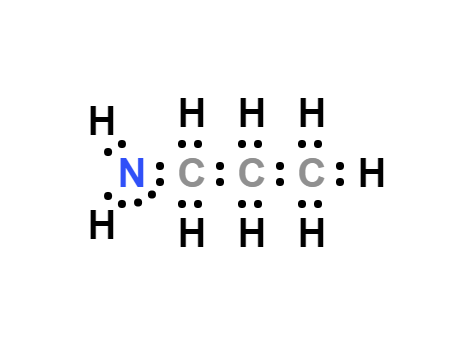
Uses
1-Propylamine is used in chemical analysis and to make other chemicals, used as a solvent in organic synthesis. And it is used as finishing agent of drugs, paints, rubber, fiber, textile and resin. Additionally, it can be used as petroleum additive and preservative.
Uses
n-Propylamine is used as an intermediate inmany organic reactions. It has been used in the synthesis of single crystals of siliceous ferrierite.
Definition
ChEBI: Propylamine is a member of the class of alkylamines that is propane substituted by an amino group at C-1. It is a conjugate base of a propan-1-aminium.
Production Methods
There are several methods employed in the manufacture of propylamine. Typically, ammonia and propanol are reacted over a dehydration catalyst at high temperature and pressure. Ammonia, propanol, and hydrogen can also be reacted over a dehydrogenation catalyst such as metallic silver. Propylamine can also be synthesized from propionaldehyde and ammonia with a Raney nickel catalyst (Schweizer et al 1978).
Aroma threshold values
High strength odor; ammoniacal type; recommend smelling in a 0.10% solution or less.
General Description
A clear colorless liquid with an ammonia-like odor. Flash point -35°F. Less dense than water and soluble in water. Vapors are heavier than air. Produces toxic oxides of nitrogen during combustion. Used in chemical analysis and to make other chemicals.
Air & Water Reactions
Highly flammable. Slightly soluble in water.
Reactivity Profile
Colorless, alkaline liquid, very volatile (b. p. 48° C), moderately toxic, highly flammable. Dangerous fire hazard when exposed to heat, flame, sparks, or strong oxidizers. When heated to decomposition Propylamine emits toxic fumes of oxides of nitrogen. Incompatible with triethylaluminum, complex may explode on sublimation [Chini, P. et al., Chim. e Ind (Milan), 1962, 44, p. 1220].
Hazard
Highly flammable, dangerous fire risk, explosive limits in air 2–10%, use alcohol foam to extinguish. Strong irritant to skin and tissue.
Health Hazard
n-Propylamine is a strong irritant and a mod erately toxic substance. the toxic routes areinhalation, ingestion, and absorption throughthe skin. Contact of the liquid on the skincan cause burns and possibly skin sensitization. Irritation in the eyes from exposure tohigh concentrations can be severe. It is a respiratory tract irritant, similar to ethylamine.Inhalation of 2300 ppm of n-propylamine for4 hours caused labored breathing, hepatitis,and hepatocellular necrosis in rats. It is somewhat less toxic than ethylamine by oral anddermal routes.
LC50 value, inhalation (mice): 2500 mg/m3/2 hr
LD50 value, oral (rats): 570 mg/kg
LD50 value, skin (rabbits): 560 mg/kg.
Fire Hazard
Highly flammable liquid; flash point (closed
cup) -37°C (-35°F); vapor density 2.0
(air = 1), vapor can travel a considerable distance to a source of ignition and flash back;
autoignition temperature 318°C (604°F); fire extinguishing agent: dry chemical, CO2, or
“alcohol” foam; water should be used to keep
fire-exposed containers cool and to flush and
dilute the spill.
n-Propylamine forms explosive mixtures
in air; LEL and UEL values are 2.0% and
10.4% by volume in air, respectively. There
is no report of explosion associated with this
compound. It is expected to exhibit violent
reactions characteristic of lower aliphatic
primary amines .
Industrial uses
Propylamine is important as a chemical intermediate for rubber chemicals, dyestuffs, propyl isocyanate, textile and leather finishing resins and corrosion inhibitors. It is also used in the production of pharmaceuticals such as Prilocaine, pesticides including Profluralin and in petroleum additives. In 1976, 500 tons of propylamine were manufactured in the U.S. (HSDB 1988).
Safety Profile
Moderately toxic by inhalation, ingestion, and skin contact routes. A skin and severe eye irritant. Possibly a skin sensitizer. Very dangerous fire hazard when exposed to heat, flame, or oxidizers. Explosive in the form of vapor when exposed to heat or flame. To fight fire, use alcohol foam. When heated to decomposition it emits toxic fumes of NOx. Incompatible with triethynyl aluminum. See also AMINES.
Potential Exposure
Propylamine is used to make textile resins, drugs, pesticides, and other chemicals.
Metabolism
To date, there are several studies which indicate that propylamine may be
metabolized in many animal species, including man. When propylamine hydrochloride
was administered to humans orally, little of the parent compound was
recovered in the urine (Rechenberger 1940). It has also been reported that dogs are
capable of metabolizing propylamine (Bernhard 1938). McEwen et al (1966)
demonstrated that monoamine oxidase, purified from rabbit serum, was capable of
oxidizing propylamine, although less actively than substituted phenylethylamines
such as dopamine. Further characterization revealed that the protonated amine is
bound by an unprotonated enzyme group, that the enzyme active site is composed
of hydrophobic residues, and that interaction of the amine residues determines
maximal velocity and affinity constant (McEwen and Sober 1967). Oxidation of
the amine could be stimulated by the presence of aliphatic alcohols which
apparently bond in a tertiary complex with the enzyme and substrate, thereby
increasing the effectiveness of substrate binding.
Other investigators have provided evidence that propylamine may not be a
substrate for tissue monoamine oxidase. When given intraperitoneally to rats it had
no effect on the liver enzyme and little effect on activity in the brain (Valiev 1974).
Early work by Pugh and Quastel (1937) indicated that slices of rat brain did not
metabolize propylamine.
Shipping
UN1277 Propylamine, Hazard Class: 3; Labels: 3-Flammable liquid, 8-Corrosive material.
Purification Methods
Distil the amine from zinc dust, under reduced pressure, in an atmosphere of nitrogen. [Beilstein 4 IV 464.]
Incompatibilities
Propylamine Vapors may form explosive mixture with air. Violent reaction on contact with oxidizers and mercury, strong acids; organic anhydrides; isocyanates, aldehydes, nitroparrafins, halogenated hydrocarbons; alcohols and many other compounds. Attacks many metals and alloys, especially those of copper. Aqueous solution is acidic and may attack glass.
Toxics Screening Level
The initial threshold screening level (ITSL) for propylarnine is 112 μg/m3 based on anannual averaging time.
Waste Disposal
Consult with environmental regulatory agencies for guidance on acceptable disposal practices. Generators of waste containing this contaminant (≥100 kg/mo) must conform with EPA regulations governing storage, transportation, treatment, and waste disposal.
Propylamine Preparation Products And Raw materials
Raw materials
1of2
Preparation Products
1of3
| Supplier | Tel | Country | ProdList | Advantage | |
|---|---|---|---|---|---|
| Jinan Yuanmao Chemical Co., Ltd | 15665725027 18854103888 | 980803361@qq.com | China | 336 | 58 |
| Jiangsu Raien Environmental Protection Technology Co., Ltd | 66814573 16651336298 | 16651336298@163.com | China | 4999 | 58 |
| Jinan Renyuan Chemical Co., Ltd. | 0531-86128689 18396852370 | 2770911192@qq.com | China | 295 | 58 |
| Jinan Renyuan Chemical Co. Ltd | 0531-86128689 13188898795 | 819291565@qq.com | China | 259 | 58 |
| JIANGSU BSECHEM CHEMICAL TECHNOLOGY Co., Ltd | 87161895 15651337098 | 15651337098@163.com | China | 4996 | 58 |
| Meryer (Shanghai) Chemical Technology Co., Ltd. | 4006356688 18621169109 | market03@meryer.com | China | 40202 | 62 |
| Alfa Aesar | 400-6106006 | saleschina@alfa-asia.com | China | 30103 | 84 |
| TCI (Shanghai) Development Co., Ltd. | 021-67121386 | Sales-CN@TCIchemicals.com | China | 24512 | 81 |
| Beijing dtftchem Technology Co., Ltd. | 010-60275820 13031183356 | elainezt@sina.com | China | 1386 | 62 |
| Energy Chemical | 400-0056266 | sales8178@energy-chemical.com | China | 44567 | 61 |
Related articles
- Propylamine:Lewis structure,Uses, Preparation and Acute Health Effects
- Propylamine is a colorless and volatile liquid, it is used to make textile resins, drugs, pesticides, and other chemicals.
- Nov 27,2024
View Latest Price from Propylamine manufacturers
| Image | Update time | Product | Price | Min. Order | Purity | Supply Ability | Manufacturer | |
|---|---|---|---|---|---|---|---|---|
 |
2026-05-15 | Propylamine
107-10-8
|
$1.10 | 1g | 99.0% Min | 100 Tons | Shaanxi Didu New Materials Co. Ltd | |
 |
2026-03-20 | Propylamine
107-10-8
|
$1.00 | 1KG | 99% | 10 mt | Hebei Chuanghai Biotechnology Co., Ltd | |
 |
2024-01-08 | Propylamine
107-10-8
|
$95.00 | 1kg | 99.96% | 500tons | Wuhan Boyuan Import & Export Co., LTD |
-
- Propylamine
107-10-8
- $1.10
- 99.0% Min
- Shaanxi Didu New Materials Co. Ltd
-
- Propylamine
107-10-8
- $1.00
- 99%
- Hebei Chuanghai Biotechnology Co., Ltd
-
- Propylamine
107-10-8
- $95.00
- 99.96%
- Wuhan Boyuan Import & Export Co., LTD
107-10-8 (Propylamine) Related Search:
1of4
