


Synthesis and Synthetic applications of Tetraethylammonium bromide
Sep 14,2026
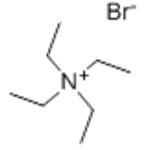
Tetraethylammonium bromide is a quaternary ammonium compound with the chemical formula C8H20N+Br−, often written as "Et4N+Br−" in the chemical literature. It has been used as the source of tetraethylammonium ions in pharmacological and physiological studies, but is also used in organic chemical synthesis.

Figure1: Picture of Tetraethylammonium bromide
Synthesis
Although Tetraethylammonium bromide is readily obtainable from commercial chemical suppliers, it can also be synthesized through a straightforward neutralization reaction in which Tetraethylammonium hydroxide is treated with hydrobromic acid. This reaction proceeds via the exchange of the hydroxide anion with the bromide anion, formally represented as Et₄N⁺OH⁻ + HBr → Et₄N⁺Br⁻ + H₂O, thereby yielding the desired quaternary ammonium salt. Following the completion of this neutralization, the resulting Tetraethylammonium bromide is recovered by evaporating the aqueous solvent under appropriate conditions, and the crude product is subsequently purified by recrystallization from acetonitrile, which affords Tetraethylammonium bromide as a high-purity crystalline solid suitable for further applications in organic synthesis and electrochemical studies. Thus, Tetraethylammonium bromide can be conveniently prepared in the laboratory with minimal experimental complexity, complementing its commercial availability.
Structure
The crystalline structure of Tetraethylammonium bromide has been successfully elucidated through X-ray diffraction analysis, and this structural investigation reveals that Tetraethylammonium bromide adopts a solid-state arrangement in which the four ethyl substituents attached to the central nitrogen atom are oriented in a manner that deviates from an ideal regular tetrahedron. Specifically, Tetraethylammonium bromide exhibits a distorted tetrahedral coordination environment around the quaternary nitrogen center, as evidenced by the observed bond angles and bond lengths among the carbon atoms that surround the nitrogen atom, indicating that although the overall geometry remains fundamentally tetrahedral, the presence of steric interactions and packing forces within the crystal lattice of Tetraethylammonium bromide leads to measurable distortions from perfect tetrahedral symmetry. Consequently, Tetraethylammonium bromide, in its crystalline form, displays this notable geometric feature, which distinguishes it from perfectly symmetric tetraalkylammonium salts and may have implications for its physicochemical behavior and intermolecular interactions in the solid state.
Synthetic applications
Tetraethylammonium bromide serves as an effective phase-transfer catalyst in the selective oxidation of organic sulfides to their corresponding sulfoxides, a transformation that is accomplished using o-iodoxybenzoic acid (IBX) as the oxidant in a biphasic chloroform/water system at ambient temperature; under these mild conditions, Tetraethylammonium bromide facilitates the reaction with exceptionally high product yields, as exemplified by the conversion of diethyl sulfide to diethyl sulfoxide. In addition to its catalytic role in sulfide oxidation, Tetraethylammonium bromide has also been employed in a different synthetic application, wherein it enables the in situ generation of tetraethylammonium superoxide from potassium superoxide, and this superoxide species, generated through the action of Tetraethylammonium bromide, is subsequently utilized for the conversion of primary alkyl halides into dialkyl peroxides, thereby demonstrating the versatility of Tetraethylammonium bromide as both a catalyst and a precursor for reactive intermediates in organic synthesis. Thus, Tetraethylammonium bromide proves to be a valuable reagent in diverse oxidation and substitution reactions, owing to its ability to mediate transformations under mild conditions while maintaining operational simplicity.
Biology
Like tetraethylammonium chloride and iodide, Tetraethylammonium bromide has been widely used as a source of tetraethylammonium ions in clinical and pharmacological studies, which are covered in greater detail under the tetraethylammonium entry. Briefly, Tetraethylammonium bromide was once clinically investigated for its ganglionic blocking properties, though it is now largely obsolete as a drug. Nonetheless, Tetraethylammonium bromide remains an important tool in physiological research, where it continues to be employed for its ability to block potassium channels in various tissues. Thus, while Tetraethylammonium bromide has lost its therapeutic relevance, it persists as a valuable reagent in experimental physiology.[1]
Toxicity
The toxicity of Tetraethylammonium bromide is largely attributable to its tetraethylammonium cation, a moiety that has been the subject of extensive toxicological investigation. In terms of acute toxicity, Tetraethylammonium bromide exhibits effects comparable to those of tetraethylammonium chloride and tetraethylammonium iodide. These comparative toxicity data, originally reported in studies by Randall and co workers, are presented here for reference, while further details can be found under the entry for Tetraethylammonium. Thus, Tetraethylammonium bromide shares a similar toxicity profile with other tetraethylammonium salts, consistent with its common cationic component.[2]
Reference
[1] Armstrong C M, Hille B. The inner quaternary ammonium ion receptor in potassium channels of the node of Ranvier[J]. The Journal of general physiology, 1972, 59(4): 388-400.
[2] Randall L O, Peterson W G, Lehmann G. The ganglionic blocking action of thiophanium derivatives[J]. The Journal of Pharmacology and Experimental Therapeutics, 1949, 97(1): 48-57.
- Related articles
- Related Questions
- Tetraethylammonium bromide: properties and toxicity Apr 7,2025
Tetraethylammonium bromide is a quaternary ammonium compound introduced into medical investigation as a vasodilator.

Researchers have publicly disclosed a novel application of Diallyl trisulfide in the field of food allergy, which falls within the technical scope of pharmaceutical and medical sciences.....
Sep 14,2026API
Sage oil is obtained by steam distillation from stems and leaves of Salvia officinalis, featuring herbaceous and camphor aroma, soluble in ethanol and vegetable oils.....
Sep 14,2026Plant extracts
Tetraethylammonium bromide
71-91-0You may like
Tetraethylammonium bromide manufacturers
- Tetraethylammonium bromide
-
- $5.00
- 2026-09-02
- CAS:71-91-0
- Min. Order: 1KG
- Purity: 99%
- Tetraethylammonium bromide
-
- $17.00
- 2026-08-12
- CAS:71-91-0
- Min. Order: 25KG
- Purity: 98%
- Supply Ability: 1-10mt
- Tetraethylammonium bromide
-

- $5.00
- 2026-05-28
- CAS:71-91-0
- Min. Order: 1KG
- Purity: 99%
- Supply Ability: 10000kg