


Chemicals reagents are commonly referred to as reagent. It is a large class of pure chemical substances with various standard purities and can be used for education, scientific research, analysis and testing as well as the functional materials and raw materials required by some kinds of novel industrial materials. There is a large variety of chemical reagents and the number has reached hundreds of thousands in the world. There are also tens of thousands of reagents that have been used in daily life in china. There is still no uniform international rules in the classification methods for chemicals. It is customary divided by subject and actual application. Take the representative catalog issued by the Germany E • Merck Company as example, there are twelve categories and seventy categories while in most countries, it is divided with the scope of application. We divide the reagents into four categories. 1. General reagents: generally refers to inorganic reagents and organic reagents that can meet standard purity. It is often applied to scientific research, analysis and testing, and synthetic reaction and used as new materials. 2. Analysis Reagents: regent dedicated to analysis and test and can be divided into two subcategories: (1) Reagents for chemical analysis: testing items for the chemical reaction analysis. 1) Baseline Reagent: pure compound directly used for the standard solution in the formulation and volumetric analysis. 2) Indicator: it can be used to indicate the end of the titration reagent and can be classified into pH indicator, redox indicator adsorption indicator, metal indicator, a fluorescent indicator, and so on. (2) Regents for instrument analysis: high-purity compounds dedicated to instrumental analysis. 1) Spectroscopically pure reagents: spectroscopically pure compound, often expressed in the SP for spectral analysis reagents. 2) Chromatography pure reagents: reagents dedicated to analysis of gas chromatography and liquid chrom
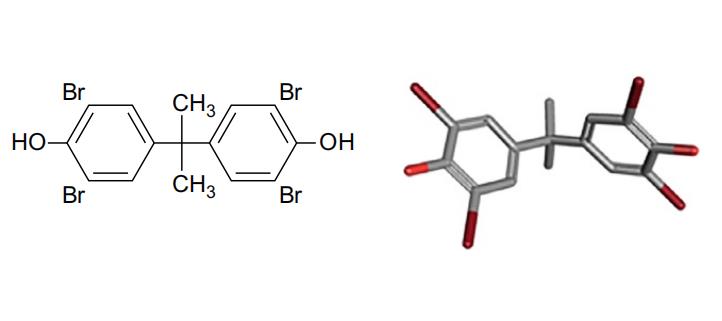
Usage and Action mechanisms of TBBPA
TBBPA, a brominated derivative of bisphenol A, is the highest-selling brominated flame retardant.
Jun 23,2022 Chemical Reagents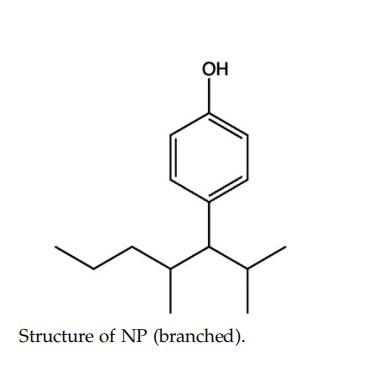
Production and Application of Nonylphenol
NP is a precursor of nonylphenol ethoxylates, which are widely used as industrial surfactants and in a variety of pesticides and consumer products.
Jun 21,2022 Chemical Reagents
The applications of carbon tetrabromidein organic synthesis
carbon tetrabromide (CBr4) is the simplest (tetrahedral) building element.
Jun 6,2022 Chemical Reagents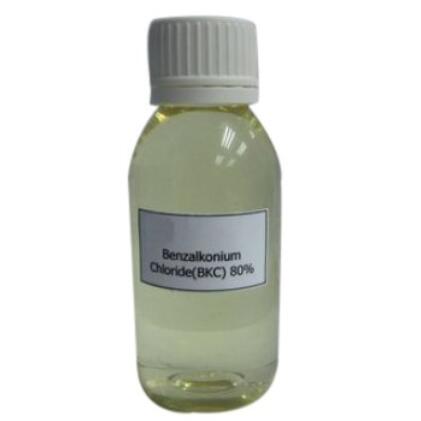
Uses and toxicity of Benzalkonium chloride
Benzalkonium chloride (BZK, BKC, BAK, BAC), also known as alkyldimethylbenzylammonium chloride (ADBAC) and by the trade name Zephiran,is a type of cationic surfactant.
May 11,2022 Chemical Reagents
Uses and health risk of Cyclopentane
?Cyclopentane is a highly flammable alicyclic hydrocarbon with chemical formula C5H10 and CAS number 287-92-3, consisting of a ring of five carbon atoms each bonded with two hydrogen atoms above and b
Apr 14,2022 Chemical Reagents
Adverse Reactions of Monobenzone
Monobenzone is a depigmenting agent. It works by increasing elimination of melanin (pigment molecules) from skin cells.
Apr 7,2022 Chemical Reagents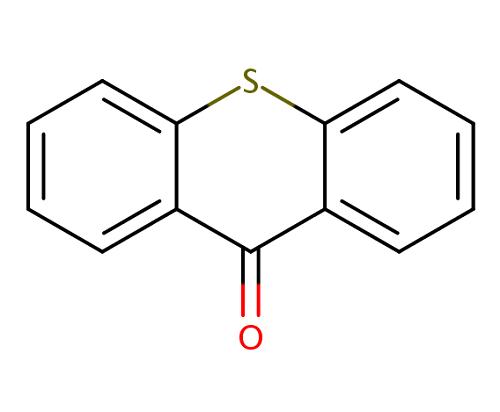
Uses of Thioxanthone
Thioxanthone is a heterocyclic compound that is a sulfur analog of xanthone.
Mar 23,2022 Chemical Reagents
Application of 2-Amino-5-chlorobenzophenone
2-amino-5-chlorobenzophenone crystal was grown using slow evaporation solution growth technique. From FT-IR and FT-RAMAN, the functional and vibrational frequencies of the grown crystals are assigned,
Mar 22,2022 Chemical Reagents
Uses and Synthesis of Meldrum’s acid
Meldrum’s acid has attracted considerable attention due to its high acidity (pKa = 4.97) and rigid cyclic structure. Acylated derivatives (synthetic equivalents of mixed ketenes) readily undergo alcoh
Mar 22,2022 Chemical Reagents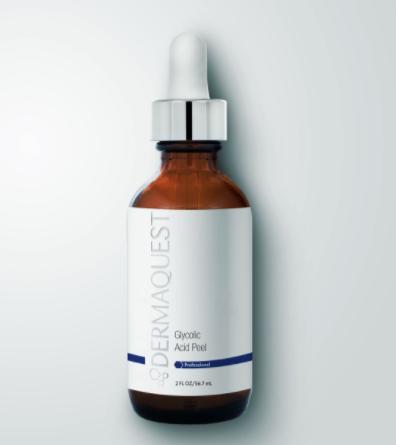
Efficacy of Glycolic acid
Glycolic acid is a water-soluble alpha hydroxy acid (AHA) made from sugar cane. It is one of the most widely used AHAs in skincare products.
Mar 9,2022 Chemical Reagents