


Inhibitor refers to substance that can hinder the chemical reactions, biological reactions (including immune response) and biological activity. In present time, commonly used inhibitors include immunosuppressants and inhibitors. 1. Immunosuppressive agents: immunosuppressants system refers to drug that can reduce the immune response. It can selectively suppress certain steps of the immune response and immune cells. Immune response refers to the body’s response to a variety of pathogenic substances. Some reactions are favorable to the body and can enhance the body's resistance to disease; some have adverse effects on the body and can cause tissue damage or disorders of physiological functions (allergy). Therefore, patients suffering from allergic reactions being harmful to the body should be subject to the treatment of immunosuppressant to affect the related immune processes and reduce the immune response of the body. For the treatment of various autoimmune diseases and weakening the tissue incompatibility, it has been developed of a variety of immunosuppressive agents, some of which have been widely used in clinical practice. Commonly used immunosuppressants include glucocorticoids (prednisone, prednisolone, etc.), alkylating agents (nitric oxide mustard, cyclophosphamide, thiotepa, busulfan, etc.), and antimetabolites (6- mercaptopurine, azathioprine, methotrexate, etc.). The mechanism of immunosuppressants, though not entirely clear, but is characterized by the following several aspects: ① most kinds of immunosuppressants can simultaneously inhibit cellular and humoral immunity and can be used for organ transplantation and autoimmune disease. ②Its inhibitory effect is strong for the primary immune response while the inhibitory effect against secondary response is weak. ③It can simultaneously act on normal and pathological immunity, therefore, can often lead to some complications. ④These drugs often have strong with serious adverse reactions. 2. Enzyme

Is telmisartan the same as losartan?
The most often prescribed ARBs are telmisartan and losartan. Both drugs are ARBs. However, they are different.
Jun 11,2024 Inhibitors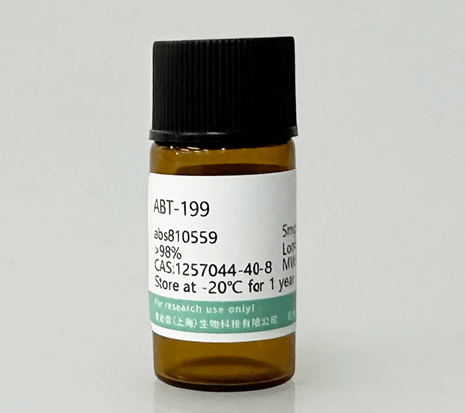
Mechanisms of resistance to ABT-199 in leukemia and lymphoma cell lines
ABT-199 (Venetoclax) is a potent, orally bioavailable, selective inhibitor of BCL-2. It is approved for the treatment of first-line and relapsed/refractory chronic lymphocytic leukaemia (CLL) and acut
Apr 2,2024 Inhibitors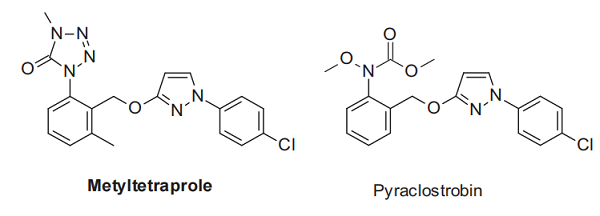
The introduction of Metyltetraprole
Metyltetraprole was announced by Sumitomo Chemical Company as a new fungicide in 2017 and is, just like fenpicoxamid and florylpicoxamid, an inhibitor of cytochrome bc1 (complex III of the fungal res
Feb 5,2024 Inhibitors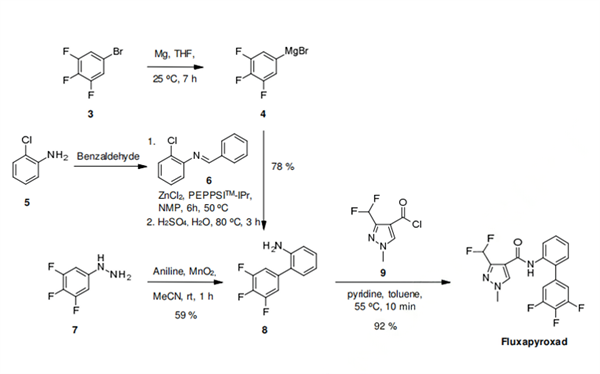
Fluxapyroxad: Synthesis and Introduction
A preparation of fluxapyroxad is likely to involve a metal catalyzed cross coupling reaction to produce the key aniline intermediate 8.
Jan 31,2024 Inhibitors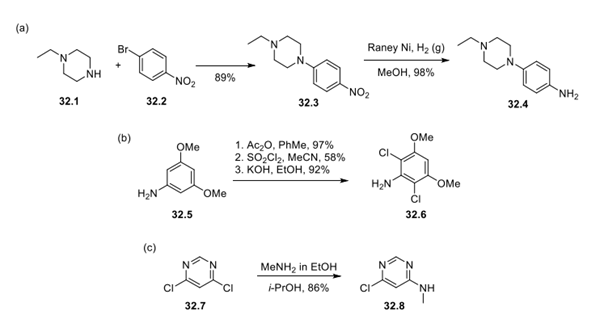
Infigratinib: Synthesis and Introduction
Infigratinib was synthesized in a modular and convergent fashion via the union of three building blocks.
Jan 29,2024 Inhibitors
How is Sotorasib synthesised?
The synthetic route of Sotorasib is completed in three steps, starting with the amidation of nicotinic acid derivatives to produce nicotinamide, obtaining acyl isomer purity 28.6 by classical resoluti
Jan 26,2024 Inhibitors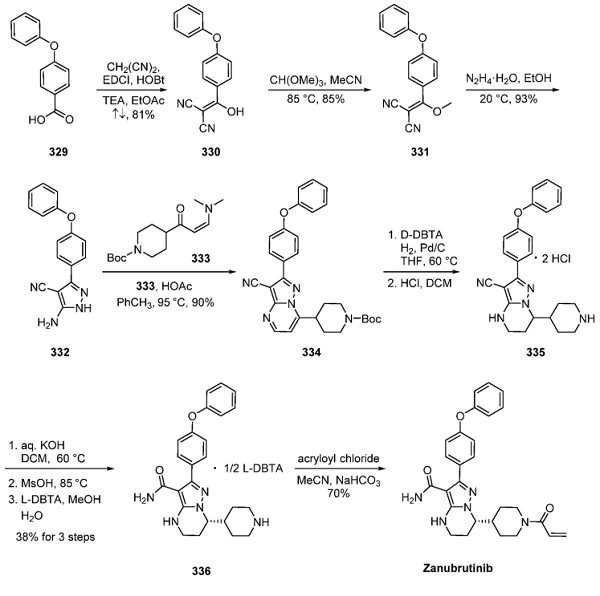
How to synthesize Zanubrutinib?
Zanubrutinib is a drug that was shown to effectively treat cancer of B cells without causing severe excessive side effects.
Jan 25,2024 Inhibitors
Mobocertinib: Synthesis and Introduction
Mobocertinib was approved as the first treatment for NSCLC with epidermal growth factor receptor (EGFR) exon 20 insertion mutations in patients whose disease has progressed after platinum-based chemot
Jan 25,2024 Inhibitors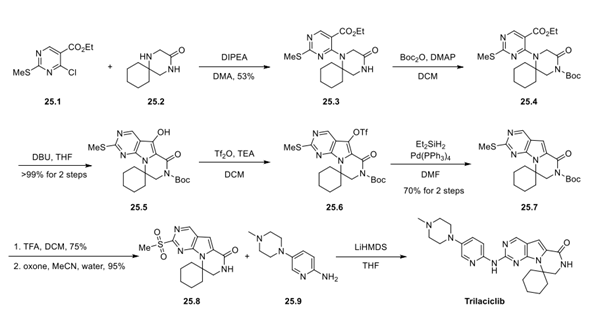
Trilaciclib: Synthesis and Introduction
Trilaciclib is an intravenously administered, short-acting inhibitor of cyclin-dependent kinases (CDKs) 4 and 6 used in combination with small-cell lung cancer and other cancer chemotherapy treatments
Jan 25,2024 Inhibitors
How is Marilixibat Chloride synthesised?
Marilixibat Chloride was synthesised by the reaction of two intermediate compounds with diethyl dibutylmalonate as the starting material.
Jan 24,2024 Inhibitors