


Inhibitor refers to substance that can hinder the chemical reactions, biological reactions (including immune response) and biological activity. In present time, commonly used inhibitors include immunosuppressants and inhibitors. 1. Immunosuppressive agents: immunosuppressants system refers to drug that can reduce the immune response. It can selectively suppress certain steps of the immune response and immune cells. Immune response refers to the body’s response to a variety of pathogenic substances. Some reactions are favorable to the body and can enhance the body's resistance to disease; some have adverse effects on the body and can cause tissue damage or disorders of physiological functions (allergy). Therefore, patients suffering from allergic reactions being harmful to the body should be subject to the treatment of immunosuppressant to affect the related immune processes and reduce the immune response of the body. For the treatment of various autoimmune diseases and weakening the tissue incompatibility, it has been developed of a variety of immunosuppressive agents, some of which have been widely used in clinical practice. Commonly used immunosuppressants include glucocorticoids (prednisone, prednisolone, etc.), alkylating agents (nitric oxide mustard, cyclophosphamide, thiotepa, busulfan, etc.), and antimetabolites (6- mercaptopurine, azathioprine, methotrexate, etc.). The mechanism of immunosuppressants, though not entirely clear, but is characterized by the following several aspects: ① most kinds of immunosuppressants can simultaneously inhibit cellular and humoral immunity and can be used for organ transplantation and autoimmune disease. ②Its inhibitory effect is strong for the primary immune response while the inhibitory effect against secondary response is weak. ③It can simultaneously act on normal and pathological immunity, therefore, can often lead to some complications. ④These drugs often have strong with serious adverse reactions. 2. Enzyme
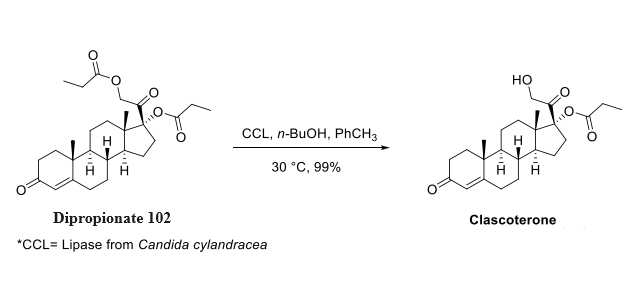
Clascoterone: Introduction and Synthesis
Clascoterone (cortexolone 17α-proprionate), a novel androgen receptor inhibitor, obtained its first approval by the USFDA in August 2020.
Dec 25,2023 Inhibitors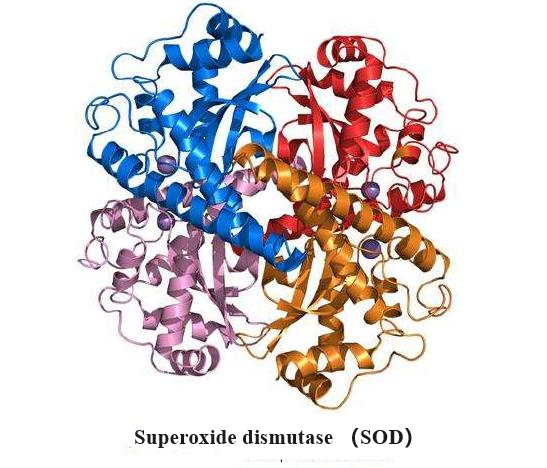
Therapeutic potentials of superoxide dismutase
Superoxide dismutases (SODs) constitute a very important antioxidant defense against oxidative stress in the body. The enzyme acts as a good therapeutic agent against reactive oxygen species-mediated
Dec 22,2023 Inhibitors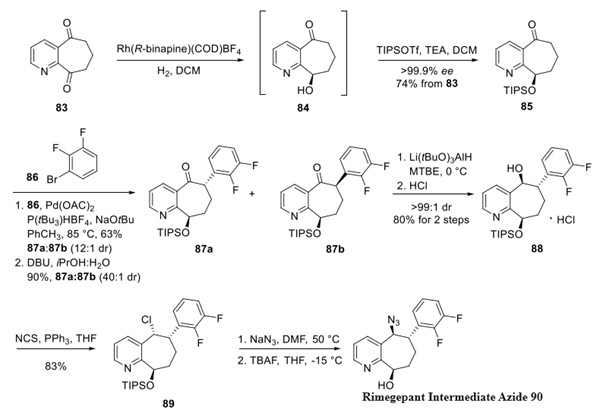
Synthesis of Rimegepant Sulfate
Rimegepant Sulfate is prepared by combining the intermediate compounds Azide and p-nitrocarbamate to form a carbamate intermediate, which is finally crystallised by the addition of warm sulfuric acid.
Dec 22,2023 Inhibitors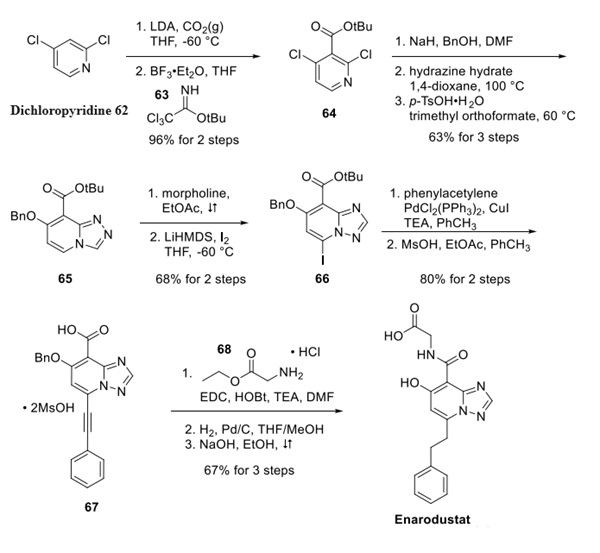
Synthesis of Enarodustat(JTZ-951)
Enarodustat is synthesised using Dichloropyridine as a raw material through the reactions of lipo-conversion, substitution, rearrangement, coupling and hydrolysis.
Dec 22,2023 Inhibitors
Synthesis of Daprodustat
Daprodustat is synthesised using malonic acid as a raw material by Biginelli reaction, saponification and other reactions.
Dec 21,2023 Inhibitors
Synthesis of Centhaquine Citrate
Centhaquine Citrate is synthesised by the reaction of Styrenyl quinoline and d piperazine.
Dec 21,2023 Inhibitors
How is Remdesivir synthesised?
Remdesivir is synthesised using ribonolactone as a raw material through reactions in the presence of a pre-drug coupling partner (P-Stereogenic Prodrug Coupling Partner).
Dec 21,2023 Inhibitors
The Synthetic method of Danoprevir
Danoprevir is an orally administered hepatitis C virus (HCV) NS3 protease inhibitor and recently approved in China for the treatment of newly diagnosed patients with non-cirrhotic genotype 1b chronic
Dec 20,2023 Inhibitors
Bictegravir: a novel integrase strand transfer inhibitor
Bictegravir is a novel integrase strand transfer inhibitor (INSTI) developed by Gilead Sciences as a treatment for HIV-1 infection.
Dec 20,2023 Inhibitors
Synthesis of Ravidasvir Hydrochloride
Ravidasvir Hydrochloride is synthesised using 2-Bromonaphthalene as a raw material by chemical reaction.
Dec 20,2023 Inhibitors