28289-54-5
中文名称
1-甲基-4-苯基-1,2,3,6-四氢吡啶
英文名称
1-Methyl-4-phenyl-1,2,3,6-tetrahydropyridine
CAS
28289-54-5
分子式
C12H15N
分子量
173.25
MOL 文件
28289-54-5.mol
更新日期
2026/01/19 12:59:08
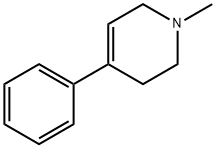 28289-54-5 结构式

基本信息
中文别名
1-甲基-4-苯基-1,2,3,6-四氢吡啶 英文别名
MPTPNSC 139654
1-METHYL-4-PHENYL-PIPERIDINE-3-EN
1-Methyl-4-phenyl-1,2,3,6-tetrahydropyridin
1,2,3,6-tetrahydro-1-methyl-4-phenylpyridine
1,2,3,6-tetrahydro-1-methyl-4-phenyl-pyridin
1-METHYL-4-PHENYL-1,2,3,6-TETRAHYDROXPYRIDINE
1-METHYL-4-PHENYL-1,2,3,6-TETRAHYDRO-PYRIDINE
N-METHYL-4-PHENYL-1,2,3,6-TETRAHYDRO-PYRIDINE
Pyridine,1,2,3,6-tetrahydro-1-methyl-4-phenyl-
所属类别
医药中间体:吡啶衍生物物理化学性质
熔点aprox. 36°C
沸点128-132 °C12 mm Hg(lit.)
密度1.001±0.06 g/cm3(Predicted)
储存条件-20°C冷冻
溶解度Chloroform (Slightly), Dichloromethane (Slightly), Ethyl Acetate (Slightly)
酸度系数(pKa)8.66±0.40(Predicted)
形态Solid
颜色Pale Yellow to Light Yellow
Merck13,6319
稳定性稳定的。与强氧化剂不相容。
安全数据


警示词危险
危险性描述H370-H301
危险品标志T
危险类别码25-39/23/24/25
安全说明45
危险品运输编号UN 2811 6.1/PG 2
WGK Germany3
RTECS号UT8358900
危险等级6.1(b)
包装类别III
毒性Human toxicity
originally discovered when it was an unexpected by-product
from the illicit synthesis of a heroin substitute (i.e., meperidine
analog). Currently used experimentally as the primary animal
model for the study of Parkinson’s disease. MPTP is a neurotoxicant
that is activated to 1-methyl-4-phenylpyridinium ion
(MPP1) by the actions of monoamine oxidase B located in the
mitochondria of brain astrocytes. The MPP1 is then transported
into dopamine, and to a lesser extent, other monoaminergic
neurons. Once inside these dopamine neurons in the
substantia nigra, it destroys these neurons by mechanisms that
may involve an oxidative cascade and/or inhibition of electron
transport. Intoxication causes a parkinsonism syndrome almost
identical in signs and symptoms to Parkinson’s disease, including
rigidity, bradykinesia, tremor, and postural instability. In
the event of known ingestion, immediate (but not delayed)
administration of a monoamine oxidase inhibitor (especially
one selective for MAO-B like deprenyl) and dopamine uptake
inhibitor can be therapeutic.