cholecystokinin N-acetyl fragment 26-31 amide,non-sulfated manufacturers
|
| | cholecystokinin N-acetyl fragment 26-31 amide,non-sulfated Basic information |
| Product Name: | cholecystokinin N-acetyl fragment 26-31 amide,non-sulfated | | Synonyms: | cholecystokinin N-acetyl fragment 26-31 amide,non-sulfated;CCK (26-31) (non-sulfated);L-Methioninamide, N-acetyl-L-α-aspartyl-L-tyrosyl-L-methionylglycyl-L-tryptophyl- (9CI);N-acetyl-L-α-aspartyl-L-tyrosyl-L-methionylglycyl-L-tryptophyl-L-methioninamide | | CAS: | 89911-64-8 | | MF: | C38H50N8O10S2 | | MW: | 842.98 | | EINECS: | | | Product Categories: | | | Mol File: | 89911-64-8.mol | 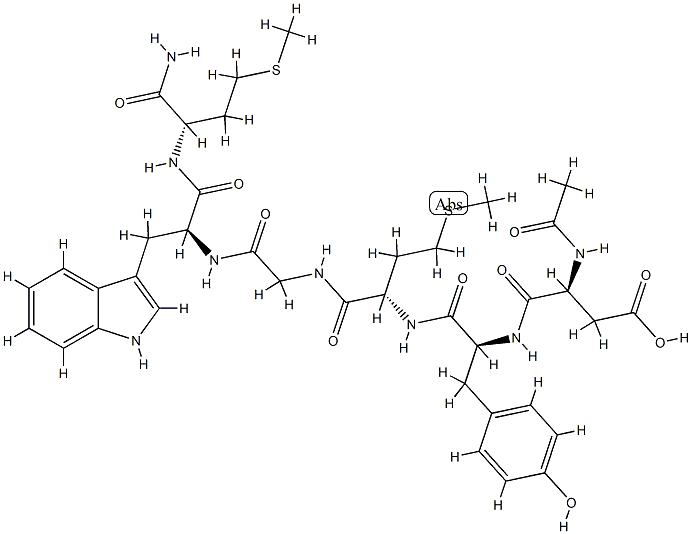 |
| | cholecystokinin N-acetyl fragment 26-31 amide,non-sulfated Chemical Properties |
| storage temp. | Store at -20°C | | solubility | Formic Acid: 1 mg/ml | | form | A lyophilized powder |
| | cholecystokinin N-acetyl fragment 26-31 amide,non-sulfated Usage And Synthesis |
| Description | CCK (26-31) is an N-terminal fragment of CCK , a peptide hormone found in the intestine and brain that stimulates digestion, mediates satiety, and is involved in anxiety.1,2 | | Uses | CCK (26-31) (non-sulfated) is the N-terminal fragment of CCK, a peptide hormone found in the gut and brain that stimulates digestion, regulates satiety, and is associated with anxiety. CCK (26-31) is also less active in non-sulfated than in sulfated form[1]. | | References | 1. Raybould, H.E., and Lloyd, K.C. Integration of postprandial function in the proximal gastrointestinal tract. Role of CCK and sensory pathways Ann. N. Y. Acad. Sci. 713(1),143-156(1994).
2. Ondetti, M.A., Pluec, J., Sabo, E.F., et al. Synthesis of cholecystokinin-pancreozymin. I. The C-terminal dodecapeptide J. Am. Chem. Soc. 92(1),195-199(1970). |
| | cholecystokinin N-acetyl fragment 26-31 amide,non-sulfated Preparation Products And Raw materials |
|