- Pyridaben
-

- $42.00
-
2026-07-15
- CAS:96489-71-3
- Purity: 99.06%
- Supply Ability: 10g
- Pyridaben
-
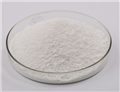
- $3.00
-
2026-07-14
- CAS:96489-71-3
- Min. Order: 1box
- Purity: 99%
- Supply Ability: 20tons per month
- Pyridaben
-
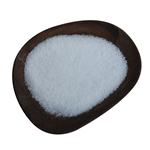
- $10.00
-
2026-03-20
- CAS:96489-71-3
- Min. Order: 1KG
- Purity: 99%
- Supply Ability: 10 mt
|
| | Pyridaben Chemical Properties |
| Melting point | 111-112° | | Boiling point | 429.9±55.0 °C(Predicted) | | density | 1.2 g/cm3 | | storage temp. | 0-6°C | | solubility | Chloroform: Slightly Soluble | | form | Solid | | pka | -2.69±0.20(Predicted) | | color | Off-white to light yellow | | Merck | 13,8057 | | BRN | 7933972 | | Henry's Law Constant | 2.1×10⁻¹ mol/(m3Pa) at 25℃, HSDB (2015) | | Major Application | agriculture
environmental | | InChI | InChI=1S/C19H25ClN2OS/c1-18(2,3)14-9-7-13(8-10-14)12-24-15-11-21-22(19(4,5)6)17(23)16(15)20/h7-11H,12H2,1-6H3 | | InChIKey | DWFZBUWUXWZWKD-UHFFFAOYSA-N | | SMILES | C1(=O)N(C(C)(C)C)N=CC(SCC2=CC=C(C(C)(C)C)C=C2)=C1Cl | | LogP | 6.370 | | CAS DataBase Reference | 96489-71-3(CAS DataBase Reference) | | NIST Chemistry Reference | Pyridaben(96489-71-3) | | EPA Substance Registry System | Pyridaben (96489-71-3) |
| Hazard Codes | T;N,N,T | | Risk Statements | 23/25-50/53 | | Safety Statements | 36/37-45-60-61 | | RIDADR | UN 3077 | | WGK Germany | 3 | | RTECS | UR6149000 | | HazardClass | 6.1(a) | | PackingGroup | II | | Storage Class | 6.1C - Combustible acute toxic Cat.3
toxic compounds or compounds which causing chronic effects | | Hazard Classifications | Acute Tox. 3 Inhalation
Acute Tox. 3 Oral
Aquatic Acute 1
Aquatic Chronic 1 | | Hazardous Substances Data | 96489-71-3(Hazardous Substances Data) | | Toxicity | LD50 in male, female rats, bobwhite quail, mallard ducks (mg/kg): 435, 358, >2250, >2500 orally (Hirata); LD50 in male, female rabbits (mg/kg): >2000, >2000 dermally (Hirata) |
| | Pyridaben Usage And Synthesis |
| Uses | Pyridaben (NC-129, BAS 3001) is widely used as an acaricide with a long residual action and as an insecticide mainly against sucking insects. Trade names include Nexter, Oracle, Poseidon, Pyramite, Sanmite, and Starling.
| | Acute Toxicity | Pyridaben shows moderate to low acute toxicity to mammals. The intraperitoneal LDso was 68 mg/kg in male rats (Igarashi and Sakamoto, 1994). The dermal toxicity is low but toxicity by the inhalation route is quite high. With sublethal doses in mice and rats, clinical signs included decreased food consumption, diarrhea, hypothermia, bradycardia, bradypnea, decreased spontaneous motor activity, abnormal gait, prostration, eye closing, amd piloerection. At near lethal or lethal doses (300 mg/kg or more) depression of the central nervous and cardiovascular systems were stronger, but no change occurred in motor functions, including coordination, muscle strength, and neuromuscular transmission, or in sensory functions. Early gastric lavage was effective in presenting poisoning in rats and loperamide was efficacious in reducing the diarrhea that occurred at low doses.
| | Carcinogenicity | Pyridaben was not oncogenic in typical lifetime feeding studies in the rat and mouse. It is classified by the U.S. Environmental Protection Agency as a Group E compound (no evidence for carcinogenicity to humans).
| | Neurotoxicity | Pyridaben caused only a low degree of acute neurotoxicity in a standard battery of neurobehavioral tests when given at a single oral dose of 200 mg/kg in males. Effects included piloerection, hypoactiviy, tremors, and lowered body temperature, but these were sporadic and transient. In a longer term (90 day) study in rats, no neurotoxicity or neuropathology was seen at oral doses up to 27 mg/kg/day, but plasma cholinesterase activity was reduced in females.
| | Environmental Fate and Toxicity | Pyridaben has a low acute toxicity to birds, but it is extremely toxic to aquatic species. Its persistence in soil is relatively brief due to rapid microbial degradation (e.g., the half-life under aerobic conditions is reported to be less than 3 weeks). In natural water in the dark, the half-life is about 10 days, due mainly to microbial action since pyridaben is stable to hydrolysis over the pH range 5-9. The half-life including aqueous photolysis is about 30 min at pH 7 (Tomlin, 2000).
| | Description | Pyridaben is an insecticide and acaricide. It has a low aqueous solubility, relatively volatile and, based on its chemical properties, is not expected to leach to groundwater. It tends not to persist in soils or water systems. It is moderately toxic to mammals and not expected to bioaccumulate. It is highly toxic to most aquatic organisms and honeybees but less so to earthworms and birds. | | Chemical Properties | White to tan crystalline solid or powder.
Faint vanilla odor. Commercial product is available as an
emulsifiable concentrate or wettable powder. | | Chemical Properties | Beige Solid | | Uses | Pyridaben is a pyridazinone derivative used as an acaricide. | | Definition | ChEBI: Pyridaben is a pyridazinone, an organochlorine insecticide and an organochlorine acaricide. It has a role as a mitochondrial NADH:ubiquinone reductase inhibitor. | | Agricultural Uses | Insecticide, Acaricide: Used to control mites, whiteflies, leafhoppers and psyllids on fruit trees, vegetables, ornamentals and other field crops. Pyramite is a selective contact miticide/insecticide that controls pests in apple, grapes, pear, pistachio, stone fruits, and the tree nuts group[83]. | | Trade name | BAS®-300; NCI®-129; NESTER®; PYRAMITE®; SANMITE® | | Mechanism of action | Non-systemic with rapid knock down action and long residual activity. Mitochondrial complex I electron transport inhibitor. | | Synthesis | A new method for synthesizing pyridaben, which is a one-step method for synthesizing pyridaben by using α-carbonyl dithioketene compounds and dichloropyridazinone through nucleophilic substitution reaction.
| | Potential Exposure | Pyridaben is a pyridazinone insecti-
cide/acaricide/miticide used to control mites, whiteflies,
leafhoppers and psyllids on fruit trees, vegetables, orna-
mentals and other field crops. It is also used to control
pests in apple, grapes, pear, pistachio, stone fruits, and the
tree nuts group . | | Shipping | UN2588 Pesticides, solid, toxic, Hazard Class:
6.1; Labels: 6.1-Poisonous materials, Technical Name
Required. UN2902 Pesticides, liquid, toxic. UN2902
Pesticides, liquid, toxic, n.o.s., Hazard Class: 6.1; Labels:
6.1-Poisonous materials, Technical Name Required. | | Incompatibilities | Dust may form explosive mixture with
air. Incompatible with oxidizers (chlorates, nitrates, perox-
ides, permanganates, perchlorates, chlorine, bromine, fluo-
rine, etc.); contact may cause fires or explosions. Keep
away from alkaline materials, strong bases, strong acids,
oxoacids, epoxides. | | Waste Disposal | It is the responsibility
of chemical waste generators to determine the toxicity and
physical properties and of a discarded chemical and to
properly identify its classification and certification as a haz-
ardous waste and to determine the disposal method. United
States Environmental Protection Agency guidelines for the
classification determination are listed in 40 CFR Parts
261.3. Additionally, waste generators must consult and
follow all regional, national, state and local hazardous
waste laws to ensure complete and accurate classification
and disposal methods. Follow recommendations for the
disposal of pesticides and pesticide containers. Containers must be disposed of properly by following package
label directions or by contacting your local or federal
environmental control agency, or by contacting your
regional EPA office. | | Pesticide Type | Insecticide; Acaricide |
| | Pyridaben Preparation Products And Raw materials |
|