- Ammonium alginate
-

-
2026-09-30
- CAS:9005-34-9
- Min. Order: 25KG
- Purity: 99%
- Supply Ability: 10000kgs
- AMMONIUM ALGINATE
-
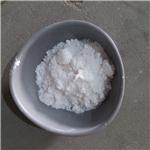
-
2025-06-27
- CAS:9005-34-9
- Min. Order: 1KG
- Purity: 99%
- Supply Ability: 500000kg
- AMMONIUM ALGINATE
-
- $1.00
-
2020-01-08
- CAS:9005-34-9
- Min. Order: 1KG
- Purity: 98%-99.9%
- Supply Ability: 200KG
|
| | AMMONIUM ALGINATE Basic information |
| Product Name: | AMMONIUM ALGINATE | | Synonyms: | ammoniumpolymannurate;analgine;callatex;collatexarmextra;digamon;protomon;ALGINIC ACID AMMONIUM SALT;AMMONIUM ALGINATE | | CAS: | 9005-34-9 | | MF: | C13H16N3NaO4S | | MW: | 333.33861 | | EINECS: | | | Product Categories: | | | Mol File: | 9005-34-9.mol |  |
| | AMMONIUM ALGINATE Chemical Properties |
| | AMMONIUM ALGINATE Usage And Synthesis |
| Chemical Properties | Ammonium alginate occurs as white to yellowish brown filamentous,
grainy, granular, or powdered forms. | | Chemical Properties | Filamentous, grainy, granular or pow- der, colorless or slightly yellow, may have a slight characteristic smell and taste. Slowly soluble in water forming a viscous solution. Insoluble in alcohol. | | Uses | Ammonium Alginate is a gum that is the ammonium salt of alginic
acid. it is cold water soluble and forms viscous solutions. it func-
tions as a stabilizer and thickener and its uses include bakery fill-
ings, gravies, and toppings. | | Pharmaceutical Applications | Ammonium alginate is widely used in foods as a stabilizer, thickener
and emulsifier. It is also used in pharmaceutical preparations as a
color-diluent, emulsifier, film-former, and humectant. | | Safety Profile | When heated to decompositionemits toxic fumes of NOx. | | Safety | Ammonium alginate is widely used in cosmetics and food products,
and also in pharmaceutical formulations such as tablets. It is
generally regarded as a nontoxic and nonirritant material, although
excessive oral consumption may be harmful. | | Synthesis | Alginate is refined from brown seaweed. A wide variety of brown seaweeds from the phylum Phaeophyceae are harvested around the world to be converted into the raw material commonly known as sodium alginate. Sodium alginate is used in a wide range of applications in the food, textile, dyeing and pharmaceutical sectors. Dental impression materials utilize alginate as a means of gelling. Alginate is both food and skin safe.
Based on pigmentation, seaweeds are categorized into three broad groups: brown, red, and green. These broad groups are Phaeophyceae, Rhodophyceae, and Chlorophyceae. brown seaweeds are usually larger, ranging from giant seaweed eels that are often 20 meters long to thick leathery-like seaweeds that are 2-4 meters long, and smaller species that are 30-60 centimeters long. The usual seaweeds produced by alginate cannot be cultivated. They cannot be grown by vegetative means, but must undergo a reproductive cycle involving alternating generations. This makes cultivated brown seaweeds too expensive compared to the cost of harvesting and transporting wild seaweeds. The only exception is edible aria japonica grown in China, but excess material is diverted to the alginate industry in China.
Alginates from different species of brown algae often have variations in their chemical structure that result in different physical properties. For example, some may produce an alginate that produces a strong gel and another that is a weaker gel; some may readily produce a creamy/white alginate while others are difficult to gel and are best suited for technical applications where color is not important.
| | storage | Ammonium alginate is a hygroscopic material, although it is stable
if stored at low relative humidities and cool temperatures. | | Incompatibilities | Incompatible with oxidizing agents and strong acids and alkalis. | | Regulatory Status | GRAS listed. Accepted in Europe for use as a food additive.
Included in the FDA Inactive Ingredients Database (oral, tablets). |
| | AMMONIUM ALGINATE Preparation Products And Raw materials |
|