


Inorganic chemicals is the shortened form of inorganic chemical industry and is an important branch of the chemical industry with natural resources and industrial by-products as raw materials for the production of sulfuric acid, nitric acid, hydrochloric acid, phosphoric acid, soda ash, caustic soda, synthetic ammonia, fertilizer and inorganic salts, etc. This includes sulfuric acid industry, soda industry, the chloro-alkali industry, synthetic ammonia industry, fertilizer industry and mineral industry. Its broad definition also includes the production of inorganic non-metallic materials and fine inorganic product such as ceramics and inorganic pigment. The main raw material of inorganic chemical products are mineral product including sulfur, sodium, phosphorus, potassium and calcium and coal, oil, gas, and air, water and so on. Inorganic chemicals can be traced back to the ancient process of ceramics, alchemy, brewing, dyeing at thousands of years ago. Although with small scale, backward technology and pure manual manipulation, but it is the prototype of inorganic chemicals. For thousands of years, due to the low productivity, it gets slow development. Until the 18th century, it had developed rapidly. In the middle of 18th century, Britain had first applied lead chamber method using saltpeter and sulfur as raw materials to produce sulfuric acid. In 1783, Lu Bulan (France) proposed the soda method using sodium chloride, sulfuric acid, coal as raw materials. In the latter half of the 18th century, the modern chemical industry taking inorganic chemical industry as the main content had began to emerge. In 1841, people began the production of phosphate fertilizer; In 1965 Belgian Solvay realized the industrialization of ammonia soda for production of soda; with the rise of preparing potassium industry in 1870; In 1890, people began to use electrolytic approach for making Cl2 and caustic soda; In 1913, people had achieved the catalytic synthesis

Titanium dioxide Crystal
The space lattice of TiO2 belongs to the tetragonal system, and its rutile-type structure has lattice constants of a=0.459373 nm and c=0.295812 nm (25℃).
Nov 21,2023 Inorganic chemistryTitanium Crystal
Titanium Ti takes two types of crystal systems, the a-type (low temperature type) and the b-type (the high temperature type is stable above 882℃).
Nov 21,2023 Inorganic chemistry
Tin Crystal
A tin is called gray tin and has the property of the semiconductor with the diamond structure of a lattice constant of a=0.649 nm and atomic distance 0.28 nm.
Nov 21,2023 Inorganic chemistry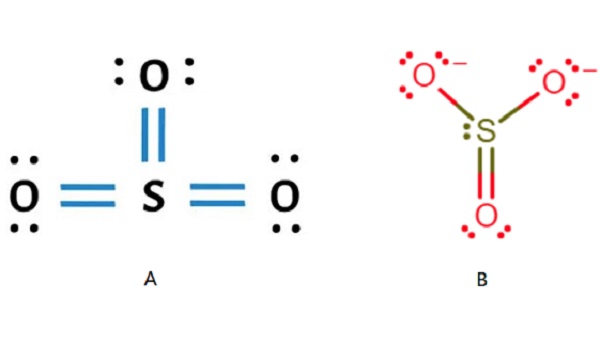
The Lewis structure of Sulfur trioxide
Sulfur trioxide is not only environmentally harmful but also highly corrosive and poses a significant threat to the safe operation of coal-fired power plants.
Nov 17,2023 Inorganic chemistry
The Lewis structure of CH4
Methane is the simplest hydrocarbon in the organic molecule and a naturally occurring gas relatively abundant on the Earth.
Nov 15,2023 Inorganic chemistry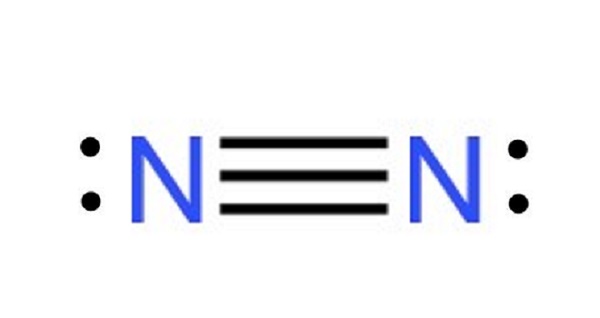
Nitrogen: importance and Lewis structure
The Lewis structure of N2 can be visualized as N≡N, with each nitrogen atom having one lone pair.
Nov 14,2023 Inorganic chemistry
The Lewis structure and Molecular geometry of H2O
Water has the molecular formula H2O. Lewis structure of water molecule contains two single bonds around oxygen atom
Nov 14,2023 Inorganic chemistry
How do we determine the Lewis structure for the NH3 molecule?
Ammonia is directly or indirectly the precursor to most nitrogen-containing compounds. Determining the Lewis structure for the NH3 is essential.
Nov 13,2023 Inorganic chemistry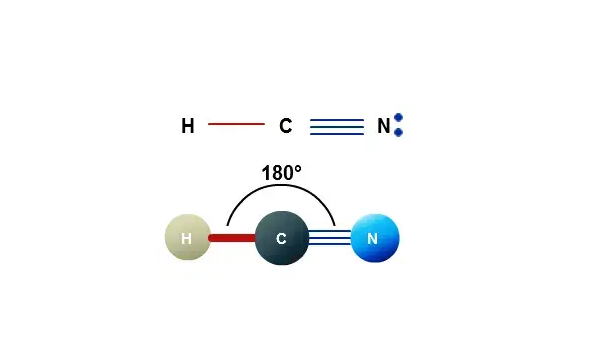
Drawing of the HCN Lewis structure
The HCN Lewis structure consists of three atoms: hydrogen, carbon and nitrogen.
Nov 9,2023 Inorganic chemistry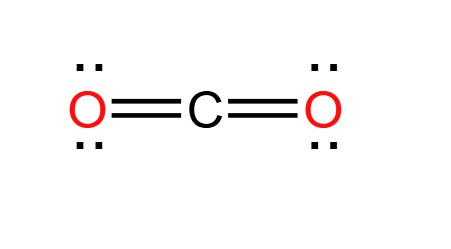
The Lewis structure of Carbon dioxide
The carbon-oxygen ratio in a CO2 molecule is 1:2. Two double bonds connect the carbon and oxygen atoms in the Lewis structure.
Nov 8,2023 Inorganic chemistry