


From early AD to mid-19 century, people mainly use the natural organic substance (such as animal and plant extracts) for qualitative analysis or quantitative analysis. From the second half of the 19th century to the 1920s, it had begun to appear of artificially synthetic organic reagent such as using potassium acetate xanthan for test of nickel, copper, and molybdenum; using morin for test of aluminum; using diazo coupling reaction for the detection of Nitrite; using α-β-nitroso naphthol for detection of cobalt; using dimethyglyoxime for nickel test. After the proposal of the special-effects group in the 1930s and the proposal of theoretical analysis of functional groups theory in 1950s, people had carried out large-scale screen of organic reagents in search of special-effects analysis groups for different ions and had successfully synthesized a lot of agents of practical value (such as copper reagents, new copper agent, cadmium reagents, beryllium reagent, thorium reagents, etc.). Before the 1950s, the complex compound, in analytic chemistry, is mainly used in the aspects of the precipitation reaction of a binary chelate for the qualitative detection, precipitate isolation and gravimetric separation and other aspects. In the early 1950s and 1960, it is mainly in the form of complexometric titration. From the beginning of the late 1960s, the main focus has been moved to the photometric analysis. Meanwhile, it has been also developed of chelate organic solvent extraction.

The role of fluorination
The introduction of fluorine into organic molecules uniquely affects the properties of the derived compounds due to the atom's small size, which is comparable to hydrogen, high electronegativity.
Jan 25,2024 Organic reagents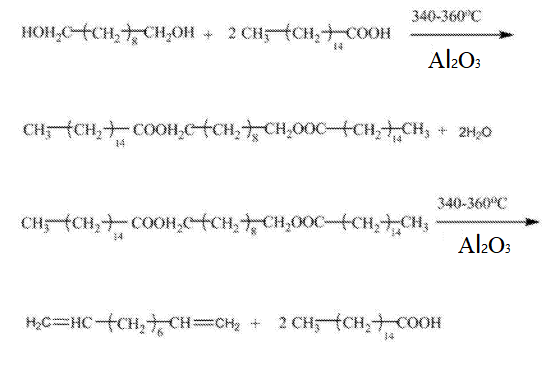
The synthesis method of 1,9-Decadiene
1,9-decadiene has a molecular formula C10H18, and sterling is a colorless liquid. This compound is widely used in organic synthesis as an important organic intermediate.
Jan 24,2024 Organic reagents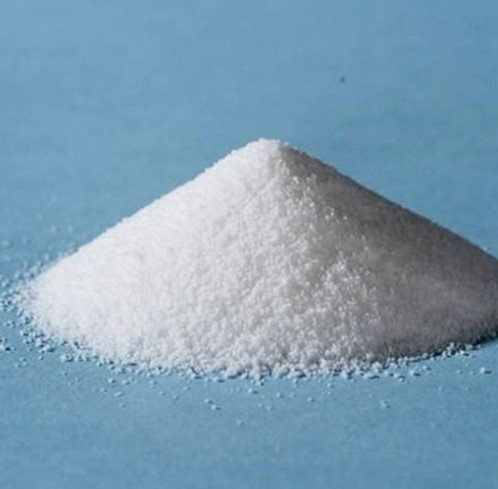
What is the relationship between oxalic acid and oxalic acid dihydrate?
Oxalic acid has two forms. One is only oxalic acid, and the other has crystallization watern. The one with no crystallization water is called oxalic acid or anhydrous oxalic acid.
Jan 24,2024 Organic reagents
How to synthesize Trimethyl phosphonoacetate?
Phosphoryl 3-acetic acid methyl ester is a kind of chemical substance also known as phosphine acyl acetic acid trimethyl or Trimethyl phosphonoacetate, and its molecular formula is C5H11O5P.
Jan 23,2024 Organic reagents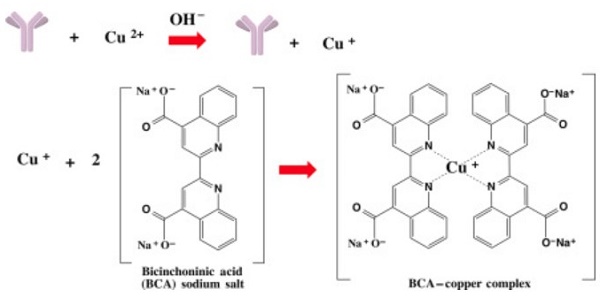
What is Bicinchoninic Acid Protein Assay?
Bicinchoninic acid (BCA; 2,2'-Bicinchoninic Acid) assay or Smith assay is a copper-based colorimetric assay for total protein quantification.
Jan 19,2024 Organic reagents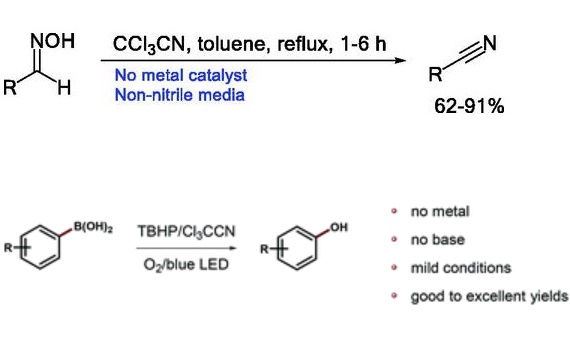
The research on the toxicity of Trichloroacetonitrile
Trichloroacetonitrile is used as an intermediate in insecticides, pesticides, and dyes.
Jan 11,2024 Organic reagents
How to prepare ACES Buffer
ACES is a zwitterionic buffer used in biochemistry and molecular biology research.
Jan 10,2024 Organic reagents
The uses of Octadecanethiol
Octadecanethiol (ODT) is an alkanethiol with a long carbon chain mainly used as a self-assembled monolayer (SAM) for surface modification of a wide range of materials.
Jan 10,2024 Organic reagents
Summary of fluoroiodomethane uses
Fluoroiodomethane (CH2FI) has emerged as an easy-to-handle, non-ozone-depleting agent and readily available platform for monofluoromethylation strategies.
Jan 9,2024 Organic reagents
A moderate polar aprotic solvent-Tetrahydrofuran
Tetrahydrofuran is a moderate polar aprotic solvent. THF has a moderate polarity thanks to the electronegativity difference between the oxygen and the carbon atoms.
Jan 4,2024 Organic reagents