


From early AD to mid-19 century, people mainly use the natural organic substance (such as animal and plant extracts) for qualitative analysis or quantitative analysis. From the second half of the 19th century to the 1920s, it had begun to appear of artificially synthetic organic reagent such as using potassium acetate xanthan for test of nickel, copper, and molybdenum; using morin for test of aluminum; using diazo coupling reaction for the detection of Nitrite; using α-β-nitroso naphthol for detection of cobalt; using dimethyglyoxime for nickel test. After the proposal of the special-effects group in the 1930s and the proposal of theoretical analysis of functional groups theory in 1950s, people had carried out large-scale screen of organic reagents in search of special-effects analysis groups for different ions and had successfully synthesized a lot of agents of practical value (such as copper reagents, new copper agent, cadmium reagents, beryllium reagent, thorium reagents, etc.). Before the 1950s, the complex compound, in analytic chemistry, is mainly used in the aspects of the precipitation reaction of a binary chelate for the qualitative detection, precipitate isolation and gravimetric separation and other aspects. In the early 1950s and 1960, it is mainly in the form of complexometric titration. From the beginning of the late 1960s, the main focus has been moved to the photometric analysis. Meanwhile, it has been also developed of chelate organic solvent extraction.
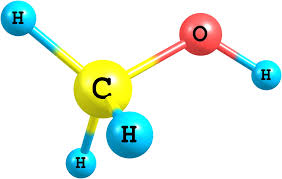
Methanol-Hazard and Toxicity
Methyl alcohol, also known as methanol or wood alcohol, is a clear, colorless, flammable liquid that is the simplest alcohol. World production of methanol is approximately 8.5 billion gallons annually
Sep 9,2019 Organic reagents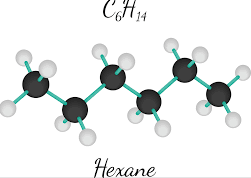
Hexane-Hazard and Toxicity
n-Hexane is a highly flammable liquid, usually isolated from crude oil, and has extensive industrial applications as a solvent in adhesive bandage factories and other industries. It is highly toxic, t
Sep 6,2019 Organic reagents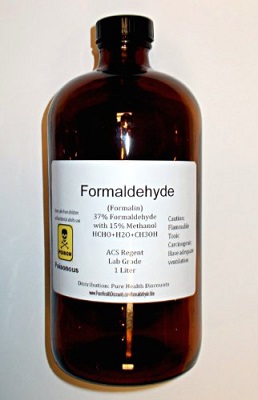
Formaldehyde-Hazard and Toxicity
Formaldehyde, also called formic aldehyde or methyl aldehyde, has extensive application. For instance, it is used as a tissue preservative or organic chemical reagent. Thus, formaldehyde is very commo
Sep 6,2019 Organic reagentsEthidium bromide-Hazard and Toxicity
Ethidium bromide (abbreviated EB) is common fluorescent dyes of observing DNA under ultraviolet ray, it belongs intercalating dye because of its polycyclic structure, which enables it to be inserted b
Sep 6,2019 Organic reagents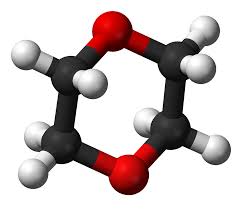
1,4-Dioxane-Hazard and Toxicity
1,4-dioxane is a clear liquid with ether-like odour. It is highly flammable and forms explosive peroxides in storage (rate of formation increased by heating, evaporation, or exposure to light). 1,4-Di
Sep 5,2019 Organic reagents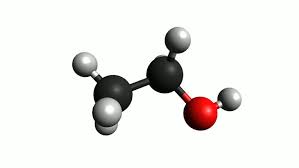
Ethanol-Hazard and Toxicity
Ethanol, also known as ethyl alcohol (or grain spirits, or alcohol), is a clear colorless, volatile, flammable solvent with a characteristic odor. The boiling point of ethanal is 78.5°C. The bio-alcoh
Sep 2,2019 Organic reagents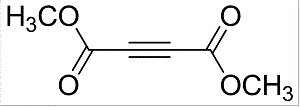
The Uses of Dimethyl acetylenedicarboxylate
Dimethyl acetylenedicarboxylate (DMAD) is an electron-deficient acetylenic compound having two reactive ester groups. It is a privileged and advantaged molecule, which participates easily and practica
Aug 27,2019 Organic reagentsMK-4827 (tosylate)
To validate that MK-4827 (Niraparib) inhibits PARP in these cell lines, A549 and H1299 cells are treated with 1 μM MK-4827 for various times and measured PARP enzymatic activity using a chemiluminesce
Aug 26,2019 Organic reagentsUses for Resorcinol
Resorcinol is a 1,3-isomer (or meta-isomer) of benzenediol with the formula C6H4(OH)2. It is used as an antiseptic and disinfectant in topical pharmaceutical products in the treatment of skin disorder
Aug 23,2019 Organic reagents
The applications and synthesize of 2-2-bis-diphenylphosphino-1-1-binaphthyl
BINAP (2,2'-bis(diphenylphosphino)-1,1'-binaphthyl) is an organophosphorus compound. This chiral ligand is widely used in asymmetric synthesis. It consists of a pair of 2-diphenylphosphinonaphthyl gro
Aug 19,2019 Organic reagents