|
|
| | PXS-5153A Basic information |
| Product Name: | PXS-5153A | | Synonyms: | PXS-5153A;(Z)-3-(1-(4-Amino-2-fluorobut-2-en-1-yl)-2-methyl-1H-pyrrolo[3,2-b]pyridin-3-yl)-N,N-dimethylbenzenesulfonamide Dihydrochloride;MAO,PXS-5153A,PXS 5153A,PXS5153A,inhibit,Inhibitor,Monoamine Oxidase;LOX-IN-3 (PXS-5505);3-{1-[(2Z)-4-Amino-2-fluorobut-2-en-1-yl]-2-methylpyrrolo[3,2-b]pyridin-3-yl}-N,N-dimethylbenzenesulfonamide dihydrochloride - [AC80868] | | CAS: | 2125956-82-1 | | MF: | C20H24ClFN4O2S | | MW: | 438.95 | | EINECS: | | | Product Categories: | | | Mol File: | 2125956-82-1.mol | 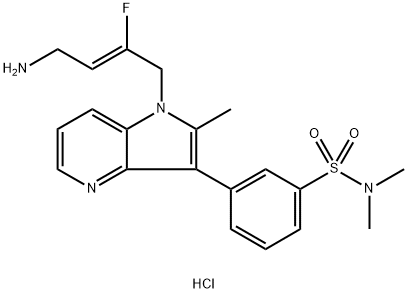 |
| | PXS-5153A Chemical Properties |
| storage temp. | Store at -20°C | | solubility | Soluble in DMSO |
| | PXS-5153A Usage And Synthesis |
| Uses | A useful intermediate in the preparation of haloallylamine indole and azaindole derivatives which are lysyl oxidases inhibitors. | | in vivo | As expected, rhLOXL2 dose-dependently induce oxidation of collagen with PXS-5153A dose-dependently impeding collagen oxidation. Therapeutic treatment of PXS-5153A substantially reduces immature crosslink formation compared with the CCl4 treated animals. Mature crosslink formation is also reduced by PXS-5153A treatment. All groups with therapeutic treatment of PXS-5153A show a significant reduction in DHLNL formation compared to the CCl4 treated animals. Treatment with PXS-5153A causes a significantly reduction in HYP compared to the CCl4 group. In addition, the amount of fibrillar collagen is markedly augmented by disease as seen by the 2.2-fold increase in percentage coverage area by Picrosirius red staining, which is reduced by PXS-5153A[1]. |
| | PXS-5153A Preparation Products And Raw materials |
|