





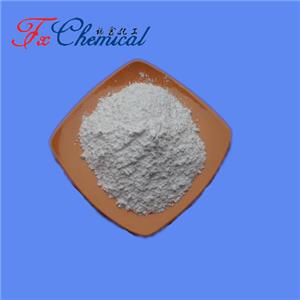

Product Details
| Product Name: Octaacetyl-beta-maltose | CAS No.: 22352-19-8 |
| EC-No.: 606-994-8 | Min. Order: 1KG |
| Purity: 99% | Supply Ability: 1000KG |
| Release date: 2025/12/02 |
Octaacetyl-β-maltose is not a compound you would typically find in everyday consumer products. Instead, it is a crucial protected intermediate used primarily in synthetic organic chemistry and biochemical research. Its value lies in its role as a building block for creating more complex molecules, particularly in the field of glycochemistry (the chemistry of sugars).
Its structure consists of a maltose molecule (a disaccharide of two glucose units) where all eight free hydroxyl groups (-OH) are "protected" or "capped" with acetyl groups (-OCOCH₃). This protection is the key to its utility.
Key Applications
1. Chemical Synthesis of Oligosaccharides and Glycoconjugates (Primary Application)
This is the most significant use of Octaacetyl-β-maltose.
The Problem: The hydroxyl (-OH) groups on a sugar molecule are all very similar and reactive. Trying to chemically link sugars together in a specific way is extremely difficult because these groups will react uncontrollably.
The Solution: Octaacetyl-β-maltose is a "protected" form of maltose. The acetyl groups block all the reactive sites except for the anomeric carbon (the specific carbon involved in forming the glycosidic bond between sugars).
The Process: A chemist can use this protected maltose unit and selectively activate its anomeric carbon to attach it to another sugar or molecule. After the desired bond is formed, the acetyl protecting groups can be easily removed under mild basic conditions (like sodium methoxide), revealing the original maltose structure within the larger, newly synthesized molecule.
Analogy: Think of it like building a intricate Lego structure. The acetyl groups are like protective caps on all the Lego bumps you don't want to use, leaving only one specific bump exposed to cleanly attach the next piece. Once the structure is built, you remove all the caps.
2. Prodrug Development and Drug Delivery
Maltose and its derivatives can be used to improve the properties of pharmaceutical drugs.
Increased Solubility: Attaching a highly water-soluble maltose unit (via its protected form) to a poorly soluble drug can drastically improve its solubility, which is critical for bioavailability (how much drug gets into the bloodstream).
Targeted Delivery: Certain cells in the body, such as hepatocytes (liver cells) and some cancer cells, overexpress receptors that recognize and uptake glucose and maltose. By conjugating a drug to a maltose derivative, it can be used as a "trojan horse" to deliver the drug more specifically to these cells.
3. Biochemical Research and Tool Development
Enzyme Substrate Studies: It is used as a substrate to study the activity, specificity, and mechanism of enzymes called glycosidases and transglycosylases. These enzymes are responsible for breaking down and building complex carbohydrates in biological systems. Researchers can use the acetyl-protected form to control the reaction.
Inhibitor Design: Understanding how enzymes interact with substrates like maltose is the first step in designing inhibitors. These inhibitors can be potential drugs for conditions like diabetes, viral infections (e.g., influenza virus neuraminidase), or lysosomal storage diseases.
4. Material Science and Surface Chemistry
Creating Bioactive Surfaces: Octaacetyl-β-maltose can be used to synthesize neoglycoconjugates where the maltose unit is attached to surfaces, polymers, or nanoparticles. This creates materials that can mimic biological interfaces, useful for:
Biosensors: Designing surfaces that specifically interact with carbohydrate-binding proteins (lectins).
Studying Cell Adhesion: Carbohydrates on cell surfaces are fundamental to cell-cell communication and infection processes.
Drug Delivery Carriers: Coating nanoparticles with sugar molecules like maltose can make them more biocompatible or target them to specific tissues.
Company Profile Introduction
You may like


Recommended supplier
| Product name | Price | Suppliers | Update time | |
|---|---|---|---|---|
| $2.00/100kg |
VIP1Y
|
ZHENGZHOU JIUYI TIME NEW MATERIALS CO,.LTD
|
2025-06-25 | |
| $0.00/1KG |
VIP1Y
|
Shenzhen Nexcon Pharmatechs Ltd.
|
2025-06-05 | |
| $0.00/1KG |
Hebei Chuanghai Biotechnology Co., Ltd
|
2024-11-05 | ||
| $0.00/1kg |
VIP4Y
|
Henan Aochuang Chemical Co.,Ltd.
|
2022-09-29 | |
| $0.00/10g |
VIP5Y
|
WUHAN FORTUNA CHEMICAL CO., LTD
|
2021-07-15 | |
| $99.00/1KG |
Hebei Runbin Biotechnology Co. LTD
|
2020-08-21 | ||
| $0.00/25Kg/Drum |
Zhejiang Synose Tech Co., Ltd
|
2019-10-30 | ||
| $7.00/1kg |
VIP8Y
|
Career Henan Chemical Co
|
2018-12-17 | |
| $7.00/1kg |
VIP8Y
|
Career Henan Chemical Co
|
2018-12-17 |

 China
China- Since: 2006-04-03
- Address: Room 2015, No.2 Building Kaixin Mansion