


What does IPTG do to E. coli?
Mar 31,2026
IPTG, full name isopropyl β-D-1-thiogalactopyranoside, is a synthetic molecular mimic of allolactose and a widely used inducer in molecular biology. When added to cultures of engineered Escherichia coli, IPTG binds to the lac repressor protein and changes its conformation, releasing it from the operator region of the lac operon. This de-repression allows RNA polymerase to transcribe downstream target genes that are under the control of the lac promoter or its derivatives such as T7-lac, thereby efficiently inducing the expression of recombinant proteins in E. coli. Unlike natural lactose, IPTG cannot be metabolized by E. coli, so its concentration remains stable during induction, ensuring consistent and sustained gene expression without being degraded by bacterial enzymes.
- Related articles
- Related Questions
- Induction concentration of IPTG and preparation of 1 M (100 x) stock solution Dec 16,2024
Isopropylthio-β-galactoside (IPTG) is a molecular analogue of isopentose that is widely used in molecular biology. Isopentose is a lactose metabolite that triggers transcription of the lac manipulator.
- IPTG:a molecular analog of lactose Jan 9,2024
IPTG, a molecular analog of lactose, induces gene expression in bacteria. It's pivotal in molecular biology, enabling precise control for research.
- Isopropyl β-D-1-thiogalactopyranoside (IPTG): a compound for scientific research Jul 4,2023
IPTG is a compound that plays a significant role in scientific research, particularly in molecular biology and biochemistry.

Sodium sulfite (SS) is a white, odourless, crystalline powder with a sulfurous taste that has reducing properties.....
Apr 22,2026Inorganic chemistry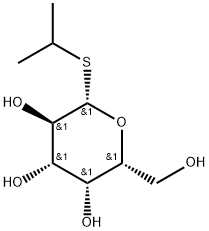
IPTG
367-93-1You may like
- IPTG
-

- $100.00
- 2026-10-26
- CAS:367-93-1
- Min. Order: 1kg
- Purity: 99%
- Supply Ability: 5000
- IPTG
-
- $70.00
- 2026-10-26
- CAS:367-93-1
- Min. Order: 10kg
- Purity: 0.99
- Supply Ability: 20tons
- Isopropyl-beta-D-thiogalactopyranoside
-

- 2026-10-23
- CAS:367-93-1
- Min. Order: 1KG
- Purity: 98%min
- Supply Ability: 500KG