


What is EDTA in toothpaste?
Apr 2,2026
In toothpaste, EDTA refers to ethylenediaminetetraacetic acid, usually in the form of disodium EDTA. It is a common chelating agent that can firmly capture and bind metal ions such as calcium, magnesium and iron. Its main role in toothpaste is to stabilize the product, preventing metal ions from causing discoloration or deterioration of the paste. It also helps to chelate calcium in dental plaque and tartar, making them easier to remove during brushing, and can boost the effect of preservatives to extend the shelf life of the toothpaste.
- Related articles
- Related Qustion
- EDTA : a chelating agent and anticoagulant Apr 28, 2024
EDTA is a polyprotic acid containing four carboxylic acid groups and two amine groups with lone-pair electrons that chelate calcium and several other metal
- Ethylenediaminetetraacetic acid: Application, toxicity and environmental fate May 9, 2023
Ethylenediaminetetraacetic acid was developed by Franz Munz in Germany during the 1930s as an alternative to citric acid. EDTA is used as a food additive, in herbicides, and pharmaceuticals.
- The principal toxicity of EDTA Oct 18, 2021
Ethylenediaminetetraacetic acid (EDTA) was developed by Franz Munz in Germany during the 1930s as an alternative to citric acid. EDTA is used as a food additive, in herbicides, in pharmaceuticals, and in a variety of consumer products.
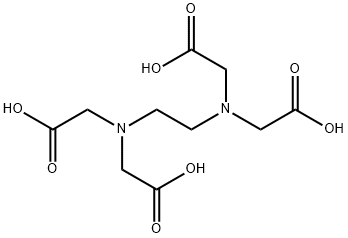
Ethylenediaminetetraacetic acid
60-00-4You may like
Ethylenediaminetetraacetic acid manufacturers
- EDTA
-
- 2026-04-18
- CAS:60-00-4
- Min. Order:
- Purity: 0.99
- Supply Ability:
- Ethylenediaminetetraacetic acid/EDTA
-
- $0.00 / 25Kg/Drum
- 2026-04-17
- CAS:60-00-4
- Min. Order: 1KG
- Purity: 99.5%min
- Supply Ability: 20 tons
- Ethylenediaminetetraacetic acid
-
- $35.00 / 1kg
- 2026-04-17
- CAS:60-00-4
- Min. Order: 1kg
- Purity: 0.99
- Supply Ability: 100kg