


Inorganic chemicals is the shortened form of inorganic chemical industry and is an important branch of the chemical industry with natural resources and industrial by-products as raw materials for the production of sulfuric acid, nitric acid, hydrochloric acid, phosphoric acid, soda ash, caustic soda, synthetic ammonia, fertilizer and inorganic salts, etc. This includes sulfuric acid industry, soda industry, the chloro-alkali industry, synthetic ammonia industry, fertilizer industry and mineral industry. Its broad definition also includes the production of inorganic non-metallic materials and fine inorganic product such as ceramics and inorganic pigment. The main raw material of inorganic chemical products are mineral product including sulfur, sodium, phosphorus, potassium and calcium and coal, oil, gas, and air, water and so on. Inorganic chemicals can be traced back to the ancient process of ceramics, alchemy, brewing, dyeing at thousands of years ago. Although with small scale, backward technology and pure manual manipulation, but it is the prototype of inorganic chemicals. For thousands of years, due to the low productivity, it gets slow development. Until the 18th century, it had developed rapidly. In the middle of 18th century, Britain had first applied lead chamber method using saltpeter and sulfur as raw materials to produce sulfuric acid. In 1783, Lu Bulan (France) proposed the soda method using sodium chloride, sulfuric acid, coal as raw materials. In the latter half of the 18th century, the modern chemical industry taking inorganic chemical industry as the main content had began to emerge. In 1841, people began the production of phosphate fertilizer; In 1965 Belgian Solvay realized the industrialization of ammonia soda for production of soda; with the rise of preparing potassium industry in 1870; In 1890, people began to use electrolytic approach for making Cl2 and caustic soda; In 1913, people had achieved the catalytic synthesis
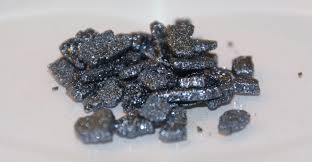
Iodine-Hazard and Toxicity
Iodine is widely distributed in nature and it exists in the form of compounds. There are traces of iodine in rocks, soil, water, flora and fauna and air. But in addition to seawater, the distribution
Sep 9,2019 Inorganic chemistry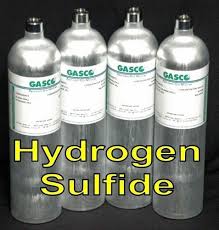
Hydrogen Sulfide-Hazard and Toxicity
Hydrogen Sulfide is a colorless, very poisonous, flammable gas with the characteristic foul odor of rotten eggs. It often results from the bacterial breakdown of organic matter in the absence of oxyge
Sep 9,2019 Inorganic chemistry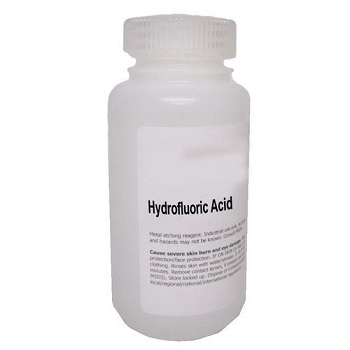
Hydrofluoric acid-Hazard and Toxicity
Hydrofluoric acid (HF) is an aqueous solution of hydrogen fluoride gas. At room temperature, it appears as colorless transparent to light yellow smoke liquid with pungent odor. It has a specific gravi
Sep 9,2019 Inorganic chemistry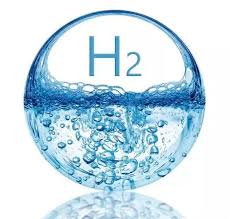
Hydrogen-Hazard and Toxicity
Hydrogen,H2, is a tasteless,colorless, odorless gas that may be liquified by cooling under pressure. Hydrogen is used in welding, in the production of ammonia, methanol, and other chemicals, for the h
Sep 9,2019 Inorganic chemistry
Silver-Health Hazards and Toxicity
The acute toxicity of silver metal is low. The acute toxicity of soluble silver compounds depends on the counterion and must be evaluated case by case.
Sep 6,2019 Inorganic chemistry
Potassium hydride-Health Hazards and Toxicity
Potassium hydride reacts violently with water, liberating highly flammable hydrogen gas; causes severe burns on eye or skin contact.
Sep 6,2019 Inorganic chemistry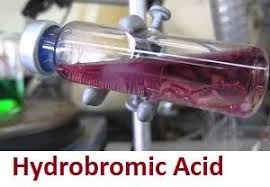
Hydrobromic Acid-Hazard and Toxicity
Hydrobromic Acid is a strong acid formed by dissolving the diatomic molecule HBr in water. “Constant-boiling” hydrobromic acid is an aqueous solution that distills at 124.3°C and contains 47.6% HBr by
Sep 6,2019 Inorganic chemistry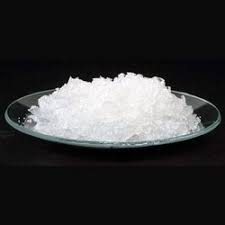
Sodium fluoride-Hazard and Toxicity
Sodium fluoride is colorless crystals or shiny white powder, belongs to tetragonal system, is positive hexahedral or octahedral crystals. It is slightly soluble in alcohol, soluble in water. Aqueous s
Sep 6,2019 Inorganic chemistry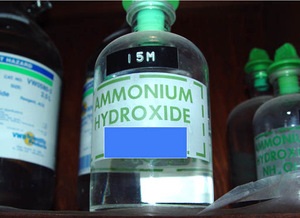
Ammonium hydroxide-Health Hazard and Toxicity
Ammonium hydroxide (NH4OH) is a solution of ammonia in water. Commonly called ammonia or ammonia water, the chemical is used as a cleanser and in manufacturing plastics, rubber, fertilizer and textile
Sep 5,2019 Inorganic chemistry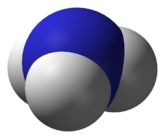
Ammonia-Health Hazard and Toxicity
Ammonia, a colorless gas with a distinct odor, is a building-block chemical and a key component in the manufacture of many products people use every day. It occurs naturally throughout the environment
Sep 5,2019 Inorganic chemistry