| Identification | More | [Name]
Tritolyl phosphate | [CAS]
1330-78-5 | [Synonyms]
PHOSPHORIC ACID TRICRESYL ESTER
PHOSPHORIC ACID TRITOLYL ESTER
TRICRESYL PHOSPHATE
TRITOLYL PHOSPHATE
celluflex179c
cresylphosphate
disflamolltkp
durad
flexolplasticizertcp
fyrquel150
imols140
kronitex
lindol
nci-c61041
phosflex179a
phosphatedetricresyle
Phosphoricacid,tris(methylphenyl)ester
tricresilfosfati
tricresyl
tricresylfosfaten | [EINECS(EC#)]
215-548-8 | [Molecular Formula]
C21H21O4P | [MDL Number]
MFCD02102116 | [Molecular Weight]
368.36 | [MOL File]
1330-78-5.mol |
| Chemical Properties | Back Directory | [Appearance]
colourless to light yellow or brown liquid | [Melting point ]
<-40°C | [Boiling point ]
265 °C10 mm Hg(lit.)
| [density ]
1.143 g/mL at 25 °C(lit.) | [Pour Point ]
-28 | [vapor pressure ]
0.03 mm Hg ( 25 °C)
| [refractive index ]
n20/D 1.555(lit.)
| [Fp ]
>230 °F
| [storage temp. ]
Store below +30°C. | [solubility ]
organic solvents: miscible(lit.) | [form ]
Powder | [color ]
White to off-white | [Stability:]
Stable. Incompatible with strong oxidizing agents. May soften some plastics. Hydrolyzes slowly under alkaline conditions. | [Water Solubility ]
INSOLUBLE | [Merck ]
14,9763 | [Henry's Law Constant]
1.2×101 mol/(m3Pa) at 25℃, HSDB (2015) | [Dielectric constant]
4.0(80℃) | [Cosmetics Ingredients Functions]
PLASTICISER | [InChI]
1S/C21H21O4P/c1-16-4-10-19(11-5-16)23-26(22,24-20-12-6-17(2)7-13-20)25-21-14-8-18(3)9-15-21/h4-15H,1-3H3 | [InChIKey]
ISNNXHQBIBWQHG-UHFFFAOYSA-N | [SMILES]
Cc1ccc(OP(=O)(Oc2ccc(C)cc2)Oc3ccc(C)cc3)cc1.Cc4ccc(OP(=O)(Oc5cccc(C)c5)Oc6ccccc6C)cc4.Cc7ccccc7OP(=O)(Oc8ccccc8C)Oc9ccccc9C | [LogP]
5.93 | [Surface tension]
40.9mN/m at 20°C | [CAS DataBase Reference]
1330-78-5(CAS DataBase Reference) | [EPA Substance Registry System]
1330-78-5(EPA Substance) |
| Safety Data | Back Directory | [Symbol(GHS) ]
 
GHS08,GHS09 | [Signal word ]
Warning | [Hazard statements ]
H361f-H410 | [Precautionary statements ]
P201-P202-P273-P280-P308+P313-P391 | [Hazard Codes ]
Xn,N,T | [Risk Statements ]
R21/22:Harmful in contact with skin and if swallowed .
R51/53:Toxic to aquatic organisms, may cause long-term adverse effects in the aquatic environment .
R39/23/24/25:Toxic: danger of very serious irreversible effects through inhalation, in contact with skin and if swallowed . | [Safety Statements ]
S28:After contact with skin, wash immediately with plenty of ... (to be specified by the manufacturer) .
S61:Avoid release to the environment. Refer to special instructions safety data sheet .
S45:In case of accident or if you feel unwell, seek medical advice immediately (show label where possible) .
S20/21:When using, do not eat, drink or smoke . | [RIDADR ]
UN 2574 6.1/PG 2
| [WGK Germany ]
2
| [RTECS ]
TD0175000
| [Autoignition Temperature]
770 °F | [TSCA ]
Yes | [REACH Registrations]
Active | [HazardClass ]
6.1 | [PackingGroup ]
II | [HS Code ]
29199000 | [Storage Class]
6.1A - Combustible acute toxic Cat. 1 and 2
very toxic hazardous materials | [Hazard Classifications]
Aquatic Acute 1
Aquatic Chronic 1
Repr. 2 | [Safety Profile]
Moderately toxic by
ingestion and skin contact. Human systemic
effects by ingestion: flaccid paralysis without
anesthesia, motor activity changes, and
muscle weakness. An experimental
teratogen. Experimental reproductive
effects. An eye and skin irritant.
Combustible. When heated to
decomposition it emits toxic fumes of POx. | [Hazardous Substances Data]
1330-78-5(Hazardous Substances Data) | [Toxicity]
cat,LD50,skin,1500mg/kg (1500mg/kg),BEHAVIORAL: ATAXIAPERIPHERAL NERVE AND SENSATION: FLACCID PARALYSIS WITHOUT ANESTHESIA (USUALLY NEUROMUSCULAR BLOCKAGE),Toxicology Letters. Vol. 1000(Sp, |
| Hazard Information | Back Directory | [Description]
Tricresyl Phosphate (TCP) is a mixture with a slightly pungent odor: of the three isomers, the normal and meta isomers are liquids, while the para isomer is a crystalline solid. TCP can be obtained by treating cresol with phosphorus oxychloride in the presence of an aluminum catalyst. It is used to recover phenol residues in gas plant wastewater and is also used as a plasticizer in the plastics industry. Plasticizers are substances used to increase the flexibility of plastic materials. By changing the amount of plasticizer added, the flexibility, hardness, water resistance and flammability of plastic materials can be changed over a wide range. Sometimes up to 50% TCP is added to polyvinyl chloride[1]. In addition, TCP is toxic to humans and can cause neuropathy, paralysis of the hands and feet, and/or death of humans and animals through ingestion, inhalation, and even absorption through the skin.
| [Chemical Properties]
Tricresyl phosphate is an isomeric mixture of phosphoric acid esters of cresols. It is an odourless and colourless oily liquid (molar mass 368.4 g/mol, melting point –33°C).
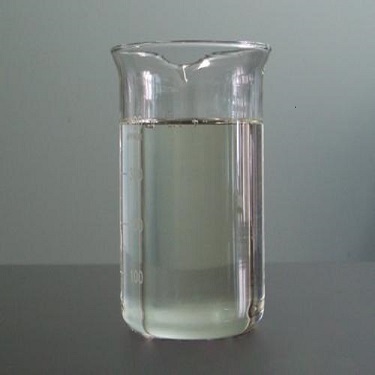
Tricresyl phosphates were used as flame retardants and plasticisers in PVC, nitrocellulose and acrylates.
| [Uses]
Tricresyl phosphate (TCP) is used as a solvent for nitrocellulose esters and numerous natural resins. It is a plasticizer for chlorinated rubber, vinyl plastics, polystyrene and polyacrylic and polymethacrylic esters. Tricresyl phosphate also acts as a binder for resins and nitrocellulose to improve toughness, elasticity and polishing properties of coatings. Alone or associated with hydrocarbons, it is used as an antiwear and antifriction additive in numerous synthetic lubricants, incorrectly termed “oils” by reason of their appearance. It is also employed as a hydraulic fluid. When incorporated in gasoline, tricresyl phosphate counteracts the harmful effects of lead deposits. In addition, it is an excellent fire retardant in many industries.
Usually used as a mediator in the preparation of uranium-sensitive electrode based on membrane containing uranium di-(4-octylphenyl)phosphate as sensor.
| [Uses]
Tricresyl Phosphate is used as plasticizer in vinyl plastics manufacture, as flame-retardant, solvent for nitrocellulose, in cellulosic molding compositions, as additive to extreme pressure lubricants, as a nonflammable fluid in hydraulic systems, as lead scavenger in gasoline: Yust, Bame, US 2889212 (1959 to Shell); to sterilize certain surgical instruments.
| [Uses]
Tricresyl phosphate is used as plasticizer in vinyl plastics manufacturing; in spectacle frames; flame-retardant; solvent for nitrocellulose; in cellulose-molding
compositions; additive to extreme-pressure lubricants; nonflammable fluid in hydraulic systems; lead scavenger in gasoline; used to
sterilize certain surgical instruments; in polystyrene; in waterproofing; in common organic solvents and thinners; in linseed oil;
emulsifying agent in cosmetics; in china wood oil; in castor oil. | [Preparation]
Tricresyl phosphate is prepared by reaction of cresols with phosphorus oxychloride, phosphoric acid, or phosphorus pentachloride:
OPCl3 + 3 HOC6H4CH3 → OP(OC6H4CH3)3 + 3 HCl
The grades of cresol commonly is a mixture of three isomers (o-, m-, p-). The fact that tricresyl phosphate is derived from a mixture and itself is a mixture ensures that it remains liquid over a wide span of temperatures.
A "refined grade" of tricresyl phosphate is prepared by vacuum distillation, or alternatively by washing with 2% sodium hydroxide and water. | [Health Hazard]
The tricresyl phosphates (TCPs) are part of a series of organophosphorus compounds which have been shown to cause delayed neurotoxicity. The 1930 outbreak of “ginger jake” paralysis was caused by the contamination of ginger extract by cresyl phosphates, used in the processing of the spice. Since that time, there have been several incidents reported of accidental poisoning of food by tri-o-cresyl phosphate (TOCP). There are few case series reports of occupational exposure in the literature. Acute occupational exposures have been described as causing gastrointestinal symptoms followed by a latent period of days to 4 weeks, after which extremity pain and tingling progress to motor paralysis of the lower extremities up to the thighs, and of the upper extremities to the elbow. There is rarely sensory loss. Partial to total recovery may take years. Fatalities have occurred in high-dose ingestion. | [Potential Exposure]
According to the World Health Organization there is no safe level of exposure to Tricresyl Phosphate(TCP).
TCP has been used as a flame retardant in fabric, plastics and rubbers and as a plasticizer in PVC, lacquers, varnishes and nitrocellulose. It is also used as a heat exchange medium and hydraulic fluid. TCP was detected in all house dust samples gathered in two different North American studies.Biomonitoring studies detected TCP in the breast milk of women in Asia and Sweden. EPA has characterized TCP to exhibit moderate persistence in the environment based on biodegradation studies. | [Purification Methods]
Dry the ester with CaCl2, percolate it through a column of alumina, then distil it under a vacuum. Alernatively pass it through a packed column of alumina at 150o, with a counter-current stream of nitrogen, under reduced pressure, to remove residual traces of volatile impurities. It also crystallises from pet ether (b 60-80o). [Cherbuliez in Organic Phosphorus Compounds (Kosolapoff & Maier eds) Wiley-Interscience Vol 6 pp 454-457 1973.] | [Toxicity evaluation]
Tricresyl Phosphate is classified by the EPA as a high hazard for reproductive toxicity based on studies of rodents fed TCP. Adverse health effects included reduced fertility, sperm motility, number of live pups per litter, testicular and epidydimal weights, and increased incidence of interstitial cell hypertrophy and ovarian interstitial cell vacuolization.
Ovarian and adrenal gland lesions were observed in rats and liver and adrenal gland lesions in mice fed an isomer mixture of TCP for 2 years in an NTP study. Rodents fed TCP for 13 weeks developed neuropathy.
TCP has been shown to influence neurological damage in humans.
There are three tricresyl phosphate isomers, of which, the ortho isomer demonstrates the highest toxicity. | [References]
[1] D. HUNTER B. E K Perry. Toxic Polyneuritis arising during Manufacture of Tricresyl Phosphate[J]. British Journal of Industrial Medicine, 1944, 2 1: 227-231. DOI:10.1136/oem.1.4.227. |
|
| Company Name: |
Alfa Aesar
|
| Telephone: |
400-6106006 |
| Website: |
http://chemicals.thermofisher.cn |
| Company Name: |
Energy Chemical
|
| Telephone: |
400-0056266 |
| Website: |
www.energy-chemical.com |
| Company Name: |
Maya High Purity Chemicals
|
| Telephone: |
+86 (573) 82222445 (0)18006601000 452520369 |
| Website: |
www.chemicalbook.com/ShowSupplierProductsList15221/0_EN.htm |
| Company Name: |
Spectrum Chemical Manufacturing Corp.
|
| Telephone: |
021-021-021-67601398-809-809-809 15221380277 |
| Website: |
www.spectrumchemical.com/oa_html/index.jsp?minisite=10020&respid=22372&language=us |
|