| Company Name: |
Ascent Scientific |
| Tel: |
4401179829988 |
| Email: |
customerservice@ascentscientific.co.uk |
- IBOTENIC ACID
-
-
2026-10-04
- CAS:2552-55-8
- Min. Order: 10kg
- Purity: 99% purity
- Supply Ability: 1000 kg
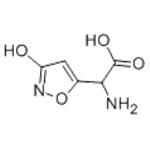
- IBOTENIC ACID
-
- $10.00
-
2026-09-02
- CAS:2552-55-8
- Min. Order: 1KG
- Purity: 99%
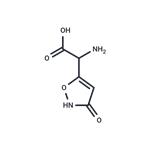
- Ibotenic acid
-
- $32.00
-
2026-07-27
- CAS:2552-55-8
- Purity: 99.70%
- Supply Ability: 10g
|
| | Ibotenic acid Basic information |
| | Ibotenic acid Chemical Properties |
| Melting point | 141-147 °C | | density | 1.621±0.06 g/cm3 (20 ºC 760 Torr) | | storage temp. | Keep in dark place,Inert atmosphere,Room temperature | | solubility | H2O: soluble1mg/mL, clear, colorless (with sonication) | | form | White solid | | pka | 2.16±0.10(Predicted) | | color | white | | Odor | Practically odorless. Faint, meat-like, mild and sweet taste in aqueous dilutions. | | Water Solubility | Soluble to 10 mM in water and to 100 mM in 1.1eq. NaOH | | Stability: | Stable for 1 year from date of purchase as supplied. Solutions in distilled water may be stored at -20°C for up to 1 month. | | InChI | 1S/C5H6N2O4/c6-4(5(9)10)2-1-3(8)7-11-2/h1,4H,6H2,(H,7,8)(H,9,10) | | InChIKey | IRJCBFDCFXCWGO-UHFFFAOYSA-N | | SMILES | NC(C(O)=O)C1=CC(=O)NO1 | | LogP | -1.070 (est) | | CAS DataBase Reference | 2552-55-8(CAS DataBase Reference) |
| Hazard Codes | T,Xn | | Risk Statements | 23/24/25-25-40 | | Safety Statements | 45-38-36/37/39-28A-22-36 | | RIDADR | 1544 | | WGK Germany | 3 | | RTECS | NY2100000 | | HazardClass | 6.1(b) | | PackingGroup | III | | Storage Class | 6.1C - Combustible acute toxic Cat.3
toxic compounds or compounds which causing chronic effects | | Hazard Classifications | Acute Tox. 3 Oral | | Toxicity | LD50 in mice, rats (mg/kg): 15, 42 i.v.; 38, 129 orally (Theobald) |
| Provider | Language |
|
ACROS
| English |
| | Ibotenic acid Usage And Synthesis |
| Description | Ibotenic acid (60573-88-8) is a conformationally restricted analog of glutamate which occurs naturally in Amanita mascaria and related mushrooms. It is a non-specific glutamate receptor (both NMDA and mGluR) agonist.1 May be used to induce hippocampal lesioning in rat neurodegeneration models.2,3 Induces lesions in the subiculum in a mouse model of Alzheimer’s disease.4 | | Chemical Properties | Crystalline solid; forms monohydrate; mp151°C (303.8°F) (anhydrous), 145°C (293°F)(monohydrate); soluble in water and alcohol. | | Uses | Ibotenic acid is a neuroexcitatory amino acid originally isolated from Amanita species that functions as a NMDA and metabotropic glutamate receptor agonist. As a neurotoxin, ibotenic acid is often used to induce brain lesions in animals that model cognitive dysfunctions resulting from neurodegenerative diseases, traumatic brain injury, and stroke. | | Uses | Ibotenic acid has been used to perform surgery in adult male zebra finches (Taeniopygia guttata) to study reversing reinforcement-induced vocal changes. | | Uses | Neurobiological tool. | | Preparation | Isolated from the Japanese fly mushroom. The acid can be produced synthetically. | | Definition | A isoxazole which, together with muscimol, is largely responsible for the toxicities of a number of mushrooms including those of the genus Amanita. It is a potent excitatory amino acid. | | Hazard | Neurotoxic; causes motor depression, ataxia, changes in mood, perceptions and feelings. | | Health Hazard | Ibotenic acid is a potent neurologic aminoacid. It exhibits neuroexcitatory activity andcauses sedative actions on spinal neurons.High doses can cause sleep, hallucinations,distorted perceptions, and nausea. In humansthe symptoms above may be manifested fromingestion of 6–8 mg of ibotenic acid.
LD50 value, oral (mice): 38 mg/kg
LD50 value, intraperitoneal (mice): 15 mg/kg. | | Biological Activity | NMDA and metabotropic glutamate receptor agonist. | | Biochem/physiol Actions | Non-selective agonist with preference for NMDA glutamate receptors; neurotoxin; neuroexcitatory amino acid originally isolated from Amanita species. | | storage | -20°C (desiccate) | | Purification Methods | It has been converted to the ammonium salt (m 121-123o dec) dissolved in H2O, passed through an Amberlite IR 120 resin (H+ form) and eluted with H2O. The acidic fractions are collected, evaporated to dryness and the residue recrystallises from H2O as the monohydrate (m 144-146o). The anhydrous acid is obtained by making a slurry with MeOH, decanting and evaporating to dryness, and repeating the process twice more to give the anhydrous acid (m 151-152o). Recrystallisation from H2O gives the monohydrate. [Nakamura Chem Pharm Bull Jpn 19 46 1971.] The ethyl ester forms needles when crystallised from a small volume of Et2O and has m 78-79o and IR (CHCl3) with
max 35002300 (OH), 1742 (ester C=O), 1628, 1528cm-1, and UV with λmax (EtOH) at 206nm (ε 7,080).
The hydrazide has m 174-175o (from MeOH) with IR (KBr) 1656 (C=O)cm-1. | | References | [1] NAKANISHI S. Molecular Diversity of Glutamate Receptors and Implications for Brain Function[J]. Science, 1992, 258 5082. DOI:10.1126/science.1329206
[2] JARRARD L E. On the use of ibotenic acid to lesion selectively different components of the hippocampal formation[J]. Journal of Neuroscience Methods, 1989, 29 3: Pages 251-259. DOI:10.1016/0165-0270(89)90149-0
[3] O. ISACSON M. P. Is there capacity for anatomical and functional repair in the adult somatosensory thalamus[J]. Experimental Neurology, 1992, 115 1: Pages 173-176. DOI:10.1016/0014-4886(92)90244-k
[4] SONIA GEORGE. Lesion of the subiculum reduces the spread of amyloid beta pathology to interconnected brain regions in a mouse model of Alzheimer’s disease.[J]. ACS Applied Nano Materials, 2014: 17. DOI:10.1186/2051-5960-2-17 |
| | Ibotenic acid Preparation Products And Raw materials |
|