


2-Ethylhexyl Mercaptoacetate: PVC Thermal Stabiliser and Chain Transfer Agent
Dec 11,2025
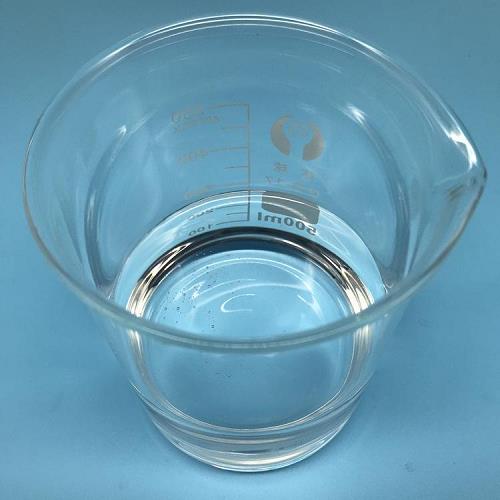
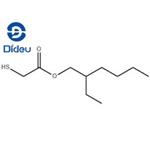
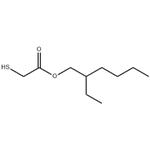
2-Ethylhexyl Mercaptoacetate is an organic compound appearing as a transparent liquid at ambient temperature. It is poorly soluble in water but readily soluble in organic solvents. This substance, containing both a mercapto group and an ester group in its molecule, exhibits reactive chemical properties while remaining stable under ambient conditions. Its primary application is as a thermal stabiliser for plastics such as polyvinyl chloride (PVC), and it also serves as a key synthetic intermediate for organotin thermal stabilisers. 2-Ethylhexyl mercaptoacetate synthesis primarily employs two processes: direct esterification and the mercaptanation of isooctyl chloroacetate. In recent years, driven by the growth of the polymer materials industry, market demand has shown sustained increase. Classified as a flammable liquid, it is harmful if swallowed or inhaled, causing irritation to skin and eyes. Storage requires sealing in light-protected conditions away from oxidising agents. During use, respiratory and skin protection must be maintained to avoid direct contact.
Coalescing aid in high performance waterborne polymeric coatings
During the last decades, the growth of the waterborne coating market has been driven by the interior architectural applications, due to the low odour, non-yellowing properties and ease-of-use of such coatings. 2-Ethylhexyl mercaptoacetate (2-EHTG) was used as chain transfer agent (CTA). For this, one of the monomers has to be labelled with a compound that forms an excimer. Pyrene is commonly used because it can be excited easily by UV-light. For the BA/MMA latex system studied in this work 1-pyrenemethoxyethoxydiethyl methacrylate (PyEG3-MA) was used as the labelled monomer. Initial reactions were carried out in order to confirm the capability of 2-Ethylhexyl mercaptoacetate chain transfer agent to produce a population of oligomers that could influence the film formation properties of reference MMA/BA latices. As an example of those reactions, the synthesis of the MMA/BA (60/40) latex in which a shot of 2-Ethylhexyl mercaptoacetate was introduced at the end of the reaction is presented here. The reaction was performed in a semi-batch manner with a pre-emulsion feed. For this, 200.00 g of a seed (10 % solids content – BA/MMA 40/60) were inserted in a one litre glass reactor, stirred at 185 rpm under a N2 flow and then heated up to 80 °C.[1]
For the initial evaluation of the temporary oligomer plasticizer (TOP) performance, the MFFT of the produced latices were compared to a reference MMA/BA (60/40) latex. Special attention was given to the GPC analysis to determine the polymer molecular mass distribution and the size of the obtained oligomers. As it has been explained in the experimental section, for this first evaluation, the results obtained for a latex in which a shot of 2-Ethylhexyl mercaptoacetate CTA was added into the reactor before the feed of the last 2 % of the monomers pre-emulsion will be presented. The presence of the oligomer in the TOP latex, with a very narrow distribution, means that 2-EHTG produced the desired low molecular weight oligomer chains. However, the Đ of such oligomer population was lower than 2, the Đ expected for a process in which chain transfer is predominant. No explanations have been found up to the moment for such a low Đ. 2-Ethylhexyl mercaptoacetate was used as CTA, either as a shot or by feeding, at the end of the conventional polymerisation reactions. The reactions produced high monomer conversions with no coagulation or large amounts of fouling being evidenced.
Water-based polymer colloids with a branched chain architecture
Over the last two decades, PSA performance has been improved by incorporating a delicate balance of crosslinker and chain transfer agent to control the sol-to-gel ratio and maintain high sol molecular weights. In the following work, the crosslinker ethylene glycol dimethacrylate (EGDMA), and the conventional chain transfer agent 2-Ethylhexyl mercaptoacetate (2-EHTG) are used in an attempt to minimise gel content but maintain a high enough molecular weight to demonstrate good adhesive properties. Both EGDMA and 2-Ethylhexyl mercaptoacetate have a realistic potential to become available from non-petrochemical resources. Previously, Agirre and coworkers have demonstrated that at low incorporations of EGDMA (less than 1 mol% with respect to monomer) there is limited effect on gel content and sol molecular weight, possibly due to its extensive primary cyclization. This work will investigate EGDMAs effect at substantially higher incorporations.[2]
Initially, a series of latexes was produced where the crosslinker, ethylene glycol dimethacrylate (EGDMA), concentration was varied and the CTA, 2-Ethylhexyl mercaptoacetate, concentration was kept constant. These are denoted with a latex name beginning with a ‘B’ to indicate that the crosslinker was added in both the batch and feed stages of the polymerization, as opposed to starting with an ‘F’ indicating the crosslinker was only added during the feed stage. The rest of the name denotes the concentration of crosslinker and CTA with respect to the monomer solution (2-OA, IBoMA, AA, EGDMA and 2-Ethylhexyl mercaptoacetate). For example ‘B_X07_C4’, relates to a latex which has 7 mol% EGDMA and 4 mol% 2-Ethylhexyl mercaptoacetate, where the mole percentage relates to the number of molecules and not the number of vinyl groups. This work demonstrates the ability to fabricate a range of viscoelastic acrylic polymer dispersions with branched polymer chain architecture by semi-batch emulsion polymerization that can exhibit a variety of adhesive properties for casted polymer films depending on the desired application.
References
[1]Dron, S. M., Bohorquez, S. J., Mestach, D., & Paulis, M. (2022). Reducing the amount of coalescing aid in high performance waterborne polymeric coatings. European Polymer Journal, 170, 111175.
[2]Brodden, E. M., & Bon, S. A. F. (2024). Water-based polymer colloids with a branched chain architecture as low-gel pressure-sensitive adhesives. Polymer Chemistry, 15(28), 2849–2861.
- Related articles
- Related Qustion
Cyclopamine is a naturally alkaloid, this article will introduce its discovery and biosynthesis method.....
Dec 10,2025Biochemical Engineering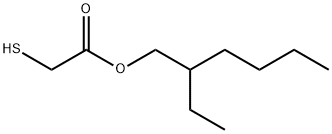
2-Ethylhexyl mercaptoacetate
7659-86-1You may like
2-Ethylhexyl mercaptoacetate manufacturers
- 2-ethylhexyl thioglycolate
-
- $5.00 / 200kg
- 2025-12-11
- CAS:7659-86-1
- Min. Order: 1kg
- Purity: ≥99%
- Supply Ability: 2000mt/year
- 2-Ethylhexyl mercaptoacetate
-
- $0.00 / 25kg
- 2025-12-01
- CAS:7659-86-1
- Min. Order: 1kg
- Purity: 99%
- Supply Ability: 10000KGS
- 2-ETHYLHEXYL THIOGLYCOLATE
-
- $0.00 / 1kg
- 2025-07-08
- CAS:7659-86-1
- Min. Order: 0.10000000149011612kg
- Purity: 99.0%min
- Supply Ability: 20000kg