


Synthesis and Decomposition Kinetics of Acetylferrocene
Dec 4,2025
Acetylferrocene, a ferrocene derivative, exists as orange needle-like crystalline powder under ambient conditions and exhibits good chemical stability. While poorly soluble in water, it readily dissolves in most organic solvents such as ethyl acetate, dichloromethane, and chloroform. Acetylferrocene can be synthesized through Friedel-Crafts acylation of ferrocene with acetic anhydride and serves primarily as an organic synthetic intermediate, widely employed in the preparation of ferrocene-based ligands and functional organic molecules.
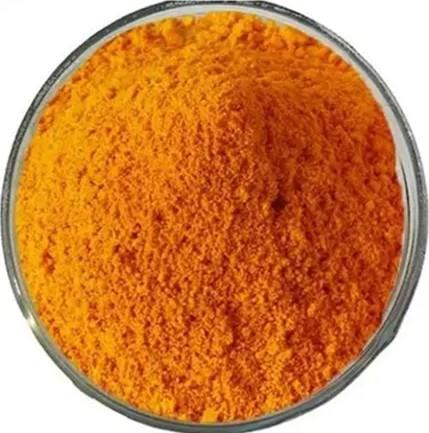
图1 Picture of Acetylferrocene
Solubility in Supercritical CO₂
Research has demonstrated the solubility measurements of ferrocene and acetylferrocene in supercritical carbon dioxide (scCO₂) using an analytical method with a quasi-flow apparatus. Quantitative analysis of their concentrations in the scCO₂ phase was achieved via online sampling coupled with high-performance liquid chromatography. Experiments were conducted within temperature and pressure ranges of 308–348 K and 7.7–24.4 MPa, respectively. Acetylferrocene, synthesized by Friedel–Crafts acylation of ferrocene, is widely applied in materials and pharmaceutical industries. The measured molar solubilities ranged from 8.9 × 10⁻⁴ to 31.2 × 10⁻⁴ for ferrocene and 2.5 × 10⁻⁴ to 79.2 × 10⁻⁴ for acetylferrocene. A solubility crossover was identified around 15 MPa for acetylferrocene and 10 MPa for ferrocene, attributed to the lower polarity of ferrocene dominating at lower pressures, while the higher volatility of acetylferrocene prevailed under elevated pressures. These findings confirm that high-pressure scCO₂ extraction can effectively separate acetylferrocene from its precursor ferrocene in Friedel–Crafts acylation processes. [1]
Synthesis
Traditionally, acetylferrocene is synthesized via classical Friedel–Crafts acylation of ferrocene using dichloromethane or carbon disulfide as solvents, with Lewis acids (e.g., aluminum chloride) or Brønsted acids (e.g., polyphosphoric acid) as catalysts and acetyl chloride as the acylating agent. However, this conventional method faces challenges including by-product formation, emission of volatile organic solvents, and corrosion issues. Recent studies have employed ionic liquids (ILs)—molten salts composed of organic cations and anions that remain liquid at room temperature—as green solvents for Friedel–Crafts acylation to produce acetylferrocene. Although ILs exhibit low vapor pressure, minimal flammability, and high solvency, the persistence of volatile solvent emissions during product separation remains a limitation. [1]
Synthesis in chloroaluminate ionic liquid
Study investigated the Friedel-Crafts acylation of ferrocene using diethylamide sulfate aluminum chloride ionic liquid as both Lewis acid source and solvent. Systematic investigation was conducted on the effects of ionic liquid catalytic activity, molar ratios of ionic liquid to ferrocene and acetyl chloride to ferrocene, reaction temperature, and reaction time. The optimized conditions were established as follows: reaction temperature 25°C, reaction time 2.5 h, n(ILs):n(FC) = 2.0:1, n(acetyl chloride):n(FC) = 4.0:1. Under these conditions, acetylferrocene was obtained in 70.2% yield. The structure of acetylferrocene was characterized by elemental analysis and IR spectroscopy, confirming the successful synthesis of the target compound. [2]
Analysis of Decomposition Kinetics
The kinetics of thermal decomposition of acetylferrocene in an inert atmosphere were investigated through a series of non-isothermal thermogravimetric measurements at varying heating rates. Acetylferrocene undergoes multistep decomposition, yielding characteristic residual masses, with the activation energy for each step—determined by model-free isoconversional methods—showing dependence on the conversion extent. The most probable reaction mechanism functions for three distinct decomposition steps under inert conditions were identified via the master plot method, revealing stepwise variations in reaction pathways. Conversion-dependent reaction rates were quantified, and accompanying changes in thermodynamic parameters during decomposition were evaluated. Kinetic triplets derived from this analysis enabled the reconstruction of conversion profiles that align closely with experimental data, thereby validating the proposed mechanistic functions. [2]
Reaction with triethyl orthoformate
The major product obtained when acetylferrocene was allowed to react with triethyl orthoformate and dry hydrochloric acid was 1,3-diferrocenylbut-2-en-1-one, and only a small amount of the cyclic trimer, 1,3,5-triferrocenylbenzene, was obtained. This result was found using either benzene or methylene chloride as the solvent or upon running the reaction without solvent. The reaction of acetylferrocene with triethyl orthoformate in ethanol, upon catalysis by p-toluenesulfonic acid, gave 2-ferrocenylpropene, ethyl ferrocenoate, polyvinylferrocene, a more complex polymer, and small amounts of 1,3,5-triferrocenylbenzene, 1,2,4-triferrocenylbenzene, and 1,3-diferrocenylbut-2-en-1-one. These results are compared with previous studies, and mechanisms are discussed. [4]
Reference
[1] Somayeh Kazemi, Solubilities of ferrocene and acetylferrocene in supercritical carbon dioxide, The Journal of Supercritical Fluids, 2012, 72, 320-325.
[2] Feng-Zhi H, et al. Synthesis of acetylferrocene in chloroaluminate ionic liquid[J].Journal of Chongqing University of Arts and Sciences, 2010.
[3] Bratati Das, Kinetic Analysis of Nonisothermal Decomposition of Acetyl Ferrocene, International Journal of Chemical Kinetics, 2018, 50, 259-272.
[4] Yukihiko,Sasaki,Charles,et al. Acid-catalyzed reaction of acetylferrocene with triethyl orthoformate[J].The Journal of Organic Chemistry, 1973, 38:3723–3726.
- Related articles
- Related Qustion
4,4'-Dithiodimorpholine achieves 93% yield via optimized production, improves asphalt anti-ageing/storage stability, and reduces environmental impact.....
Dec 4,2025Chemical Materials
Acetylferrocene
1271-55-2You may like
- Ferrocene, acetyl-
-
- $9.00 / 25g
- 2025-12-04
- CAS:1271-55-2
- Min. Order: 25g
- Purity: 0.90
- Supply Ability: 25kg
- acetylferrocene
-

- $20.00 / 1KG
- 2025-12-04
- CAS:1271-55-2
- Min. Order: 1KG
- Purity: 99%
- Supply Ability: 200tons/ year
- Acetylferrocene
-
- $0.00 / 1kg
- 2025-08-02
- CAS:1271-55-2
- Min. Order: 1kg
- Purity: 99%+
- Supply Ability: 500kg