What is the Uracil function?
Mar 26,2026
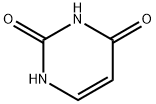
Uracil (U) is one of the four nucleotide bases in RNA, with the other three being adenine (A), cytosine (C) and guanine (G). In RNA, uracil pairs with adenine. In a DNA molecule, the nucleotide thymine (T) is used in place of uracil. Uracil is a product of spontaneous deamination of cytosine and is potentially mutagenic. The monofunctional UNG DNA glycosylase is the main defense against uracil residues in DNA. It co-localizes with RPA and PCNA and is believed to remove uracil during replication. Uracil readily undergoes regular reactions including oxidation, nitration, and alkylation. While in the presence of phenol (PhOH) and sodium hypochlorite (NaOCl), uracil can be visualized in ultraviolet light. Uracil also has the capability to react with elemental halogens because of the presence of more than one strongly electron donating group.
- Related articles
- Related Questions
- Molecular structure differences between Uracil and thymine Dec 16,2024
Uracil (U) and thymine (T) are both nitrogenous bases in the genetic information of genes and play an important role in the structure and function of nucleic acids (DNA and RNA).
- What is the relationship between Uracil and Uracil-DNA glycosylase? Dec 16,2024
Uracil is an important component of RNA and is closely related to the transmission of genetic traits. Uracil can be used to repair and select large-scale DNA sequence deletions.
- Uracil: Different sources in DNA and Role in Adaptive Immunity Oct 29,2024
Uracil is one of the four nucleotide bases in the nucleic acid RNA. In RNA, uracil binds to adenine via two hydrogen bonds.
See also

Sodium sulfite (SS) is a white, odourless, crystalline powder with a sulfurous taste that has reducing properties.....
Apr 22,2026Inorganic chemistry