


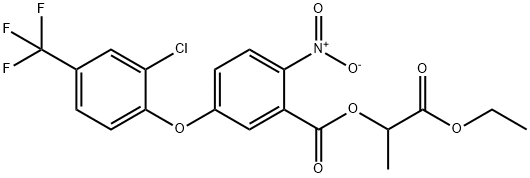
Lactofen synthesis
- Product Name:Lactofen
- CAS Number:77501-63-4
- Molecular formula:C19H15ClF3NO7
- Molecular Weight:461.77
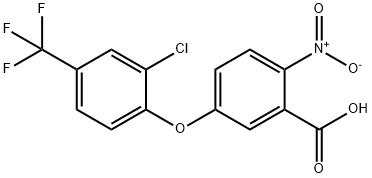
50594-66-6
187 suppliers
$78.00/1g
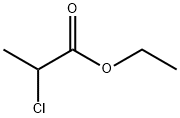
535-13-7
213 suppliers
$10.00/5g
77501-63-4
119 suppliers
$129.00/100mg
Yield:-
Reaction Conditions:
with potassium hydroxide in ethyl acetate;Heating;Solvent;Reagent/catalyst;
Steps:
1
In a 5000 ml four-necked reaction flask equipped with azeotropic dehydration apparatus, 2,500 ml of ethyl acetate solvent was added and stirredStirring and then into the acifluorfen 1000g (2.76 mol), 170 g (3.0 moles) of potassium hydroxide as a sheet, and 440 g (3.22 moles) of ethyl 2-chloropropionate were added. After completion of the heating, the reaction-produced water was removed by azeotropic dehydration. In 80 ~ 85 ° C insulation, while the reaction side of the system dehydration, to be completely reacted acifluorfen, the vacuum of -0.095MPa, the liquid temperature f 80 ° C ethyl acetate evaporated, and finally through (60 ~ 80 ° C). The purity of the product was 88.3% and the yield was 98.2%. The purity of the product was 88.3%.
References:
CN103694123,2016,B Location in patent:Paragraph 0024-0027