| Identification | More | [Name]
Manganese dioxide | [CAS]
1313-13-9 | [Synonyms]
ACTIVATED MANGANESE DIOXIDE
BLACK MANGANESE OXIDE
MANGANESE(+4)OXIDE
MANGANESE BINOXIDE
MANGANESE BIOXIDE
MANGANESE DIOXIDE
MANGANESE DIOXIDE, ACTIVATED
MANGANESE (IV) DIOXIDE
MANGANESE(IV) OXIDE
MANGANESE(IV) OXIDE ACTIVATED
MANGANESE(IV) OXIDE ON CARRIER
MANGANESE OXIDE
MANGANESE PEROXIDE
MANGANESE SUPEROXIDE
PYROLUSITE
Bog manganese
bogmanganese
Braunstein
Bruinsteen
C.I. 77728 | [EINECS(EC#)]
215-202-6 | [Molecular Formula]
MnO2 | [MDL Number]
MFCD00003463 | [Molecular Weight]
86.94 | [MOL File]
1313-13-9.mol |
| Chemical Properties | Back Directory | [Appearance]
Iron-black to dark steel-gray or bluish
mineral; black or bluish-black streak; metallic or
dull luster. Sol-
uble in hydrochloric acid.
| [Melting point ]
535 °C (dec.) (lit.) | [bulk density]
600-800kg/m3 | [density ]
5.02
| [vapor pressure ]
0-0Pa at 25℃ | [storage temp. ]
Store below +30°C. | [solubility ]
<0.001g/l insoluble | [form ]
powder
| [color ]
gray
| [Specific Gravity]
5.026 | [Stability:]
Stable. Incompatible with strong acids, strong reducing agents, organic materials. | [Water Solubility ]
insoluble | [Specific Heat Capacity]
Cp(crystal):0.622268J/(g·K),at 25℃ | [Crystal Structure]
Rutile type | [crystal system]
square | [Merck ]
14,5730 | [Space group]
P42/mnm | [Lattice constant]
| a/nm | b/nm | c/nm | α/o | β/o | γ/o | V/nm3 | | 0.4398 | 0.4398 | 0.2873 | 90 | 90 | 90 | 0.0556 |
| [Reactivity Profile]
The stability of manganese dioxide is due primarily to its insolubility. It is, however, readily attacked by reducing agents in acid solution, for example oxidizing concentrated hydrochloric acid to chlorine. In hot concentrated alkali it dissolves to give a purple solution which contains an equimolar mixture of trivalent manganese, probably as (Mn(OH)6)3- and manganate(V), (MnO4)3-. Manganese dioxide is also one of the most active catalysts for the oxidation of carbon monoxide near room temperature. | [Exposure limits]
ACGIH: TWA 0.02 mg/m3; TWA 0.1 mg/m3
OSHA: Ceiling 5 mg/m3
NIOSH: IDLH 500 mg/m3; TWA 1 mg/m3; STEL 3 mg/m3 | [Cosmetics Ingredients Functions]
ANTIOXIDANT | [InChI]
1S/Mn.2O | [InChIKey]
NUJOXMJBOLGQSY-UHFFFAOYSA-N | [SMILES]
O=[Mn]=O | [Uses]
The chemistry of manganese(III) is not extensive, and in the higher oxidation states manganese dioxide and potassium permanganate are the most important compounds.
Manganese dioxide is also used in the manufacture of glass to bleach the colour of any iron present. If excess manganese dioxide is added, a pink coloration can be produced in the glass and if a large excess is present it will appear black.
Other uses of manganese dioxide include its use as an oxidizing agent in organic chemistry and as an oxidizing agent in safety matches, fireworks and flares. It is also an effective adsorbent for hydrogen sulphide and is also used to colour ceramics. | [CAS DataBase Reference]
1313-13-9(CAS DataBase Reference) | [NIST Chemistry Reference]
manganese(IV) dioxide(1313-13-9) | [EPA Substance Registry System]
1313-13-9(EPA Substance) |
| Safety Data | Back Directory | [Symbol(GHS) ]
 
GHS07,GHS08 | [Signal word ]
Warning | [Hazard statements ]
H302+H332-H373 | [Precautionary statements ]
P260-P264-P270-P301+P312-P304+P340+P312-P314 | [Hazard Codes ]
Xn | [Risk Statements ]
R20/22:Harmful by inhalation and if swallowed . | [Safety Statements ]
S25:Avoid contact with eyes . | [RIDADR ]
3137 | [WGK Germany ]
1
| [RTECS ]
OP0350000
| [TSCA ]
Yes | [REACH Registrations]
Active | [PackingGroup ]
III | [HS Code ]
28201000 | [Storage Class]
13 - Non Combustible Solids | [Hazard Classifications]
Acute Tox. 4 Inhalation
Acute Tox. 4 Oral
STOT RE 2 Inhalation | [Safety Profile]
Poison by intravenous
and intratracheal routes. Moderately toxic by
subcutaneous route. Experimental
reproductive effects. A powerful oxidizer.
Flammable by chemical reaction. It must not
be heated or rubbed in contact with easily
oxilzable matter. Violent thermite reaction
when heated with aluminum. Potentially explosive reaction with hydrogen peroxide,
peroxomonosulfuric acid, chlorates + heat,
anilinium perchlorate. Ignition on contact
with hydrogen sulfide. Violent reaction with
oxidizers, potassium azide (when warmed),
diboron tetrafluoride, Incandescent reaction
with calcium hydride, chlorine trifluoride,
rubidium acetylide (at 350℃). Vigorous
reaction with hydroxylaminium chloride.
Incompatible with H202, H2SO j, Naz02.
Keep away from heat and flammable
materials. See also MANGANESE
COMPOUNDS. | [Toxicity]
LD50 orally in rats: >40 mmole/kg (Holbrook) |
| Hazard Information | Back Directory | [Hazard]
Oxidizing agent, may ignite organic materials. | [Potential Exposure]
Manganese dioxide is used as depolarizer for dry cell batteries, for production of manganese metal; as an oxidizing agent; laboratory reagent;
and in making pyrotechnics and matches; in dry cell
batteries. | [First aid]
If this chemical gets into the eyes, remove any
contact lenses at once and irrigate immediately for at least
15 minutes, occasionally lifting upper and lower lids. Seek
medical attention immediately. If this chemical contacts
the skin, remove contaminated clothing and wash immediately with soap and water. Seek medical attention immediately. If this chemical has been inhaled, remove from
exposure, begin rescue breathing (using universal precautions, including resuscitation mask) if breathing has
stopped and CPR if heart action has stopped. Transfer
promptly to a medical facility. When this chemical has
been swallowed, get medical attention. Give large quantities of water and induce vomiting. Do not make an unconscious person vomit.
| [Shipping]
UN1479 Oxidizing solid, n.o.s., Hazard Class:
5.1; Labels: 5.1-Oxidizer, Technical Name Required.
UN3137 (powder) Oxidizing solid, flammable, Hazard
Class: 5.1; Labels: 5.1-Oxidizer, 4.1 Flammable solid,
Technical Name Required. | [Incompatibilities]
A powerful oxidizer. Incompatible with
strong acids; reducing agents; combustible materials (such as
fuel and clothing; organic materials. Mixtures with calcium
hydride is a heat- and friction-sensitive explosive. Vigorous
reaction with hydrogen sulfide, diboron tetrafluoride; calcium hydride; chlorine trifluoride; hydrogen peroxide; hydroxyaluminum chloride; anilinium perchlorate. Decomposes
when heated above 553�C producing manganese(III)oxide
and oxygen, which increases fire hazard. Reacts violently
with aluminum (thermite reaction), potassium azide; rubidium acetylide; in the presence of hea | [Waste Disposal]
Generators of waste (equal to
or greater than 100 kg/mo) containing this contaminant,
EPA hazardous waste number N450, must conform to
USEPA regulations for storage, transportation, treatment,
and disposal of waste. Dispose of waste material as
hazardous waste using a licensed disposal contractor to an
approved landfill. Dispose of contents and container to
an approved waste disposal plant. Containers must be
disposed of properly by following package label directions
or by contacting your local or federal environmental
control agency, or by contacting your regional EPA
office. All federal, state, and local environmental regulations must be observed. Do not discharge into drains
or sewers | [General Description]
Manganese(IV) oxide (MnO2) is an eco-friendly chemical having a high theoretical specific capacitance. | [Flammability and Explosibility]
Nonflammable | [reaction suitability]
reagent type: oxidant | [Industrial uses]
Manganese dioxide (MnO2) is soluble in water and HNO3 and soluble in HCl. It occurs in nature as the blue-black mineral pyrolusite. In glass, manganese dioxide is used as a colorant and decolorizer.
The major use of manganese oxides is an ore of manganese for the manufacturing of steel; manganese serves to increase the hardness and decrease the brittleness of steel. Another important use of manganese oxides is as the cathode material of common zinc/carbon and alkaline batteries (such as flashlight batteries). | [storage]
Color Code—Yellow: Reactive Hazard (strong oxidizer); Store in a location separate from other materials, especially flammables and combustibles. Prior to working with this chemical you should be trained on its proper handling and storage. Manganese dioxide must be stored to avoid contact with heat and flammable materials and oxidizers (such as perchlorates, peroxides, permanganates, chlorates, and nitrates), since violent reactions occur. See also incompatibilities above. See OSHA Standard 1910.104 and NFPA 43A Code for the Storage of Liquid and Solid Oxidizers for detailed handling and storage regulations. |
| Questions and Answers (Q&A) | Back Directory | [Physical properties]
Black tetragonal crystals; density 5.08 g/cm3; Moh’s hardness 6.3; decomposes at 535°C; insoluble in water.
| [Uses]
Manganese(IV) oxide is the most important ore of manganese from which the metal is mostly manufactured. The oxide occurs in nature as the mineral pyrolusite as heavy gray lumps, or black when powdered.
The mineral is used to produce manganese metal, most manganese salts, and also manganese steel and other alloys. The metallurgical applications of manganese(IV) oxide mainly involve making ferromanganese and special manganese alloys. Another important application of manganese(IV) oxide is in manufacturing dry-cell batteries and alkaline cells. The oxide also is a colorant in brick, tile, porcelain and glass; a drier for paints and varnishes; a 552 MANGANESE(IV) OXIDEpreparation for printing and dyeing textiles; a curing agent for polysulfide rubbers; an adsorbent for hydrogen sulfide and sulfur dioxide; an oxidizing agent in many organic syntheses such as quinone and hydroquinone; and a catalyst in laboratory preparation of oxygen from potassium chlorate. Manganese(IV) oxide also is used to make welding rods and fluxes, and ceramic magnets (ferrites); and is an additive to fertilizers.
| [Preparation]
Pure manganese(IV) oxide (precipitate form) may be prepared by reducing permanganate ion with a manganous salt:
2KMnO4 + 3MnSO4 + 2H2O → 5MnO2 + K2SO4 + 2H2SO4
Manganese(IV) oxide can also be precipitated by oxidation of a manganese(II) salt using an oxidizing agent such as hypochlorite or peroxydisulphate:
Mn2+ + S2O82– + 2H2O → MnO2 + 2SO42– + 4H+
Manganese(IV) oxide may also be made by thermal decomposition of manganese(II) nitrate; or from roasting manganese(II) carbonate in air: Mn(NO3)2 → MnO2 + 2NO2
MnCO3 + ½ O2 → MnO2 + CO2
A highly active gamma-MnO2 can be produced by treating manganese(III) oxide with hot sulfuric acid:
Mn2O3 + H2SO4 → MnO2 + MnSO4 + H2O
Mn2O3 is derived from pyrolusite by heating the mineral at 600–800°C or reducing with powdered coal at 300°C.
|
| Questions And Answer | Back Directory | [Description]
Manganese dioxide, mainly used as a depolarizer in dry cell batteries, is the most important non-metallic form of manganese. In either traditional alkaline and rechargeable battery cells, Manganese dioxide takes in electrons through a redox reaction, becoming Manganese III oxide. It also has applications in lithium-ion technologies.
It is also the primary precursor to ferromanganese, an alloy of iron used for its lower melting point and low cost.
It is black in appearance and used to color glass and ceramics, as well as for cave art and possibly body paint in prehistorical eras. Further uses include the purification of drinking water, and production of pure oxygen and chlorine.
| [Chemical Properties]
Manganese dioxide ( MnO2 ) , known as pyrolusite when found in nature , is the most plentiful of all the manganese compounds. MnO2 is Iron-black to dark steel-gray or bluish mineral; black or bluish-black streak; metallic or dull luster. Soluble in hydrochloric acid.
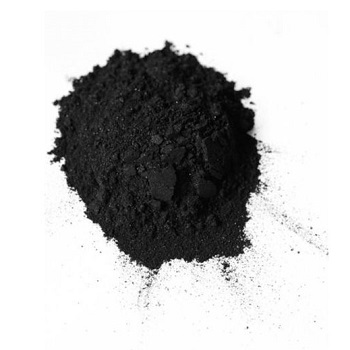
Manganese dioxide is an important component in batteries. It is also used in glassmaking to remove the green fint caused by iron impurities.
| [Toxicity evaluation]
Inhalation exposure to high concentrations of manganese dusts (specifically manganese dioxide [MnO2] and manganese tetroxide [Mn3O4]) can cause an inflammatory response in the lung, which, over time, can result in impaired lung function. Lung toxicity is manifested as an increased susceptibility to infections such as bronchitis and can result in manganic pneumonia. Pneumonia has also been observed following acute inhalation exposures to particulates containing other metals. Thus, this effect might be characteristic of inhalable particulate matter and might not depend solely on the manganese content of the particle. | [Resources]
https://www.hindawi.com/journals/jnm/2013/736375/
https://b2bbusinessnews.wordpress.com/2012/03/22/uses-and-benefits-of-manganese-dioxide/
http://metalpedia.asianmetal.com/metal/manganese/application.shtml
https://www.chemistryworld.com/podcasts/manganese-dioxide/9217.article
https://en.wikipedia.org/wiki/Manganese_dioxide
https://en.wikipedia.org/wiki/Ferroalloy
|
|
| Company Name: |
J & K SCIENTIFIC LTD.
|
| Telephone: |
18210857532 18210857532 |
| Website: |
https://www.jkchemical.com |
| Company Name: |
Alfa Aesar
|
| Telephone: |
400-6106006 |
| Website: |
http://chemicals.thermofisher.cn |
| Company Name: |
Energy Chemical
|
| Telephone: |
400-0056266 |
| Website: |
www.energy-chemical.com |
|