| Identification | More | [Name]
Propionaldehyde | [CAS]
123-38-6 | [Synonyms]
1-PROPANAL
ALDEHYDE C3
FEMA 2923
METHYLACETALDEHYDE
N-PROPANAL
PROPANAL
PROPIONALDEHYDE
PROPIONALDHYDE
PROPIONIC ALDEHYDE
PROPYL ALDEHYDE
PROPYLIC ALDEHYDE
TRIMETHYLENE GLYCOL
1-Propanone
Aldehyde propionique
aldehydepropionique
aldehydepropionique(french)
C2H5CHO
ethanecarbaldehyde
Ethylcarboxaldehyde
femanumber2923 | [EINECS(EC#)]
204-623-0 | [Molecular Formula]
C3H6O | [MDL Number]
MFCD00007020 | [Molecular Weight]
58.08 | [MOL File]
123-38-6.mol |
| Chemical Properties | Back Directory | [Description]
Propionaldehyde is a volatile liquid substance which consists of one carbonyl group and its characteristic functional group. The main functional group is an aldehyde which classifies propionaldehyde in the carbonyls. The main trunk of this substance is a short aliphatic chain. The carbonyl group determines, to a large extent, its chemical properties and most importantly its nucleophilic property. Propionaldehyde is oxidized very easily. | [Appearance]
Propionaldehyde is a colorless liquid. Very
strong, intensive fruit odor | [Melting point ]
-81 °C (lit.) | [Boiling point ]
46-50 °C (lit.) | [density ]
0.805 g/mL at 25 °C(lit.)
| [vapor density ]
2 (vs air)
| [vapor pressure ]
18.77 psi ( 55 °C)
| [FEMA ]
2923 | [refractive index ]
n20/D 1.362(lit.)
| [Fp ]
−16 °F
| [storage temp. ]
2-8°C
| [solubility ]
soluble in chloroform; miscible with alcohol and ether | [form ]
Liquid | [color ]
White | [Specific Gravity]
0.815 (20/4℃) | [Odor]
at 0.10 % in propylene glycol. earthy alcohol wine whiskey cocoa nutty | [Stability:]
Stable. Highly flammable. Incompatible with oxidizing agents, strong acids, strong bases. | [biological source]
synthetic | [explosive limit]
2.3-21%(V) | [Odor Threshold]
0.001ppm | [Odor Type]
ethereal | [Water Solubility ]
540 g/L (20 ºC) | [Specific Heat Capacity]
Cp(gas):1.38946J/(g·K),at 25℃ | [Sensitive ]
Air Sensitive | [JECFA Number]
83 | [Merck ]
14,7823 | [BRN ]
506010 | [Henry's Law Constant]
9.9×10⁻² mol/(m3Pa) at 25℃, Burkholder et al. (2019) | [Dielectric constant]
18.9(17℃) | [Exposure limits]
ACGIH: TWA 20 ppm | [Major Application]
flavors and fragrances | [Cosmetics Ingredients Functions]
PERFUMING | [InChI]
1S/C3H6O/c1-2-3-4/h3H,2H2,1H3 | [InChIKey]
NBBJYMSMWIIQGU-UHFFFAOYSA-N | [SMILES]
[H]C(=O)CC | [LogP]
0.59 at 25℃ | [Uses]
Propionaldehyde is produced by the oxo reaction of ethylene with carbon monoxide and hydrogen. n-Propyl alcohol is produced by hydrogenation of propionaldehyde, and propionic acid is made by oxidation of propionaldehyde.
n-Propyl alcohol is used as solvent in printing inks and as an intermediate in the preparation of agricultural chemicals. Propionic acid is used as a grain preservative as, for example, in preventing spoilage of wet corn used as animal feed. The use of propionic acid as a grain preservative is an alterna tive to drying by heating, which consumes fuel, and is considered mostly when fuel is expensive. | [CAS DataBase Reference]
123-38-6(CAS DataBase Reference) | [NIST Chemistry Reference]
Propanal(123-38-6) | [EPA Substance Registry System]
123-38-6(EPA Substance) |
| Safety Data | Back Directory | [Symbol(GHS) ]
  
GHS02,GHS05,GHS07 | [Signal word ]
Danger | [Hazard statements ]
H225-H302+H332-H315-H318-H335 | [Precautionary statements ]
P210-P280-P301+P312-P303+P361+P353-P304+P340+P312-P305+P351+P338 | [Hazard Codes ]
F,Xi,Xn | [Risk Statements ]
R11:Highly Flammable.
R36/37/38:Irritating to eyes, respiratory system and skin . | [Safety Statements ]
S9:Keep container in a well-ventilated place .
S16:Keep away from sources of ignition-No smoking .
S29:Do not empty into drains . | [RIDADR ]
UN 1275 3/PG 2
| [WGK Germany ]
1
| [RTECS ]
UE0350000
| [Autoignition Temperature]
404 °F | [TSCA ]
Yes | [REACH Registrations]
Active | [HazardClass ]
3 | [PackingGroup ]
II | [HS Code ]
29121900 | [Storage Class]
3 - Flammable liquids | [Hazard Classifications]
Acute Tox. 4 Inhalation
Acute Tox. 4 Oral
Eye Dam. 1
Flam. Liq. 2
Skin Irrit. 2
STOT SE 3 | [Safety Profile]
Moderately toxic by
skin contact, ingestion, and subcutaneous
routes. Mddly toxic by inhalation. A skin
and severe eye irritant. Flammable liquid.
Dangerous fire hazard when exposed to heat
or flame; reacts vigorously with oxidizers.
Explosive in the form of vapor when
exposed to heat or flame. Vigorous
polymerization reaction with methyl
methacrylate. To fight fire, use alcohol
foam, CO2, dry chemical. When heated to
decomposition it emits acrid smoke and
irritating fumes. See also ALDEHYDES. | [Hazardous Substances Data]
123-38-6(Hazardous Substances Data) | [Toxicity]
LD50 orally in rats: 1.4 g/kg; LC for rats in air: 8000 ppm (Smyth) |
| Raw materials And Preparation Products | Back Directory | [Raw materials]
Hydrogen-->Propylene oxide-->Carbon monoxide-->Palladium chloride-->Acrolein-->Phosphine-->Cobalt carbonyl-->Dichromate, Ion chromatography standard solution, Specpure, Cr2O7ˉ2 1000μg/ml-->1-Chloropropane | [Preparation Products]
Propionic acid-->Polyethylene-->Propylamine-->Admire-->Ethyl 3,4-dihydro-6-methyl-4-oxothieno[2,3-d]pyrimidine-2-carboxylate-->1-Propanol-->Imidacloprid-->1-(2,6-Difluoropyridin-3-yl)propan-1-one-->5-Methyl-2-pyrrol-1-yl-thiophene-3-carboxylic acid-->2-(Chloromethyl)-6-methylthieno[2,3-d]pyrimidin-4(3H)-one ,97%-->2-Amino-5-methylthiazole-->6-Methyl-3H-thieno[2,3-d]pyrimidin-4-one-->Pramipexole-->2-Amino-5-methyl-thiophene-3-carboxylic acid ethyl ester-->N-Ethylpropylamine-->4-Heptanone-->2,3,5-Collidine-->1-Phenyl-1-propanol-->2-Methyl-2-pentenoic acid-->2,2-Bis(hydroxymethyl)propionic acid-->2-Methyl-pent-4-enal |
| Hazard Information | Back Directory | [General Description]
A clear colorless liquid with an overpowering fruity-like odor. Less dense than water. Flash point 15°F. Vapors are heavier than air. | [Reactivity Profile]
PROPIONALDEHYDE(123-38-6) may form explosive peroxides. Reacts vigorously with oxidizing agents. Explosive in the form of vapor when exposed to heat or flame [Lewis]. Incompatible with strong bases and strong reducing agents. Vigorous polymerization reaction with methyl methacrylate. Polymerization may also occur in the presence of acids or caustics . | [Air & Water Reactions]
Highly flammable. Soluble in water. | [Hazard]
Flammable, dangerous fire risk, explosive
limits in air 3.0–16%. Upper respiratory tract irri-
tant.
| [Health Hazard]
Vapors will irritate nose and throat, and may cause nausea and vomiting. Liquid causes eye irritation. | [Potential Exposure]
Used as a synthetic flavoring; as
a disinfectant and preservative; to make propionic acid;
in plastic and rubber manufacturing; to make alkyl resins
and plasticizers. | [Fire Hazard]
Behavior in Fire: Vapor is heavier than air and may travel considerable distance to a source of ignition and flash back. | [First aid]
If this chemical gets into the eyes, remove any
contact lenses at once and irrigate immediately for at least 15
minutes, occasionally lifting upper and lower lids. Seek med-
ical attention immediately. If this chemical contacts the skin,
remove contaminated clothing and wash immediately with
soap and water. Seek medical attention immediately. If this
chemical has been inhaled, remove from exposure, begin res-
cue breathing (using universal precautions, including resusci-
tation mask) if breathing has stopped and CPR if heart action
has stopped. Transfer promptly to a medical facility. When
this chemical has been swallowed, get medical attention.
Give large quantities of water and induce vomiting. Do not
make an unconscious person vomit. Medical observation is
recommended for 24?48 hours after breathing overexposure,
as pulmonary edema may be delayed. As first aid for pulmo-
nary edema, a doctor or authorized paramedic may consider
administering a drug or other inhalation therapy. | [Shipping]
UN1275 Propionaldehyde, Hazard Class: 3;
Labels: 3-Flammable liquid. | [Incompatibilities]
Incompatible with strong acids; amines.
Incompatible with oxidizers (chlorates, nitrates, peroxides,
permanganates, perchlorates, chlorine, bromine, fluorine,
etc.); contact may cause fires or explosions. Keep away
from alkaline materials, strong bases, strong acids, oxoa-
cids, epoxides. Strong caustics; reducing agents can cause
explosive polymerization. Can self-ignite if finely dispersed
on porous or combustible material, such as fabric. Heat or
UV light can cause decomposition. Aldehydes are fre-
quently involved in self-condensation or polymerization
reactions. These reactions are exothermic; they are often
catalyzed by acid. Aldehydes are readily oxidized to give
carboxylic acids. Flammable and/or toxic gases are gener-
ated by the combination of aldehydes with azo, diazo com-
pounds, dithiocarbamates, nitrides, and strong reducing
agents. Aldehydes can react with air to give first peroxo
acids, and ultimately carboxylic acids. These autoxidation
reactions are activated by light, catalyzed by salts of
transition metals, and are autocatalytic (catalyzed by the
products of the reaction). The addition of stabilizers (anti-
oxidants) to shipments of aldehydes retards autoxidation | [Chemical Properties]
Propionaldehyde has a characteristic sharp and pungent odor similar to acetaldehyde.It undergoes reactions typical for the low molecular weight aldehydes, which, because of the terminal carbonyl group, are very reactive. Contamination or the exposure to elevated temperatures may induce a hazardous polymerization.
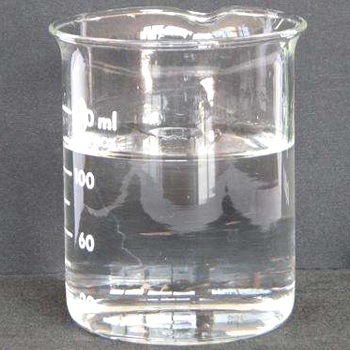
Propionaldehyde is a colorless, flammable liquid with a suffocating fruity odor. It is used as Intermediate for the chemical industry, for example for the manufacture of pharmaceuticals, pesticides, perfumes and plastics.
| [Occurrence]
Reported found in apple aroma and in the essential oils of camphor, Rosa centifolia, clary sage, Pinus excelsa
and Pinus silverstris. Also reported found in over 100 natural products including apple, banana, sweet cherry, sour cherry, black
currant grapes, melon, pineapple, strawberry, cabbage, carrot, celery, cucumber, garlic, onion, leek, potato, peas, rutabaga, tomato,
Scotch spearmint oil, vinegar, bread and bread preferment, blue cheeses, cheddar cheese, Swiss cheese, butter, milk, cream, boiled
egg, caviar, fatty fish, cooked turkey, beef, pork and chicken, beer, rum, cognac, whiskies, grape wines, coffee, cocoa, tea, roasted
filberts and peanuts, peanut oil, potato chips, pecans, oats, honey, soybeans, Arctic bramble, beans, Bantu beer, plum brandy, cauliflower,
Brussels sprouts, rice, prickly pear, peated malt, clary sage, truffle, krill, oysters, loganberry, Chinese quince and maté. | [Definition]
ChEBI: An aldehyde that consists of ethane bearing a formyl substituent. The parent of the class of propanals. | [Preparation]
By oxidation of propyl alcohol, or by dry distillation of barium propionate with calcium formate. | [Preparation]
Propionaldehyde is prepared in the usual way by the oxidation of n-propyl alcohol. It can also be prepared by dehydrogenating the alcohol by passing the vapors over a heated copper or brass catalyst. This avoids the danger of further oxidation to propionic acid.
The reactions of propionaldehyde are practically like those of acetaldehyde. It must be remembered that only the two alpha hydrogen atoms are active in replacement and condensation reactions. | [Flammability and Explosibility]
Flammable | [Biochem/physiol Actions]
Taste at 5-10 ppm | [Carcinogenicity]
In a mutagenic test in V79 cells, Eder et al. observed
that propionaldehyde is not mutagenic at 1 mM, but is toxic at 2mM. Similar to acrolein, Eder et al. suggested that
the mutagenicity of this compound is mediated by its bifunctionality,
whereas its cytotoxicity is mediated by the aldehyde
function. | [Purification Methods]
the aldehyde with CaSO4 or CaCl2, and fractionally distil it under nitrogen or in the presence of a trace of hydroquinone (to retard oxidation). Blacet and Pitts [J Am Chem Soc 74 3382 1952] repeatedly distilled the middle fraction in a vacuum until it no longer gave a solid polymer when cooled to -80o. It is stored with CaSO4. [Beilstein 1 IV 3165.] | [Toxics Screening Level]
The initial threshold screening level (ITSL) for propionaldehyde is 8 μg/m3 based on an annual averaging time. | [Waste Disposal]
Propionaldehyde is destroyed by burning in achemical incinerator equipped with an afterburnerand scrubber. Permanganate oxidationis a suitable laboratory method of destruction. |
|
| Company Name: |
Alfa Aesar
|
| Telephone: |
400-6106006 |
| Website: |
http://chemicals.thermofisher.cn |
| Company Name: |
Energy Chemical
|
| Telephone: |
400-0056266 18918157536; |
| Website: |
http://www.energy-chemical.com |
| Company Name: |
Jia Xing Isenchem Co.,Ltd
|
| Telephone: |
0573-85285100 18627885956 |
| Website: |
https://www.chemicalbook.com/ShowSupplierProductsList14265/0_EN.htm |
| Company Name: |
jiliang chemicals
|
| Telephone: |
21-62165282 |
| Website: |
http://www.jiliangchem.com |
|