| Identification | More | [Name]
2-Hydroxy-4-methoxybenzaldehyde | [CAS]
673-22-3 | [Synonyms]
2-HYDROXY-4-ANISALDEHYDE
2-HYDROXY-4-METHOXYBENZALDEHYDE
2-HYDROXY-P-ANISALDEHYDE
4-METHOXY-2-HYDROXYBENZALDEHYDE
4-METHOXYSALICYLALDEHYDE
AKOS 222-39
2-hydroxy-p-anisaldehyd
4-Methoxysalicyaldehyde
4-o-methylresorcylaldehyde
o-Hydroxy-p-methoxybenzaldehyde
p-Anisaldehyde, 2-hydroxy-
Salicylaldehyde, 4-methoxy-
2-Hydroxy-4-methoxylbenzaldehyde
2-Hydroxy-p-anisaldehyde~4-Methoxysalicylaldehyde
4-MethoxySalicyladehyde
2-Hydroxyanisaldehyde
2-hydroxy-4-Methoxysalicylaldehyde
Benzaldehyde, 2-hydroxy-4-methoxy-
2-Formyl-5-methoxyphenol | [EINECS(EC#)]
211-604-0 | [Molecular Formula]
C8H8O3 | [MDL Number]
MFCD00003327 | [Molecular Weight]
152.15 | [MOL File]
673-22-3.mol |
| Chemical Properties | Back Directory | [Appearance]
creamy white to beige or light brown cryst. powder | [Melting point ]
41-43 °C (lit.) | [Boiling point ]
124 °C / 12mmHg | [density ]
1.2143 (rough estimate) | [FEMA ]
4435 | 2-HYDROXY-4-METHOXYBENZALDEHYDE | [refractive index ]
1.4447 (estimate) | [Fp ]
>230 °F
| [storage temp. ]
Store below +30°C. | [solubility ]
DMF: 30 mg/ml; DMSO: 30 mg/ml; Ethanol: 30 mg/ml | [form ]
Crystalline Powder | [pka]
7.79±0.10(Predicted) | [color ]
Creamy white to beige or light brown | [Odor]
at 100.00 %. vanillin like | [Odor Type]
vanilla | [Water Solubility ]
Solubility in methanol is almost transparent. Insoluble in water. | [Sensitive ]
Air Sensitive | [Detection Methods]
HPLC | [JECFA Number]
2277 | [BRN ]
1072443 | [InChI]
1S/C8H8O3/c1-11-7-3-2-6(5-9)8(10)4-7/h2-5,10H,1H3 | [InChIKey]
WZUODJNEIXSNEU-UHFFFAOYSA-N | [SMILES]
[H]C(=O)c1ccc(OC)cc1O | [LogP]
1.79 | [CAS DataBase Reference]
673-22-3(CAS DataBase Reference) | [NIST Chemistry Reference]
Benzaldehyde, 2-hydroxy-4-methoxy-(673-22-3) | [EPA Substance Registry System]
673-22-3(EPA Substance) |
| Questions And Answer | Back Directory | [Synthesis]
Paraformaldehyde (67.5 mmol) was added to a mixture of a phenolic derivative (10 mmol), anhydrous MgCl2 (1.43 g, 15 mmol), and Et3N (5.3 mL, 37.5 mmol) in THF (50 mL). The mixture was heated under reflux for 24 hours, or until the material was completely consumed at room temperature as determined by TLC. The reaction mixture was cooled to room temperature. The reaction mixture was quenched with 1 M HCl. The product was extracted with EtOAc (50 mL x 3). The organic layers were combined. The organic layers were washed with saturated brine. The organic layers were dried with Na2SO4. The organic layers were filtered. All volatiles were removed under reduced pressure. 2-Hydroxy-4-methoxybenzaldehyde was isolated by rapid chromatography (EtOAc/hexane) on silica gel.
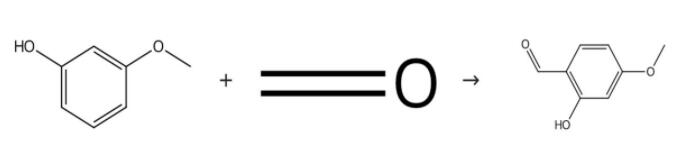 Figure 2-Hydroxy-4-methoxybenzaldehyde |
| Safety Data | Back Directory | [Symbol(GHS) ]

GHS07 | [Signal word ]
Warning | [Hazard statements ]
H315-H319-H335 | [Precautionary statements ]
P261-P280a-P304+P340-P305+P351+P338-P405-P501a | [Hazard Codes ]
Xi | [Risk Statements ]
R36/37/38:Irritating to eyes, respiratory system and skin . | [Safety Statements ]
S26:In case of contact with eyes, rinse immediately with plenty of water and seek medical advice .
S36:Wear suitable protective clothing .
S24/25:Avoid contact with skin and eyes . | [WGK Germany ]
3
| [RTECS ]
BZ2810000
| [F ]
10 | [Hazard Note ]
Irritant | [TSCA ]
Yes | [REACH Registrations]
Active | [HS Code ]
29124900 | [Storage Class]
11 - Combustible Solids |
| Hazard Information | Back Directory | [Chemical Properties]
creamy white to beige or light brown cryst. powder | [Uses]
2-Hydroxy-4-methoxybenzaldehyde was used in the synthesis of Schiff base ligand. | [Definition]
ChEBI: 2-Hydroxy-4-methoxybenzaldehyde is a member of methoxybenzenes and a member of phenols. | [Synthesis Reference(s)]
Tetrahedron Letters, 7, p. 4153, 1966 DOI: 10.1016/0005-2760(66)90119-6 | [General Description]
2-Hydroxy-4-methoxybenzaldehyde is the main component of root bark essential oil of Periploca sepium Bunge. It is a potential tyrosinase inhibitor present in African medicinal plants. | [storage]
Store at -20°C |
|
| Company Name: |
J & K SCIENTIFIC LTD.
|
| Telephone: |
18210857532 18210857532 |
| Website: |
https://www.jkchemical.com |
| Company Name: |
Alfa Aesar
|
| Telephone: |
400-6106006 |
| Website: |
http://chemicals.thermofisher.cn |
| Company Name: |
Energy Chemical
|
| Telephone: |
400-0056266 |
| Website: |
www.energy-chemical.com |
| Company Name: |
Jia Xing Isenchem Co.,Ltd
|
| Telephone: |
0573-85285100 18627885956 |
| Website: |
https://www.chemicalbook.com/ShowSupplierProductsList14265/0_EN.htm |
|