| Identification | More | [Name]
Sodium dithionite | [CAS]
7775-14-6 | [Synonyms]
dithionous acid disodium salt
HYDROSULFITE
SODIUM DITHIONITE
SODIUM HYDROSULFITE
SODIUM HYDROSULPHITE
SODIUM HYPODISULFITE
SODIUM HYPOSULFITE
blankit
burmol
disodiumdithionite
disodiumhydrosulfite
hydros
sodiumdithionite[na2(s2o4)]
sodiumhydrosulfite(na2s2o4)
sodiumhydrosulfite88%
sodiumsulfoxylate
vatrolite
v-briteb
HYDROSULPHITE OF SOD
SODIUM HYDR | [EINECS(EC#)]
231-890-0 | [Molecular Formula]
Na2O4S2 | [MDL Number]
MFCD00011640 | [Molecular Weight]
174.11 | [MOL File]
7775-14-6.mol |
| Chemical Properties | Back Directory | [Appearance]
White solid | [Melting point ]
300 °C
| [Boiling point ]
1390°C | [bulk density]
1250kg/m3 | [density ]
2.13 | [Fp ]
>100°C | [storage temp. ]
Store at RT. | [solubility ]
250 g/L (20°C) | [form ]
Powder/Solid | [color ]
White | [Odor]
None or slight scent of sulfur dioxide | [PH]
5.5-8.5 (50g/l, H2O, 20℃) | [Stability:]
Stable, but air sensitive. Incompatible with strong acids, strong oxidizing agents, water, moisture. | [Water Solubility ]
250 g/L (20 ºC) | [Sensitive ]
Moisture Sensitive | [Merck ]
14,8626 | [Cosmetics Ingredients Functions]
VISCOSITY CONTROLLING
REDUCING | [InChI]
1S/2Na.H2O4S2/c;;1-5(2)6(3)4/h;;(H,1,2)(H,3,4)/q2*+1;/p-2 | [InChIKey]
JVBXVOWTABLYPX-UHFFFAOYSA-L | [SMILES]
[Na+].[Na+].[O-]S(=O)S([O-])=O | [LogP]
-2.756 (est) | [CAS DataBase Reference]
7775-14-6(CAS DataBase Reference) | [EPA Substance Registry System]
Sodium hydrosulfite (7775-14-6) |
| Safety Data | Back Directory | [Symbol(GHS) ]
 
GHS02,GHS07 | [Signal word ]
Danger | [Hazard statements ]
H251-H302-H319 | [Precautionary statements ]
P235-P264-P270-P280-P301+P312-P305+P351+P338 | [Hazard Codes ]
Xn | [Risk Statements ]
R7:May cause fire.
R22:Harmful if swallowed.
R31:Contact with acids liberates toxic gas. | [Safety Statements ]
S26:In case of contact with eyes, rinse immediately with plenty of water and seek medical advice .
S28:After contact with skin, wash immediately with plenty of ... (to be specified by the manufacturer) .
S43:In case of fire, use ... (indicate in the space the precise type of fire-fighting equipment. If water increases the risk add-Never use water) .
S7/8:Keep container tightly closed and dry . | [RIDADR ]
UN 1384 4.2/PG 2
| [WGK Germany ]
1
| [F ]
1-10 | [Autoignition Temperature]
>200 °C | [TSCA ]
Yes | [REACH Registrations]
Active | [HazardClass ]
4.2 | [PackingGroup ]
II | [HS Code ]
28311010 | [Storage Class]
4.2 - Pyrophoric and self-heating hazardous materials | [Hazard Classifications]
Acute Tox. 4 Oral
Eye Irrit. 2
Self-heat. 1 | [Safety Profile]
Toxic and an irritant. An allergen. Flammable when exposed to heat or flame. Ignites on contact with water or sodium chlorite. To extinpsh fires, flood the reacting mass with water. Decomposes violently when heated to 19OOC and emits toxic fumes of SOx and NazO | [Hazardous Substances Data]
7775-14-6(Hazardous Substances Data) | [Toxicity]
LD50 orally in Rabbit: 2500 mg/kg |
| Raw materials And Preparation Products | Back Directory | [Raw materials]
Ethanol-->Sodium hydroxide-->Methanol-->ZINC-->Sulfur dioxide-->Sodium metabisulfite-->Sodium formate-->Zinc hydroxide-->SODIUM SULFITE HEPTAHYDRATE-->ZINC HYDROSULFITE | [Preparation Products]
3-Methylxanthine-->Luminol-->4-(1,2,3-Thiadiazol-4-yl)aniline-->4-Azaindole-->3-Bromo-4-(trifluoromethoxy)aniline-->Trimethylhydroquinone-->Riboflavin-->8-Bromo-3-methyl-3,7-dihydro-purine-2,6-dione-->5-Hydroxyanthranilic acid-->Sodium salicylate-->3-Bromo-4-(trifluoromethoxy)phenol-->4-Aminoresorcinol hydrochloride-->8-Methylxanthine-->(2,4-Diaminopteridin-6-yl)methanol hydrochloride hydrate-->4,5,6-Triaminopyrimidine-->3-(4-Amino-phenyl)-chromen-2-one-->5,6-Diamino-2,4-dihydroxypyrimidine sulfate-->1H-1,2,3-Triazolo[4,5-d]pyrimidin-7-amine-->Disperse Blue BGL-->(2-Cyano-3-pyridinyl)carbamic acid, 1,1-dimethyl ethyl ester-->3-(3-Aminophenyl)-2H-chromen-2-one-->4,5,6-Triaminopyrimidine sulfate-->Hexachlorophene-->4-Aminobenzyl alcohol-->8-AZAGUANINE-->N-(2,5-Dimethoxyphenyl)-2-hydroxydibenzofuran-3-carboxamide-->Sodium dithionate-->Vitamin B2-->2-Amino-5-chlorobenzaldehyde-->Naphthol AS-OL-->4.4'-Diaminodiphenylaminesulfate-->2,5-Diamino-4,6-dihydroxy-pyrimidine-->5,6-Diamino-1-methyluracil-->5-Aminouracil-->5-Fluoroindole-2-carboxylic acid-->BASIC BLUE 3-->Glyoxalbis(2-hydroxyanil)-->3-Hydroxy-N-2-naphthyl-2-naphthamide-->Trifluoromethyl sulfinyl chloride |
| Hazard Information | Back Directory | [General Description]
Sodium dithionite is a whitish to light yellow crystalline solid having a sulfur dioxide-like odor. SODIUM HYDROSULFITE(7775-14-6) spontaneously heats on contact with air and moisture. This heat may be sufficient to ignite surrounding combustible materials. SODIUM HYDROSULFITE(7775-14-6) is soluble in water. Under prolonged exposure to fire or intense heat containers of this material may violently rupture. SODIUM HYDROSULFITE(7775-14-6) is used in dyeing and to bleach paper pulp. | [Reactivity Profile]
Inorganic reducing agents, such as SODIUM HYDROSULFITE, react with oxidizing agents to generate heat and products that may be flammable, combustible, or otherwise reactive. Their reactions with oxidizing agents may be violent. Sulfites and hydrosulfites (dithionites) can react explosively with strong oxidizing agents (sodium chlorite). Sulfites generate gaseous sulfur dioxide in contact with oxidizing acids and nonoxidizing acids. | [Hazard]
Fire risk in contact with moisture. To extin-
guish fires, flood the reacting mass with water.
| [Health Hazard]
Fire will produce irritating, corrosive and/or toxic gases. Inhalation of decomposition products may cause severe injury or death. Contact with substance may cause severe burns to skin and eyes. Runoff from fire control may cause pollution. | [Fire Hazard]
Flammable/combustible material. May ignite on contact with moist air or moisture. May burn rapidly with flare-burning effect. Some react vigorously or explosively on contact with water. Some may decompose explosively when heated or involved in a fire. May re-ignite after fire is extinguished. Runoff may create fire or explosion hazard. Containers may explode when heated. | [Chemical Properties]
White solid | [Definition]
ChEBI: An inorganic sodium salt that is the disodium salt of dithionous acid. | [Production Methods]
An alternative route for dithionite production is the reduction of sodium bisulfite with sodium borohydride. Sodium borohydride is obtained by reacting boron trimethyl ester, B(OCH3)3, with sodium hydride, NaH. The resulting product is hydrolyzed with water, and methanol is evaporated. An alkaline, aqueous solution is obtained, containing about 12% NaBH4 and 40% NaOH. This solution is commercially available. Reaction to dithionite is made on-site by adding sulfur dioxide and some additional caustic soda. Storages, handling and mixing of sulfur dioxide and of the Borol® liquid are not everywhere cost competitive.
NaBH4+8NaOH+8SO2 → 4Na2S2O4+NaBO2+6H2O. | [Flammability and Explosibility]
Notclassified | [reaction suitability]
reagent type: reductant | [storage]
Sodium dithionite crystals are available in steel containers (1 or 2 tons) or in steel drums (200 kg). Because of the danger of spontaneous ignition in humid air, sodium dithionite must be stored under dry and cool conditions. The sites for the preparation of dithionite solutions must permit handling without risks, high humidity should be avoided and remote fire control should be available.
Commercial dithionite products are classified as self-igniting hazardous goods (Class 4.2, UN 1384). Local rules for transportation and storage must be obeyed. | [Properties and Applications]
|
INDEX/GRADE
|
SH-90
|
SH-88
|
SH-85
|
|
CONTENT
|
90%
|
88%
|
85%
|
|
Na
2
S
2
O
4
|
≥90%
|
≥88%
|
≥85%
|
|
Fe
|
≤20ppm
|
≤20ppm
|
≤20ppm
|
|
Zinc (Zn)
|
≤1ppm
|
≤1ppm
|
≤1ppm
|
|
Other heavy metal
(calculated as Pb)
|
≤1ppm
|
≤1ppm
|
≤1ppm
|
|
Water Insolubles
|
≤0.05%
|
≤0.05%
|
≤0.05%
|
|
Shelf Life(month)
|
12
|
12
|
12
|
|
| Questions And Answer | Back Directory | [Description]
Sodium dithionite is also called sodium hydrosulfite, sodium hydrosulphite, sodium sulfoxylate, and sulfoxylate. Sodium dithionite is not stable under physiological conditions, with the rate of decomposition increasing with increasing acidity. Upon contact with moisture, it is oxidized to hydrogen sulfite (HSO3-), sulfite (SO32-) and hydrogen sulfate (HSO4-). Under strongly acidic conditions it may liberate sulfur dioxide. Under anaerobic conditions (such as in the lower gastrointestinal tract), hydrogen sulfite (HSO3-) and thiosulfate (S2O32-) may be formed. Hydrogen sulfite (HSO3-) can be absorbed after ingestion. It is efficiently metabolized and the major part rapidly is excreted as sulfate into the urine.
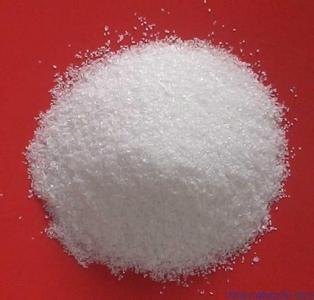
Sodium dithionite is widely used in industry owing to its reducing properties and ability to react with oxygen. It is used in textile industry for dyeing, in the pulp and paper industry as a reducing bleach to remove yellow discoloration from cellulose based products, as an oxygen scavenger in boilers, in conservation to remove iron stains on cultural artifacts, and in water treatment for controlling iron flash on white fabrics in bleaching environments. It is also used in photographic film, clay, wine, leather goods, foods and beverages, polymers, cleaners, gas purification, environmental remediation, metal recovery, and chemical processing.
| [Uses]
Sodium dithionite is a strong reducing agent and is produced commercially for use in vat dyeing. | [Preparation]
The most convenient production method involves a reaction of a suspension of metallic zinc dust with sulphur dioxide to form zinc dithionite, followed by metathesis with sodium carbonate to form the corresponding sodium dithionite:
Zn+2SO2->ZnS2O4
ZnS204 + Na2CO3 -> Na2S2O4 + ZnCO3
| [References]
[1] http://chemicalsolutions.net/sodium-hydrosulfite.html
[2] http://www.inchem.org/documents/sids/sids/7775146.pdf
[3] Lyndsie Selwyn, Season Tse (2008) The chemistry of sodium dithionite and its use in conservation, 53, 61-73
|
|
| Company Name: |
Alfa Aesar
|
| Telephone: |
400-6106006 |
| Website: |
http://chemicals.thermofisher.cn |
| Company Name: |
Energy Chemical
|
| Telephone: |
400-0056266 |
| Website: |
www.energy-chemical.com |
| Company Name: |
Adamas Reagent, Ltd.
|
| Telephone: |
4006009262 13023226327 |
| Website: |
http://www.tansoole.com |
|