| Identification | More | [Name]
(R)-Tomoxetine | [CAS]
83015-26-3 | [Synonyms]
n-methyl-3-(2-methylphenoxy)benzenepropanamine
(r)-tomoxetine
Tomoxetine
TomoxetineHcl
N-Methyl--(2-methylphenoxy)benzenepropanamine
N-Methyl-3-(2-methylphenoxy)-3-phenylpropylamine
(R)-N-Methyl-3-phenyl-3-(2-methylphenoxy)-1-propanamine
Methyl[(R)-3-phenyl-3-(2-methylphenoxy)propyl]amine | [EINECS(EC#)]
617-427-9 | [Molecular Formula]
C17H21NO | [MDL Number]
MFCD00865352 | [Molecular Weight]
255.35 | [MOL File]
83015-26-3.mol |
| Questions And Answer | Back Directory | [Synthesis]
1. 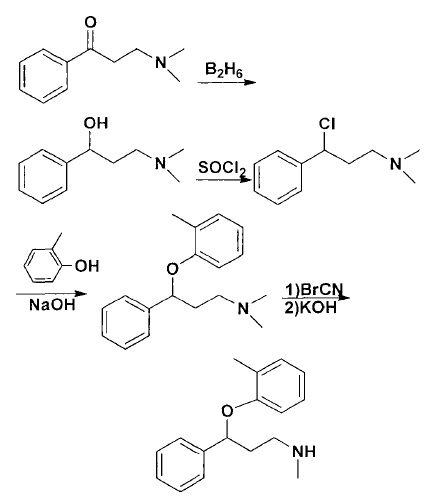
Figure 1 shows the synthetic route 1 of (R)-Tomoxetine.
This route does not consider the optical rotation of (R)-Tomoxetine, resulting in a low yield. The final step of the reaction requires N-demethylation, and the demethylating reagent used is highly toxic, leading to a low reaction yield. Furthermore, the chlorination of the amino alcohol also generates dehydration products.
2. 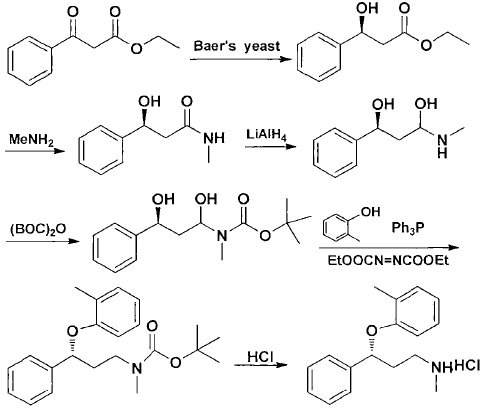
Figure 2 shows the second synthetic route of (R)-Tomoxetine.
This route employs asymmetric synthesis catalyzed by chemical enzymes, using ethyl benzophthaloacetate as the precursor. The target product with optical purity is obtained through six steps, resulting in a relatively high overall yield. However, the price of chemical enzymes is high, which is a consideration for economic efficiency.
3. 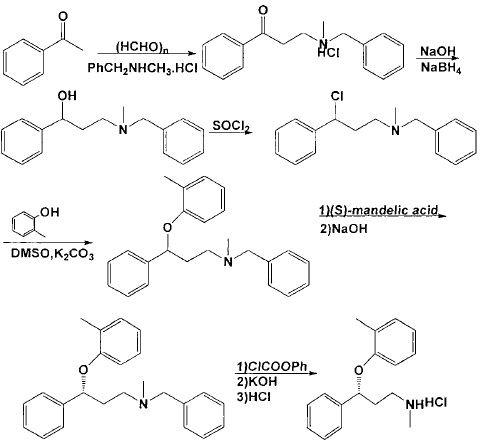
Figure 3 shows the synthetic route 3 of (R)-Tomoxetine.
This synthetic route involves six steps: Mannich reaction, reduction, chlorination, etherification, resolution, and demethylation, yielding the target product. The operation is simple, the reaction conditions are mild, and the yield is relatively high. However, the cited literature is a patent and is subject to copyright restrictions.
4. 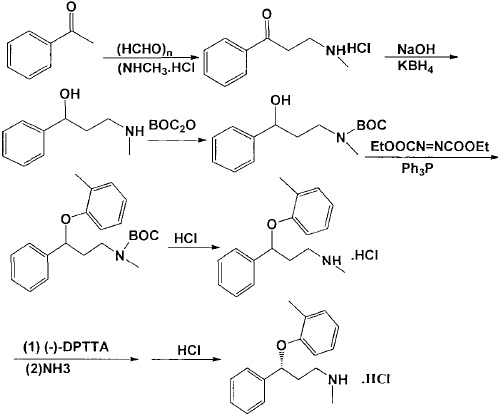
Figure 4 shows the synthetic route 4 of (R)-Tomoxetine. |
| Hazard Information | Back Directory | [Uses]
(R)-Tomoxetine is a compound active at novel site on receptor-operated calcium channels useful for treatment of neurological disorders and diseases.
| [Definition]
(R)-Tomoxetine is a secondary amino compound having methyl and 3-(2-methylphenoxy)-3-phenylpropan-1-yl substituents.
| [Brand name]
Strattera
(Lilly). | [in vivo]
Atomoxetine (Tomoxetine) (0.3-3 mg/kg; i.p.; 0-4 hours; male Sprague-Dawley rats) increases extracellular norepinephrine and dopamine by 3-fold and increases Fos expression in the rat prefrontal cortex[1].
Atomoxetine (Tomoxetine) (0.1-5 mg/kg; i.p. and p.o; for 14 days; spontaneously hypertensive rat) can improve behaviors associated with ADHD in rats[3]. | Animal Model: | Male Sprague-Dawley rats[1] | | Dosage: | 0.3, 1 and 3 mg/kg | | Administration: | Intraperitoneal injection; for 4 hours | | Result: | Increased the number of cells expressing Fos-like immunoreactivity in PFC 3.7-fold and increased extracellular norepinephrine and dopamine by 3-fold. |
| Animal Model: | Spontaneously hypertensive rat (SHR)[3] | | Dosage: | 0.1, 0.3, 1.25 and 5.0 mg/kg | | Administration: | Intraperitoneal injection and oral administration; for 14 days | | Result: | Had non-impact on the measurement of motor activity. |
|
|
|