Anti-tuberculous mycobacterium leprae drugs
In addition to Mycobacterium tuberculosis, other mycobacteria can also be pathogenic to humans. Because of their colonies formed during culture are not typical features of Mycobacterium tuberculosis, they are given the name "atypical mycobacteria", while now they are more commonly referred to as "non-tuberculous mycobacteria" (NTM).Mycobacterium tuberculosis can be divided into 4 groups according to the pigment production or rapid growth (Runyon, 1965). After the initial report published of Runyon's classification system, the report of disease caused by NTM lesions in the southeastern United States emerged. The epidemiology of these patients and general TB patients are different. These patients are older, most of whom are white, and their lungs are often suffered from chronic disease. However, the existing anti-TB drug treatment are ineffective. In order to understand the occurrence of NTM disease, we have found some information in the United States’ 1981-1983 epidemiological studies: the highest incidence is Mycobacterium avium complex (MAC), followed by Mycobacterium kansas and mycobacterium - Mycobacterium tumefaciens (O Brien et al., 1987). In some areas of the United States, NTM may be as common as tuberculosis. Human infections appear to arise from mycobacteria in the environment.
Leprosy is caused by leprosy bacillus infection. Mycobacterium leprae and Mycobacterium tuberculosis both belong to the genus Mycobacterium, and they have similar points in the form and response to drugs. Some anti-tuberculosis drugs can also be used for the treatment of leprosy, such as rifampicin which is the main leprosy drug, ammonia thiourea which also have a role. Anti-leprosy drugs are mainly sulfone drugs.
Click on the specific product, view the latest prices of the products, information, serving information
| Structure |
Chemical Name |
CAS |
MF |
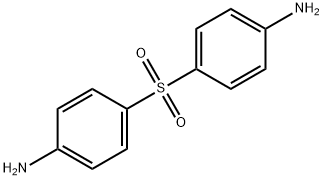 |
4,4'-Diaminodiphenylsulfone |
80-08-0 |
C12H12N2O2S |
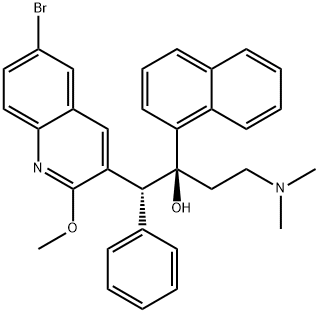 |
TMC-207 |
843663-66-1 |
C32H31BrN2O2 |
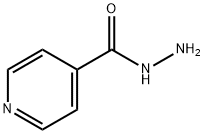 |
Isoniazid |
54-85-3 |
C6H7N3O |
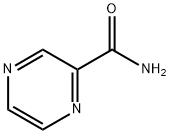 |
Pyrazinamide |
98-96-4 |
C5H5N3O |
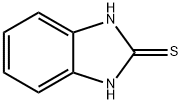 |
2-Mercaptobenzimidazole |
583-39-1 |
C7H6N2S |
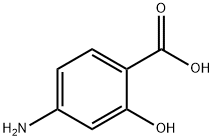 |
4-Aminosalicylic acid |
65-49-6 |
C7H7NO3 |
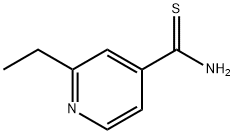 |
Ethionamide |
536-33-4 |
C8H10N2S |
 |
Aluminoparaaminosalicylate calcium |
14641-21-5 |
C14H13AlCaN2O8 |
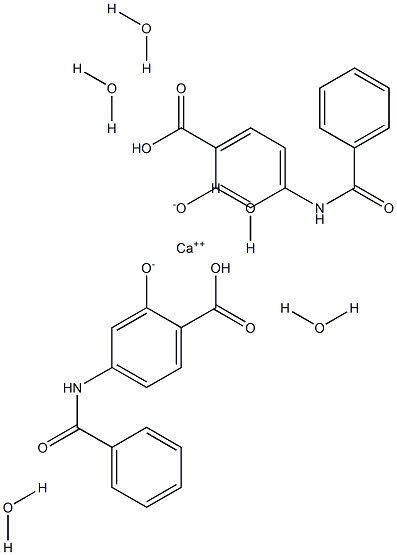 |
Benzoylpas calcium pentahydrate |
5631-00-5 |
C28H30CaN2O13 |
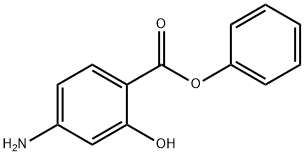 |
Phenyl-4-aminosalicylate |
133-11-9 |
C13H11NO3 |
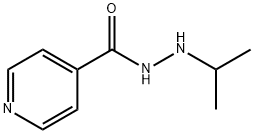 |
iproniazid |
54-92-2 |
C9H13N3O |
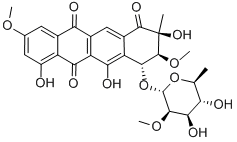 |
Steffimycin |
11033-34-4 |
C28H30O13 |
 |
Contezolid acefosamil |
1807365-35-0 |
C20H19F3N4NaO8P |
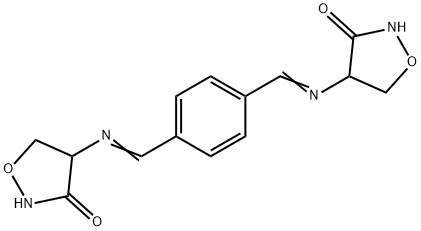 |
TERIZIDONE |
25683-71-0 |
C14H14N4O4 |
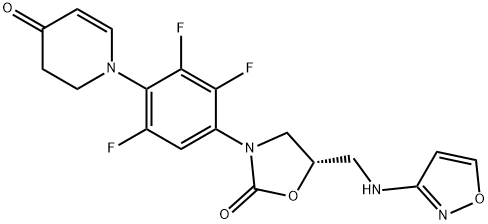 |
Contezolid |
1112968-42-9 |
C18H15F3N4O4 |
![2(1H)-Quinolinone, 5-[[(3R,4R)-1-(4-chloro-2,6-difluorophenyl)-3,4-dihydroxy-4-piperidinyl]methoxy]-8-fluoro-3,4-dihydro-](/CAS/20200611/GIF/1883747-71-4.gif) |
2(1H)-Quinolinone, 5-[[(3R,4R)-1-(4-chloro-2,6-difluorophenyl)-3,4-dihydroxy-4-piperidinyl]methoxy]-8-fluoro-3,4-dihydro- |
1883747-71-4 |
C21H20ClF3N2O4 |
![Calcium 2-[[hydroxy(4-pyridyl)methylene]hydrazono]propionate](/CAS/GIF/3428-05-5.gif) |
Calcium 2-[[hydroxy(4-pyridyl)methylene]hydrazono]propionate |
3428-05-5 |
|
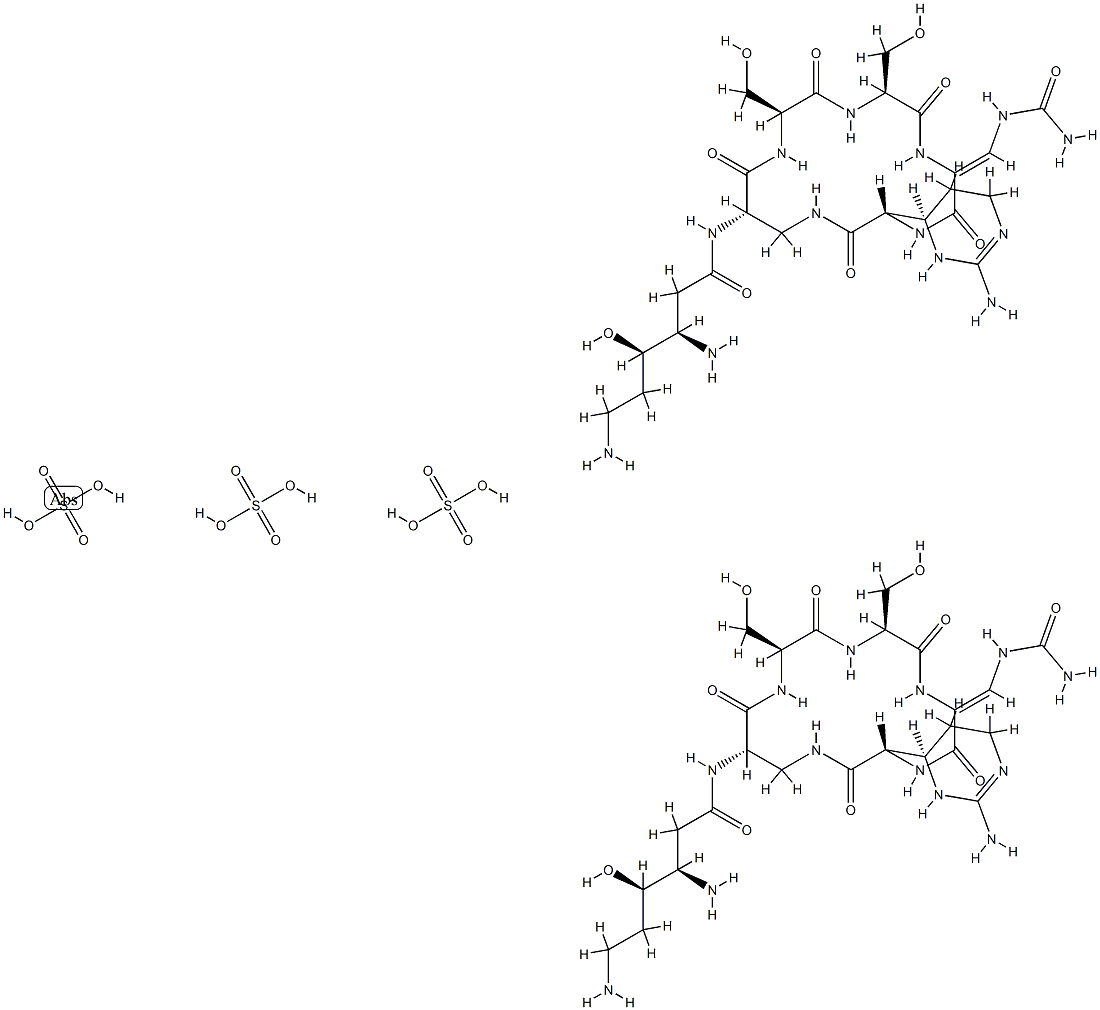 |
1,4,7,10,13-Pentaazacyclohexadecane, cyclic peptide deriv. |
53760-33-1 |
C50H92N26O32S3 |
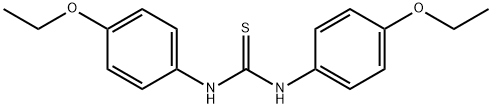 |
Etocarlide |
1234-30-6 |
C17H20N2O2S |
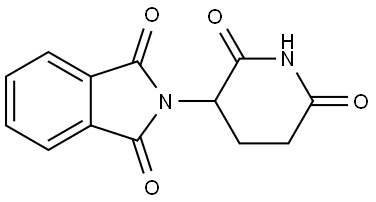 |
Thalidomide |
50-35-1 |
C13H10N2O4 |
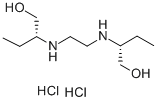 |
Ethambutol dihydrochloride |
1070-11-7 |
C10H24N2O2.2ClH |
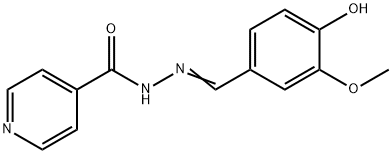 |
Ftivazide |
149-17-7 |
C14H13N3O3 |
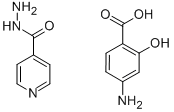 |
Pasiniazid |
2066-89-9 |
C13H14N4O4 |
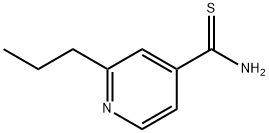 |
Protionamide |
14222-60-7 |
C9H12N2S |
 |
isonoazone |
|
|
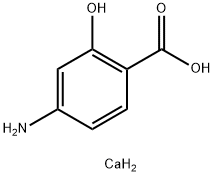 |
Calcium 4-aminosalicylate |
133-15-3 |
C7H9CaNO3 |
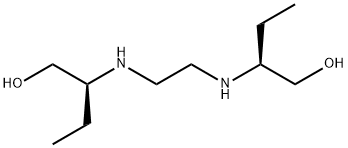 |
Ethambutol |
74-55-5 |
C10H24N2O2 |
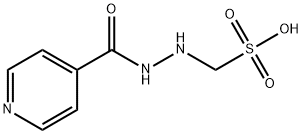 |
methaniazide |
13447-95-5 |
C7H9N3O4S |
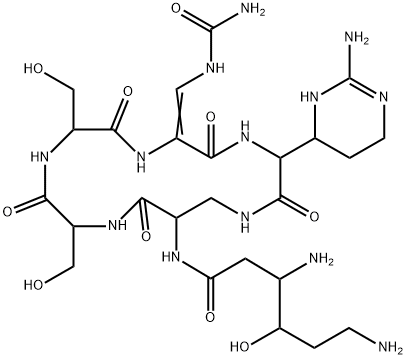 |
Enviomycin |
33103-22-9 |
C25H43N13O10 |
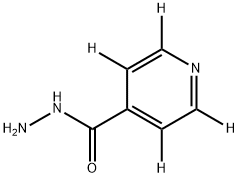 |
Isoniazid-D4 |
774596-24-6 |
C6H7N3O |
 |
1-Phenyl-1-propyne |
623-32-5 |
C20H36O2 |
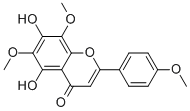 |
LYSIONOTIN |
152743-19-6 |
C18H16O7 |
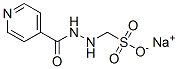 |
2'-(sulphomethyl)isonicotinohydrazide, monosodium salt |
3804-89-5 |
C7H9N3O4S.Na |
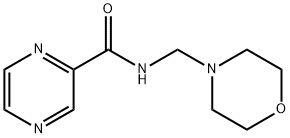 |
morinamide |
952-54-5 |
C10H14N4O2 |
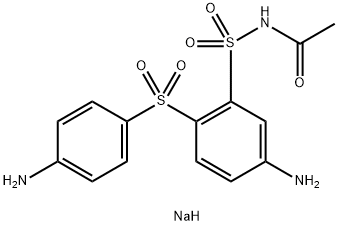 |
SulfadiasulfoneSodium |
128-12-1 |
C14H16N3NaO5S2 |
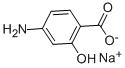 |
Sodium 4-aminosalicylate |
133-10-8 |
C7H7NO3.Na |
 |
RIFAMPICIN |
38776-75-9 |
C43H59N4NaO12 |
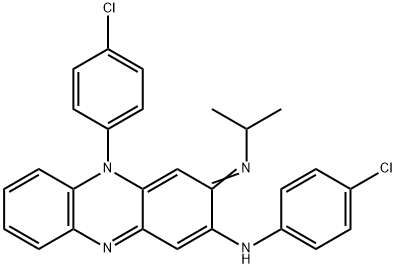 |
Clofazimine |
2030-63-9 |
C27H22Cl2N4 |
|
|
Furilazone |
|
|
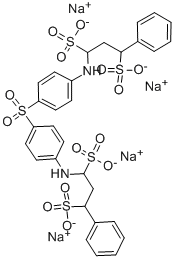 |
solasulfone |
133-65-3 |
C30H28N2O14S5.4Na |
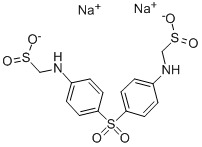 |
Aldesulfone Sodium |
144-75-2 |
C14H14N2Na2O6S3 |
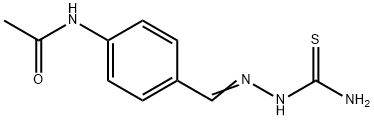 |
THIACETAZONE |
104-06-3 |
C10H12N4OS |
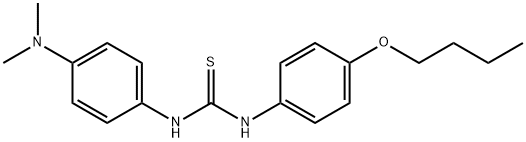 |
thiambutosine |
500-89-0 |
C19H25N3OS |
![Rifamycin, 3-[[(4-methyl-1-piperazinyl)imino]methyl]-, mixt. with 4-pyridinecarboxylic acid hydrazide](/CAS/20211123/GIF/51683-28-4.gif) |
Rifamycin, 3-[[(4-methyl-1-piperazinyl)imino]methyl]-, mixt. with 4-pyridinecarboxylic acid hydrazide |
51683-28-4 |
C49H65N7O13 |
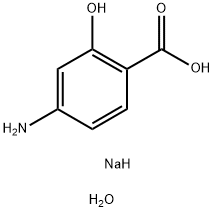 |
Sodium 4-aminosalicylate dihydrate |
6018-19-5 |
C7H10NNaO4 |
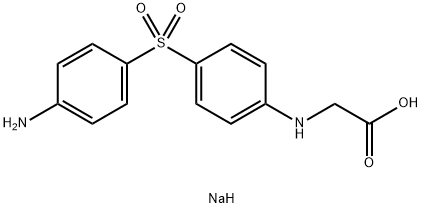 |
acediasulfone sodium |
127-60-6 |
C14H15N2NaO4S |
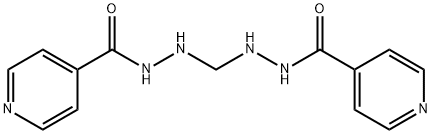 |
Isonicotinic acid 2,2'-methylenedihydrazide |
1707-15-9 |
C13H14N6O2 |