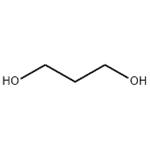
- 1,3-Propanediol
-
-
2026-05-04
- CAS:504-63-2
- Min. Order:
- Purity: 0.99
- Supply Ability:
- 1,3-Propanediol
-

- $29.00 / 1mL
-
2026-04-22
- CAS:504-63-2
- Min. Order:
- Purity: 99.00%
- Supply Ability: 10g
- 1 3 Propanediol
-

- $10.00 / 25kg
-
2026-03-20
- CAS:504-63-2
- Min. Order: 1kg
- Purity: 99.5%
- Supply Ability: 100 TON
Related articles - 1,3-Propanediol Production
- 1,3-Propanediol is prepared by a two-step process involving the hydrolysis of acrolein to 3-hydroxypropanal followed by hydrog....
- Nov 10,2022
|
| | 1,3-Propanediol Basic information |
| Product Name: | 1,3-Propanediol | | Synonyms: | 1,3-Propanediol Vetec(TM) reagent grade, 98%;KARL FISCHER WATER STANDARD 100 Μ;1,3-Propanediol, Standard for GC,>=99.5%(GC);1,3-prpanediol;1,3-Propylenediol;2-(Hydroxymethyl)ethanol;2-Deoxyglycerol;beta-Propylene glycol | | CAS: | 504-63-2 | | MF: | C3H8O2 | | MW: | 76.09 | | EINECS: | 207-997-3 | | Product Categories: | Glycerolipid Metabolism;Building Blocks;Chemical Synthesis;Metabolic Pathways;Metabolomics;Organic Building Blocks;alpha,omega-Alkanediols;alpha,omega-Bifunctional Alkanes;Monofunctional & alpha,omega-Bifunctional Alkanes;Cell culture;Oxygen Compounds;Polyols;bc0001;504-63-2 | | Mol File: | 504-63-2.mol |  |
| | 1,3-Propanediol Chemical Properties |
| Melting point | -27 °C (lit.) | | Boiling point | 214 °C/760 mmHg (lit.) | | density | 1.053 g/mL at 25 °C (lit.) | | vapor pressure | 0.8 mm Hg ( 20 °C) | | refractive index | n20/D 1.440(lit.) | | FEMA | 4753 | 1,3-PROPANEDIOL | | Fp | >230 °F | | storage temp. | Store below +30°C. | | solubility | H2O: soluble | | pka | 14.46±0.10(Predicted) | | form | Oily Liquid | | color | Clear | | PH | 4.5-7.0 (100g/l, H2O, 20℃) | | explosive limit | 2.5%(V) | | Water Solubility | 100 g/L | | Merck | 14,9714 | | BRN | 969155 | | Henry's Law Constant | 1.6×10⁴ mol/(m3Pa) at 25℃, Burkholder et al. (2019) | | Dielectric constant | 35.0(20℃) | | Cosmetics Ingredients Functions | SOLVENT
VISCOSITY CONTROLLING | | InChI | 1S/C3H8O2/c4-2-1-3-5/h4-5H,1-3H2 | | InChIKey | YPFDHNVEDLHUCE-UHFFFAOYSA-N | | SMILES | OCCCO[H] | | LogP | -0.71 at 20℃ | | CAS DataBase Reference | 504-63-2(CAS DataBase Reference) | | NIST Chemistry Reference | 1,3-Propanediol(504-63-2) | | EPA Substance Registry System | 1,3-Propanediol (504-63-2) |
| Hazard Codes | Xi | | Risk Statements | 38 | | Safety Statements | 23-24/25 | | WGK Germany | 1 | | RTECS | TY2010000 | | Autoignition Temperature | 405 °C | | TSCA | TSCA listed | | HS Code | 29053980 | | Storage Class | 10 - Combustible liquids | | Hazardous Substances Data | 504-63-2(Hazardous Substances Data) | | Toxicity | LD50 orally in Rabbit: 15670 mg/kg LD50 dermal Rabbit > 20000 mg/kg |
| | 1,3-Propanediol Usage And Synthesis |
| Chemical Properties | 1,3-Propanediol, an isomer of propylene glycol, is a viscous, colorless, odorless, hygroscopic liquid that has a brackish irritating taste. miscible with various solvents such as water, ethanol, acetone, chloroform (chloroform) and ether, and is insoluble in benzene. Combustible. | | Uses | 1,3-Propanediol is used as a solvent for thin film preparations, in the production of polymers such as polytrimethylene terephthalate, adhesives, laminates, coatings, moldings, aliphatic polyesters, as an antifreeze and in wood paint. It also acts as a reagent for vinyl epoxide synthon, for epoxide ring-opening, for polymerization reactions and for natural product syntheses. | | Definition | ChEBI: Propane-1,3-diol is the simplest member of the class of propane-1,3-diols, consisting of propane in which one hydrogen from each methyl group is substituted by a hydroxy group. A colourless, viscous, water-miscible liquid with a high (210℃) boiling point, it is used in the synthesis of certain polymers and as a solvent and antifreeze. It has a role as a protic solvent and a metabolite. | | Application | 1,3-Propanediol /PDO/ is mainly used for making polytrimethylene terephthalate polymer, which is used in fibers and fabrics, for example, carpets, textiles, engineering thermoplastics, nonwovens, films, and monofilaments. PDO finds also use as chain extender in thermoplastic polyurethanes, where it contributes to improved thermal, hydrolytic and dimensional stability. In adipate polyesters with other diols these diols are partly substituted by 1,3-propanediol to break crystallinity in order to obtain liquid polyester polyols. In polyesters for powder coatings PDO improves the flexibility but lowers the glass transition temperature somewhat. PDO finds also uses in cosmetics and personal care products, engine coolants, and solvents for ink-jet and screen inks. | | Biosynthesis | 1,3-Propanediol (1,3-PDO) can be produced by fermentation from glycerol, with different strains such as Klebsiella pneumoniae, Clostridium butyricum, Clostridium pasteurianum, and Citrobacter freundii. Drawbacks of industrial fermentation using these strains are strong inhibition of 1,3-PDO production and by-products during fermentation. | | Flammability and Explosibility | Non flammable | | Synthesis | 1,3-Propanediol is produced commercially by Degussa starting from acrolein.
CH2CHCHO + H2O → HOHCH2CH2CHO
HOHCH2CH2CHO + H2 → HOHCH2CH2CH2OH
The addition of water under mild acidic conditions gives 3-hydroxypropionaldehyde with high selectivity. Preferentially buffer solutions with a pH 4-5 or weak acidic ion exchange resins are used as catalysts. Further hydrogenation of this aqueous solutions gives 1,3-propanediol. There is an alternative route via hydroformylation of ethylene oxide and subsequent hydrogenation of the intermediate 3-hydroxypropionaldehyde. | | Purification Methods | Dry this diol with K2CO3 and distil it under reduced pressure. More extensive purification involves conversion with benzaldehyde to 2-phenyl-1,3-dioxane (m 47-48o) which is subsequently decomposed by shaking with 0.5M HCl (3mL/g) for 15minutes and standing overnight at room temperature. After neutralisation with K2CO3, the benzaldehyde is removed by steam distillation and the diol is recovered from the remaining aqueous solution by continuous extraction with CHCl3 for 1day. The extract is dried with K2CO3, the CHCl3 is evaporated and the diol is distilled. [Foster et al. Tetrahedron 6 177 1961, Beilstein 1 IV 2493.] |
| | 1,3-Propanediol Preparation Products And Raw materials |
|