| Company Name: |
BOC Sciences |
| Tel: |
1-631-485-4226; 16314854226 |
| Email: |
info@bocsci.com |
- Acetylshikonin
-

- $35.00
-
2026-07-27
- CAS:24502-78-1
- Purity: 99.74%
- Supply Ability: 10g
- ACETYLSHIKONIN
-
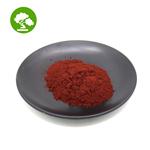
-
2024-04-12
- CAS:24502-78-1
- Min. Order: 1kg
- Purity: 99%
- Supply Ability: 2000ton
- Acetylshikonin
-
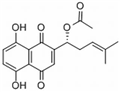
-
2023-02-24
- CAS:24502-78-1
- Min. Order: 20mg
- Purity: ≥98%(HPLC)
- Supply Ability: 10 g
|
| | ACETYLSHIKONIN Basic information |
| Product Name: | ACETYLSHIKONIN | | Synonyms: | (+)-5,8-Dihydroxy-2-[(R)-1-acetoxy-4-methyl-3-pentenyl]-1,4-naphthoquinone;(R)-1-(1,4-Dihydro-5,8-dihydroxy-1,4-dioxonaphthalen-2-yl)-4-methyl-3-pentenyl=acetate;2-[(R)-1-Acetoxy-4-methyl-3-pentenyl]-5,8-dihydroxy-1,4-naphthoquinone;1,4-Naphthoquinone, 5,8-dihydroxy-2-(1-hydroxy-4-methyl-3-pentenyl)-, 2-acetate, (+)-;Nsc110199;Shikonin, acetyl;Shikonin acetate;(+)-5,8-dihydroxy-2-(1-hydroxy-4-methyl-3-pentenyl)-1,4-naphthoquinone2-acet | | CAS: | 24502-78-1 | | MF: | C18H18O6 | | MW: | 330.33 | | EINECS: | | | Product Categories: | Miscellaneous Natural Products | | Mol File: | 24502-78-1.mol | 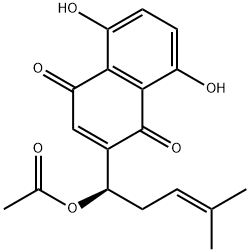 |
| | ACETYLSHIKONIN Chemical Properties |
| Melting point | 86°C | | Boiling point | 553.2±50.0 °C(Predicted) | | density | 1.326±0.06 g/cm3(Predicted) | | storage temp. | 4°C, protect from light | | solubility | Soluble in Chloroform,Dichloromethane,Ethyl Acetate,DMSO,Acetone,etc. | | form | Powder | | pka | 7.12±0.20(Predicted) | | color | Brown to khaki | | Stability: | Hygroscopic | | LogP | 2.700 (est) | | CAS DataBase Reference | 24502-78-1(CAS DataBase Reference) |
| Risk Statements | 36/37/38 | | Safety Statements | 26-36/37/39 | | Toxicity | mouse,LD50,intraperitoneal,41mg/kg (41mg/kg),BEHAVIORAL: CHANGES IN MOTOR ACTIVITY (SPECIFIC ASSAY)BEHAVIORAL: ATAXIA,Nippon Yakurigaku Zasshi. Japanese Journal of Pharmacology. Vol. 73, Pg. 193, 1977. |
| | ACETYLSHIKONIN Usage And Synthesis |
| Chemical Properties | Acetylshikonin is a biologically active compound with anti-cancer and anti-inflammatory activity, which is isolated from the roots of Lithospermum erythrorhizoma. | | Uses | Acetylshikonin is the main ingredient of Zicao, which has used in clinics as a traditional Chinese for thousands of years. It exerts anti-obesity and anti-NAFLD effects through the regulation of lipid metabolism and anti-inflammatory effects. Also, it is a 1,4-naphthoquinone pigment extracted from the roots of Lithospermum erythrorhizon with anti-tumor effects. | | Biological Activity | Acetylshikonin is one naphthoquinone derivative isolated from the Lithospermum erythrorhizon, exhibits weak cytotoxicity against human umbilical vein endothelial cells (HUVECs) with IC50 of over 20 microM, exhibits the antiangiogenic and antitumorigenic effects by suppressing proliferation and angiogenic factors.
Acetylshikonin inhibits the generation of NADPH oxidase complex in the activation of respiratory burst of PMNs, but does not directly inhibit the activity of NADPH oxidase already generated.
Certain shikonin derivatives(such as Acetyl shikonin) act as modulators of the Nur77-mediated apoptotic pathway and identify a new shikonin-based lead that targets Nur77 for apoptosis induction.
Acetylshikonin, shikonin, and alkannin have accelerative effect on the proliferation of granulation tissue in rats.
Acetylshikonin isolated from Arnebia euchroma (Royle) Johnst cell suspension cultures exhibits specific in vivo and in vitro antitumor effects.
Acetylshikonin has inhibitory effect on the edematous response is due neither to the release of steroid hormones from the adrenal gland nor to the glucocorticoid activity, but probably partly to the suppression of mast cell degranulation and partly to protection of the vasculature from mediator challenge.
Acetylshikonin induces apoptosis of hepatitis B virus X protein-expressing human hepatocellular carcinoma cells via endoplasmic reticulum stress. | | in vivo | Acetylshikonin (50 mg/kg; Intraperitoneal injection; Three times per week for 6 weeks) significantly inhibited tumor growth in BALB/c nude mice in a concentration-dependent manner[6].
Acetylshikonin (270-1080 mg/kg; Intragastric administration; Once a day for 30 days) reduces D-galactose-induced (150 mg/kg) cognitive impairment and hippohippoal aging by reducing oxidative stress and neuroinflammation and inhibiting the activation of the p53/p21 signaling pathway in mice[1].
Acetylshikonin (2 mg/kg; Intramuscular injection; Single dose) inhibits Coxsackievirus A16 (CVA16) replication in mice[2].
Acetylshikonin (100 mg/kg; Intragastric administration; Once a day for eight weeks) inhibits renal fibrosis by inhibiting TGF-β1/Smad pathway without affecting blood glucose, thus reducing the damage of renal function in streptozotocin (STZ) -induced diabetic C57BL/6 mice[5].
Acetylshikonin (10 mk/kg; Intraperitoneal injection; Once a day for three days) reduces alloxouracil- (180 mg/kg; Intraperitoneal injection; Single dose) induced blood glucose level in diabetic mice[3].
Acetylshikonin (540 mg/kg; Oral administration; Once a day for eight weeks) reduces liver fat accumulation by regulating fat metabolism and liver inflammation in obese C57BL/6J mice, thereby improving obesity and nonalcoholic fatty liver disease (NAFLD)[4].
Acetylshikonin (120-1080 mg/kg; Intragastric administration;) doesn’t affect the ability of pregnancy in Sprague-Dawley rats at low doses (120 mg/kg and 360 mg/kg), but inhibits the ability of pregnancy in Sprague-Dawley rats at high doses (1080 mg/kg) by affecting the secretion of gonadotropin (GTH) and reducing the levels of serum follicle-stimulating hormone (FSH) and luteinizing hormone (LH)[7].
| Animal Model: | D-galactose (D-gal)-induced sub-acuteaging mouse model of Alzheimer’s disease (AD)[1] | | Dosage: | 270 mg/kg, 540 mg/kg, 1080 mg/kg | | Administration: | Intragastrical administration (i.g.); Once daily for 30 days. After D-gal treatment (150 mg/kg; Subcutaneous injection (s.c.); Once daily for 30 days) | | Result: | Decreased levels of the pro-inflammatory cytokines IL-1β and TNF-α.
Decreased the content of MDA and increased the activity of SOD.
Significantly mitigated D-Gal-induced downregulation of SIRT1 in hippocampal neurons.
Significantly inhibited the expression of p53, acetyl-p53, and p21 in mice (all proteins associated with hippocampal aging).
|
| Animal Model: | CAV16-indeced ICR suckling mice model[2] | | Dosage: | 2 mg/kg | | Administration: | Intramuscular injection (i.m.); Single dose. After CVA16 treatment (10[5.5] TCID50/g; Intramuscular injection (i.m.); Single dose ) | | Result: | Delayed death of the mice (6 days post-infection and 7 dpi), and eventually resulted in a survival rate of 50% and 70% for the mice in the treatment and prevention groups, respectively (the death of the control mice began at 4 days after infection and all died at 6 days after infection).
|
| Animal Model: | Obese male C57BL/6J Mice model[4] | | Dosage: | 540 mg/kg | | Administration: | Oral gavage (P.O.); Once daily for 8 weeks | | Result: | Reduced body mass index (BMI) and food efficiency in obese mice by 17.1% and 48.2%, respectively.
Decreased plasma glucose, CHE, AST and ALT levels by 34.1%, 45.5% and 27.2%, respectively.
Significantly inhibited the levels of serum proinflammatory cytokines TNF-α, IL-6 and IL-1β by 49.1%, 41.1% and 45.6%, respectively.
|
| | IC 50 | AChE |
| | ACETYLSHIKONIN Preparation Products And Raw materials |
|