


Why is phenacetin banned?
Mar 19,2026
Phenacetin, a painkiller, was the world’s first synthetic pharmaceutical drug. It was one of the first painkillers that was not derived from opium while at the same time being absent of anti-inflammatory qualities. Phenacetin was developed in 1878 by an American chemist, Harmon Northrop Morse. It was introduced into the pharmaceutical market in 1887.

However, it was withdrawn in 1983 in the United States due to unacceptable levels of interstitial nephritis in patients and potential risks of tumorigenicity. Like the United States, most Western countries did not ban phenacetin from being used in marketing until 1983. Phenacetin is a component of APC (aspirin-phenacetin-caffeine).
Possible exposure routes of phenacetin are oral and inhalation. Phenacetin is harmful if swallowed or inhaled and may cause kidney, liver, and blood disorders. It may cause methemoglobinemia and hemolytic anemia due to acute toxicities, but more commonly, as a result of chronic overdosage. A therapeutic plasma level was less than 20 μg ml−1, with 50–150 μg ml−1 being toxic plasma levels in humans. Phenacetin is group 2A (reasonably anticipated to be a human carcinogen) based on sufficient evidence of carcinogenicity in experimental animals, according to the IARC Working Group.
Phenacetin is banned worldwide primarily due to its proven renal toxicity and classification as a Group 1 carcinogen by the IARC.
Long-term or high-dose use causes analgesic nephropathy, characterized by renal papillary necrosis, leading to chronic kidney failure, end-stage renal disease, and an elevated risk of urothelial cancers (e.g., renal pelvis, bladder, ureter). Its active metabolite p-phenetidine is key to these toxic effects. Additionally, it may induce acute hemolysis in people with G6PD deficiency.
First marketed in 1887, it was withdrawn from the U.S. market in 1983 and banned in most countries, as safer alternatives like paracetamol (acetaminophen) became available.
- Related articles
- Related Qustion
- Phenacetin: A Comprehensive Overview for Chemistry Professionals Oct 31, 2024
Phenacetin, a painkiller, was the world's first synthetic pharmaceutical drug. It was one of the first painkillers that was not derived from opium while at the same time being absent of anti-inflammatory qualities.
- Why is phenacetin banned? Jul 5, 2024
However, phenacetin was withdrawn in 1983 in the United States due to unacceptable levels of interstitial nephritis in patients and potential risks of tumorigenicity.
- Phenacetin: pharmacokinetics, mechanism of action and clinical applications Aug 23, 2023
Phenacetin is absorbed orally, metabolized to paracetamol and inhibits prostaglandin synthesis. no longer widely used due to safety concerns.

Sodium sulfite (SS) is a white, odourless, crystalline powder with a sulfurous taste that has reducing properties.....
Apr 22,2026Inorganic chemistry
1,3,5-Benzenetricarboxaldehyde is a symmetric trifunctional building block for COFs and porous materials, and it self-assembles into supramolecular polymers.....
Mar 20,2026Organic Building BlocksSodium sulfite (SS) is a white, odourless, crystalline powder with a sulfurous taste that has reducing properties.....
Apr 22,2026Inorganic chemistry1,3,5-Benzenetricarboxaldehyde is a symmetric trifunctional building block for COFs and porous materials, and it self-assembles into supramolecular polymers.....
Mar 20,2026Organic Building Blocks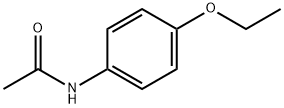
Phenacetin
62-44-2You may like
- Phenacetin
-
- $1.00 / 1g
- 2026-05-05
- CAS:62-44-2
- Min. Order: 1g
- Purity: 99%
- Supply Ability: 1000kg
- Phenacetin
-

- $100.00 / 100g
- 2026-05-04
- CAS:62-44-2
- Min. Order: 100g
- Purity: 99%
- Supply Ability: 9999
- Phenacetin
-
- $0.00 / 1kg
- 2026-04-30
- CAS:62-44-2
- Min. Order: 1kg
- Purity: 98%
- Supply Ability: 1000