- Syringic acid
-
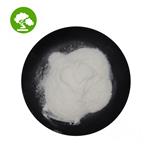
-
2024-04-12
- CAS:530-57-4
- Min. Order: 1KG
- Purity: 99%
- Supply Ability: 50000kg/Mouth
- Syringic acid
-

-
2023-02-24
- CAS:530-57-4
- Min. Order: 5mg
- Purity: ≥98%(HPLC)
- Supply Ability: 10 g
- Syringic acid
-
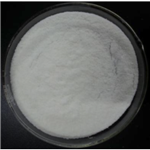
- $80.00
-
2023-02-13
- CAS:530-57-4
- Min. Order: 1kg
- Purity: 99%
- Supply Ability: 100MT
|
| | Syringic acid Basic information |
| | Syringic acid Chemical Properties |
| Melting point | 205-209 °C (lit.) | | Boiling point | 192-193°C 14mm | | density | 1.2539 (rough estimate) | | refractive index | 1.4570 (estimate) | | Fp | 192-193°C/14mm | | storage temp. | Store below +30°C. | | solubility | DMSO (Slightly), Methanol (Slightly) | | pka | 4.33±0.10(Predicted) | | form | Powder | | color | Grayish-beige to light brown | | Water Solubility | 5780 mg/L (25 ºC) | | BRN | 2115262 | | Stability: | Stable. Incompatible with strong bases, strong oxidizing agents. | | Major Application | cleaning products
cosmetics
flavors and fragrances
food and beverages
personal care | | Cosmetics Ingredients Functions | ANTIOXIDANT | | InChI | 1S/C9H10O5/c1-13-6-3-5(9(11)12)4-7(14-2)8(6)10/h3-4,10H,1-2H3,(H,11,12) | | InChIKey | JMSVCTWVEWCHDZ-UHFFFAOYSA-N | | SMILES | COc1cc(cc(OC)c1O)C(O)=O | | LogP | 1.040 | | CAS DataBase Reference | 530-57-4(CAS DataBase Reference) | | NIST Chemistry Reference | Benzoic acid, 4-hydroxy-3,5-dimethoxy-(530-57-4) | | EPA Substance Registry System | Syringic acid (530-57-4) |
| Hazard Codes | Xi | | Risk Statements | 36/37/38 | | Safety Statements | 26-36-37/39 | | WGK Germany | 3 | | RTECS | DH2090000 | | Hazard Note | Irritant | | TSCA | TSCA listed | | HS Code | 29189090 | | Storage Class | 11 - Combustible Solids | | Hazard Classifications | Eye Irrit. 2
Skin Irrit. 2
STOT SE 3 |
| | Syringic acid Usage And Synthesis |
| Description | Syringic acid is a naturally occurring O-methylated phenolic acid that can be enzymatically degraded by some bacteria as a source of methane or methanol. It is also a component of phenolic extracts from various plants that have antioxidant and prooxidant activities. Syringic acid has been shown to inhibit aldose reductase (IC50 = 213 μg/ml), proteasome activity, and cancer cell proliferation. Phenolic extracts containing syringic acid have been shown to inhibit α-amylase and α-glucosidase activities and reduce lipid peroxidation in vitro. | | Chemical Properties | light brown powder | | Uses | antiproliferative; antifungal | | Uses | Syringic Acid is used in biological studies for electron transfer from plant phenolates to carotenoid radical cations with antioxidant interaction entering the Marcus theory inverted region. | | Uses | Syringic acid (4-hydroxy-3,5-dimethoxybenzoic acid) is a naturally occurring phenolic compound with antioxidant, antimicrobial, and anti-inflammatory properties, serving as a natural sweetener in cosmetics and food applications while exhibiting significant sedative and local anesthetic activity. The compound demonstrates neuropharmacological and central depressive activities in laboratory models, including mice and frogs, and exhibits in vitro antimicrobial effects against Ganoderma boninense. Syringic acid esters are utilized as ingredients in dental cements, and the acid itself serves as a model agent in laccase-based bioremediation processes[6-7]. | | Definition | ChEBI: A dimethoxybenzene that is 3,5-dimethyl ether derivative of gallic acid. | | Synthesis | Syringic acid can be synthesised in three steps using syringaldehyde as the starting material.
Step 1: Syringaldehyde is esterified with acetic anhydride to form the syringaldehyde acetate ester (4-acetoxy-3,5-dimethoxybenzaldehyde);
Step 2: The ester is oxidised with hydrogen peroxide to yield 4-acetoxy-3,5-dimethoxybenzoic acid;
Step 3: The oxidised ester is hydrolysed to yield syringic acid. This method yields a yield of 86.5 per cent and a purity of 98.6 per cent [7].
 | | Purification Methods | Recrystallise syringic acid from H2O using charcoal [Bogert & Coyne J Am Chem Soc 51 571 1929, Anderson & Nabenhauer J Am Chem Soc 48 3001 1926.] The methyl ester has m 107o (from MeOH), the 4-acetyl derivative has m 190o and the 4-benzoyl derivative has m 229-232o. [Hahn & Wassmuth Chem Ber 67 2050 1934, UV: Lemon J Am Chem Soc 69 2998 1947 and Pearl & Beyer J Am Chem Soc 72 1743 1950, Beilstein 10 IV 1995.] | | References | [1] H HARA. The 4-oxalomesaconate hydratase gene, involved in the protocatechuate 4,5-cleavage pathway, is essential to vanillate and syringate degradation in Sphingomonas paucimobilis SYK-6.[J]. Journal of Bacteriology, 2000, 182 24: 6950-6957. DOI: 10.1128/jb.182.24.6950-6957.2000
[2] MILENA COTORAS. In vitro and in vivo evaluation of the antioxidant and prooxidant activity of phenolic compounds obtained from grape (Vitis vinifera) pomace.[J]. Molecules, 2014, 19 12: 21154-21167. DOI: 10.3390/molecules191221154
[3] XIAOYONG WEI. Syringic Acid Extracted from Herba dendrobii Prevents Diabetic Cataract Pathogenesis by Inhibiting Aldose Reductase Activity.[J]. Evidence-based Complementary and Alternative Medicine, 2012, 2012: 426537. DOI: 10.1155/2012/426537
[4] KHALED Y ORABI. Selective growth inhibition of human malignant melanoma cells by syringic acid-derived proteasome inhibitors.[J]. Cancer Cell International, 2013, 13 1: 82. DOI: 10.1186/1475-2867-13-82
[5] GANIYU OBOH. Inhibition of key enzymes linked to type 2 diabetes and sodium nitroprusside induced lipid peroxidation in rats’ pancreas by phenolic extracts of avocado pear leaves and fruit.[J]. International Journal of Biomedical Science: IJBS, 2014, 10 3: 208-216.
[6]
Srinivasulu, C., Ramgopal, M., Ramanjaneyulu, G., Anuradha, C., Kumar, C. S. (2018). Syringic acid (SA) ‒ A Review of Its Occurrence, Biosynthesis, Pharmacological and Industrial Importance. Biomedicine & Pharmacotherapy, 108, 547–557. https://doi.org/10.1016/j.biopha.2018.09.069
[7]
Mohammad, O., Onwudili, J. A., Yuan, Q. (2026). Production of syringic acid by direct CO 2 insertion into syringol via a Kolbe–Schmitt type reaction. RSC Sustainability, 4(4), 1964–1974. https://doi.org/10.1039/d5su00232j
|
| | Syringic acid Preparation Products And Raw materials |
|