- 2-Methyl-6-nitroaniline
-
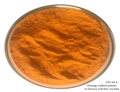
- $83.72 / 25Kg/Drum
-
2026-04-30
- CAS:570-24-1
- Min. Order: 25Kg/Drum
- Purity: 99.0%HPLC
- Supply Ability: 10tons/month
|
| | 2-Methyl-6-nitroaniline Basic information | | Uses |
| | 2-Methyl-6-nitroaniline Chemical Properties |
| Melting point | 93-96 °C (lit.) | | Boiling point | 124 °C / 1mmHg | | density | 1.19 g/cm3 | | refractive index | 1.6276 (estimate) | | Fp | 110 °C | | storage temp. | Keep in dark place,Inert atmosphere,Room temperature | | solubility | <1mg/l | | form | Crystalline Powder | | pka | -0.44±0.25(Predicted) | | color | Brownish | | Water Solubility | <0.1 g/100 mL at 23 ºC | | BRN | 1868029 | | Henry's Law Constant | 4.6×101 mol/(m3Pa) at 25℃, Abraham and Jr. (2019) | | Cosmetics Ingredients Functions | HAIR DYEING | | InChI | 1S/C7H8N2O2/c1-5-3-2-4-6(7(5)8)9(10)11/h2-4H,8H2,1H3 | | InChIKey | FCMRHMPITHLLLA-UHFFFAOYSA-N | | SMILES | Cc1cccc(c1N)[N+]([O-])=O | | CAS DataBase Reference | 570-24-1(CAS DataBase Reference) | | NIST Chemistry Reference | 2-Methyl-6-nitroaniline(570-24-1) | | EPA Substance Registry System | 2-Methyl-6-nitroaniline (570-24-1) |
| Hazard Codes | T,N,Xi | | Risk Statements | 23/24/25-33-51/53 | | Safety Statements | 28-36/37-45-61-28A | | RIDADR | UN 2660 6.1/PG 3 | | WGK Germany | 3 | | F | 10 | | Hazard Note | Toxic | | HazardClass | IRRITANT | | HazardClass | 6.1 | | PackingGroup | Ⅲ | | HS Code | 29214300 | | Storage Class | 6.1C - Combustible acute toxic Cat.3
toxic compounds or compounds which causing chronic effects | | Hazard Classifications | Acute Tox. 3 Dermal
Acute Tox. 3 Inhalation
Acute Tox. 3 Oral
Aquatic Acute 1
Aquatic Chronic 2
STOT RE 2 |
| | 2-Methyl-6-nitroaniline Usage And Synthesis |
| Uses | 2-Methyl-6-nitroaniline is a compound useful in organic synthesis. Dyes and metabolites, Environmental Testing. | | Chemical Properties | Redish-Brown Solid | | Uses | 2-Methyl-6-nitroaniline (cas# 570-24-1) is a compound useful in organic synthesis. Dyes and metabolites, Environmental Testing | | General Description | Orange-yellow prisms or brown granular powder. | | Air & Water Reactions | 2-Methyl-6-nitroaniline is sensitive to prolonged exposure to air. Insoluble in water. | | Reactivity Profile | 2-Methyl-6-nitroaniline is incompatible with acids, acid chlorides, acid anhydrides, chloroformates, and strong oxidizers. | | Fire Hazard | Flash point data for 2-Methyl-6-nitroaniline are not available, but 2-Methyl-6-nitroaniline is probably combustible. | | Synthesis | The general procedure for the synthesis of 2-methyl-6-nitroaniline from 2-methylacetanilide was carried out as follows: the modified Howard method [27] was used. Toluidine (1a or 1b; 53.5 mL, 0.5 mol) was slowly added to acetic anhydride (325 mL) in batches while maintaining constant stirring. The reaction solution was cooled to 12-13 °C in an ice-salt bath. Subsequently, 70% nitric acid (63 mL) was slowly added dropwise to the reaction mixture at a rate that maintained the temperature at 10-12 °C with constant stirring. The dropwise addition process took 2.5 h to complete, after which the solution was poured into 1.5 L of ice water. The resulting acetamide (3a, or a mixture of 3b and 3c) precipitate (as a cream-colored solid) was collected on a Brinell's funnel, washed with four 250 mL portions of ice water, and partially dried by suction. The wetted acetamide (3a, or a mixture of 3b and 3c) was mixed with 70% sulfuric acid (100 mL) and stirred at reflux for 3 hours. The acetamide 3b was separated from the reaction mixture by steam distillation to give the hydrolysis product of 2-methyl-6-nitroaniline (4b). After the distiller was cooled, the isolated bright orange needle-like crystals 4b were collected on a Brinell funnel and dried in a vacuum desiccator. If acetamide 3a was hydrolyzed, the warm reaction mixture was diluted with 350 mL of water and alkalized with 10% aqueous sodium hydroxide. After cooling to room temperature, 4-methyl-2-nitroaniline (4a) precipitated as a brown powder, which was separated by vacuum filtration, washed with three parts of 200 mL of water, and dried in a vacuum desiccator. The yields of compounds 4a and 4b were 53.6% (40.73 g) and 52.3% (39.78 g), respectively. | | References | [1] Bulletin des Societes Chimiques Belges, 1969, vol. 78, p. 571 - 582
[2] Chemistry Letters, 1989, p. 1849 - 1852
[3] Journal of Medicinal Chemistry, 2012, vol. 55, # 13, p. 6047 - 6060
[4] Polyhedron, 2016, vol. 105, p. 137 - 149 |
| | 2-Methyl-6-nitroaniline Preparation Products And Raw materials |
| Raw materials | 2-METHYLACETANILIDE-->2-Azido-3-nitrotoluene-->o-Oxalotoluidide-->2-Aminotoluene-5-sulfonic acid-->Sulfuric acid-->2-METHYL-4-NITROACETANILIDE-->Acetic anhydride-->N-(2-METHYL-6-NITRO-PHENYL)-ACETAMIDE-->Nitric acid-->4-Methyl-2-nitroaniline | | Preparation Products | 4-(BROMOMETHYL)-2,1,3-BENZOTHIADIAZOLE-->2,1,3-BENZOTHIADIAZOLE-4-CARBOXYLIC ACID-->2,1,3-BENZOTHIADIAZOL-4-YLMETHANOL,97%-->2,1,3-BENZOTHIADIAZOLE-4-CARBALDEHYDE-->1H-INDAZOL-7-AMINE-->7-Nitroindazole-->2-Bromo-3-nitrotoluene-->2,3-DINITROBENZOIC ACID-->4-methyl-1H-benzotriazole-->3-AMINO-2-BROMO-BENZOIC ACID METHYL ESTER-->4-broMo-3-Methylbenzene-1,2-diaMine-->5-BROMO-7-NITRO-1H-INDAZOLE-->METHYL 2-BROMO-3-NITROBENZOATE |
|